Content Marketing · Ecommerce Strategy · Done-For-You Marketing · Traffic Growth
Next Level (DFY) Content Marketing for Ecommerce: 2026 Step-by-Step Strategy to Drive Traffic & Build Brand Awareness
The complete done-for-you content marketing system that ecommerce brands are using to drive 195-417% traffic growth — without building an in-house content team or managing daily execution.
Media Strobe Strategy Team · Updated March 2026 · 17 min read
Article-At-A-Glance
• Google drives 43% of all ecommerce traffic — making search visibility the single most valuable asset your store can build in 2026.
• DFY content marketing means having a full system of research, creation, and distribution handled for you — so your brand shows up everywhere buyers are searching, without you doing the daily work.
• Ecommerce brands using strategic content distribution have recorded results like a 417.8% increase in organic traffic — proof that smart distribution outperforms content creation alone.
• There’s a specific 5-step media distribution strategy covered in this article that ecommerce brands can run in 2026 — even without a large marketing team or prior PR experience.
• The brands quietly pulling ahead right now aren’t spending more on ads — they’re building compounding content infrastructure that keeps driving traffic long after it’s published.
Table of Contents
- Most Ecommerce Brands Are Invisible Online — Here’s Why
- What DFY Content Marketing Actually Means for Ecommerce
- The 2026 Step-by-Step DFY Content Marketing Strategy for Ecommerce
- Real Ecommerce Results From Strategic Content Distribution
- Which Distribution Channels Deliver the Best ROI for Ecommerce in 2026
- How Content Repurposing Cuts Costs While Multiplying Reach
- DFY Content Marketing Is a Permanent Asset, Not a Monthly Expense
- How Media Strobe Can Help
- Frequently Asked Questions
If your ecommerce store isn’t showing up where buyers are searching, you’re already losing sales to brands that figured this out.
The hard truth is that most ecommerce store owners are working hard on their business but remaining almost completely invisible online. They’re posting on Instagram, maybe writing the occasional blog, and running paid ads that stop the moment the budget runs out. That’s not a content strategy — that’s a treadmill. And in 2026, the gap between brands that grow organically and brands that plateau is getting wider, not smaller.
Media Strobe Press specializes in content distribution and media amplification for ecommerce brands — and the data their team has documented across real stores makes one thing very clear: it’s not about creating more content. It’s about getting the right content in front of the right people, across the right channels, at scale. To understand the fundamentals, exploring what content marketing truly means provides essential context.
Most Ecommerce Brands Are Invisible Online — Here’s Why
Visibility online isn’t an accident. It’s the direct result of a documented, repeatable system — and most ecommerce brands simply don’t have one.
Google Still Drives 43% of All Ecommerce Traffic in 2026
The Search Visibility Opportunity
43% of All Ecommerce Traffic Comes From Google
Google organic search still delivers approximately 43% of all ecommerce traffic, making it the single largest traffic source available to any online store. That number dwarfs paid social, email, and influencer traffic combined for most categories. Yet the majority of ecommerce store owners are spending their marketing budget on channels that deliver diminishing returns, while the brands investing in organic search visibility are quietly compounding their advantage month after month.
68% of Consumers Begin Shopping With a Google Search
That means nearly 7 out of 10 potential customers are going to Google before they ever see your Instagram ad or open your email. If you’re not showing up in those moments, someone else is — and they’re getting the sale.
Why Posting Content Is Not the Same as a Content Strategy
There’s a difference between creating content and executing a content strategy, and it’s a distinction that costs ecommerce brands real money every year. Posting blog articles nobody reads, sharing product photos on social media that get three likes, or pushing out email newsletters to an unengaged list — that’s content activity, not content strategy.
A real content strategy is built around buyer intent. It starts with understanding exactly what your target customer is searching for at each stage of their journey — awareness, consideration, and purchase — and then systematically placing your brand in those conversations across multiple high-authority channels.
Without that foundation, all the content in the world won’t move the needle. A real content strategy is built around understanding exactly what your target customer is searching for at each stage of their journey, and then systematically placing your brand in those conversations across multiple high-authority channels.
The Gap Between Brands That Grow and Brands That Plateau
The ecommerce brands that dominate their categories in 2026 share one common trait: they’ve built content infrastructure that works for them continuously, not just when they’re actively pushing it. That infrastructure includes strategic content creation, multi-channel distribution, and compounding media placements that keep generating search visibility, backlinks, and brand authority over time. The brands stuck on the plateau are still treating content as a one-time task rather than a long-term asset.
What DFY Content Marketing Actually Means for Ecommerce
Done-For-You content marketing isn’t just outsourcing your blog. It’s a complete system where strategy, creation, optimization, and distribution are all handled — leaving you with the results without the daily execution burden. For a strategic framework, Harvard Business School’s content marketing strategy research provides valuable insights.
Done-For-You vs. DIY Content Marketing: The Core Difference
DIY content marketing puts everything on the store owner’s plate. You’re researching keywords, writing articles, formatting content, building backlinks, pitching publications, and tracking performance — all while running the actual business. For most ecommerce owners, that means content gets deprioritized, published inconsistently, or never distributed beyond your own website.
DFY content marketing flips that model entirely. A team of strategists, writers, SEO specialists, and media distributors handles the full workflow. Your job is to review, approve, and watch the results come in. The strategy is documented, the production is scheduled, and the distribution happens whether you’re focused on it or not.
The financial case is equally compelling. DIY content marketing is often described as the “slower path” — and the data backs that up. When you factor in the hours spent creating content that never gets properly distributed, the opportunity cost of not ranking for buyer-intent keywords, and the compounding advantage your competitors build while you’re catching up, the ROI math shifts decisively toward a done-for-you model for most growth-stage ecommerce brands.
Done-For-You vs. DIY Content Marketing
DIY Content Marketing Reality
→ High time investment with inconsistent output
→ Limited distribution reach beyond owned channels
→ Slow results as you learn distribution yourself
→ Content created but never properly amplified — invisible to audiences that matter
DFY Content Marketing Advantage
✓ Managed execution with consistent publishing schedule
✓ Multi-channel distribution to high-authority platforms
✓ Compounding results from day one
✓ Every piece of content built to rank, distribute, and convert from launch
What a Full DFY Content System Includes
A properly built DFY content marketing system for ecommerce covers far more ground than most store owners realize. It’s not just blog posts — it’s a multi-layer infrastructure designed to place your brand in front of buyers across every stage of the purchase journey.
At minimum, a complete system includes buyer-intent keyword research, long-form content creation optimized for search, content repurposing across multiple formats, media distribution to high-authority publications and news networks, backlink acquisition through editorial placements, and performance tracking to identify what’s driving traffic and conversions. Each component feeds the next, creating a flywheel that builds momentum over time rather than delivering a one-time spike.
The 2026 Step-by-Step DFY Content Marketing Strategy for Ecommerce
This is the exact framework ecommerce brands are using right now to drive compounding organic traffic — without running paid ads or relying on social media algorithms.
The strategy works in five distinct steps, each building on the last. Skip one and the system underperforms. Execute all five and you create a content infrastructure your competitors will struggle to replicate quickly.
The Complete 5-Step DFY Content Strategy
Step 1: Identify Top Questions People Are Researching About Your Product
Map buyer-intent questions to content opportunities where your brand can realistically rank and convert. Tools like Ahrefs, SEMrush, and Google’s “People Also Ask” section are your starting point. The real competitive edge comes from identifying the specific questions your competitors are failing to answer well. For those looking to enhance their approach, consider reading about hyperlocal content marketing strategies.
Step 2: Answer Each Question Publicly (Blog, Article, Podcast, etc.)
Create long-form, well-structured content that fully addresses the buyer’s question, builds trust, and naturally positions your product as the solution. This means doing it better than anyone else currently ranking for that query.
Step 3: Mass-Distribute Top-Performing Answers Into Multiple Format Variations
A single well-researched blog post becomes a YouTube video script, a podcast episode, an infographic, short-form social clips, and an email sequence. Each format reaches a different segment of your audience without multiplying your content budget.
Step 4: Get These Answers Featured on High-Authority Media Sites
Editorial distribution across major news sites, industry publications, and content syndication networks. A single placement on a major news distribution network can generate dozens of indexed mentions across regional and national publications simultaneously.
Step 5: Stack “As Seen On” Credibility to Get AI Citations and Be Seen Everywhere
Buyers who encounter your brand on a news site, then see it referenced in an industry publication, then find your product ranking on page one of Google — they experience it as social proof at scale. In 2026, this credibility stack also directly influences AI-generated search results.
Real Ecommerce Results From Strategic Content Distribution
The results documented from ecommerce brands executing this kind of strategic content distribution aren’t marginal improvements — they’re category-defining shifts in organic visibility and revenue potential.
What makes these numbers credible isn’t just the percentages — it’s the mechanism behind them. Each result came from the same core framework: targeted content creation, multi-channel distribution, and compounding media placements over time.
Documented Ecommerce Results
195% Traffic Increase
A Shopify store selling home robots achieved a 195% increase in website traffic through strategic content marketing and media distribution. This came from consistent execution across multiple distribution channels over time — each placement building on the last, each new backlink strengthening domain authority.
Core levers: Buyer-intent content, high-authority media placements, content repurposing, search ranking improvement, compounding visibility network
417.8% Organic Traffic Growth
An ecommerce furniture store achieved a 417.8% increase in organic traffic directly from a strategic combination of high-value content creation and systematic media distribution. For a category as competitive as furniture ecommerce, this result demonstrates what’s possible when distribution is treated as seriously as content itself.
218% Website Traffic Rise
A service business achieved a 218% increase in website traffic by leaning heavily into content repurposing — taking existing core content and systematically converting it into multiple formats distributed across additional channels.
Which Distribution Channels Deliver the Best ROI for Ecommerce in 2026
Not all distribution channels are created equal. The right mix depends on your product category, your target buyer, and your content format — but the channels that consistently deliver the strongest compounding ROI for ecommerce brands follow a clear pattern. For a deeper understanding of how AI is reshaping digital marketing strategies, you can explore further insights.
The highest-performing distribution strategy isn’t about picking one channel and going all-in. It’s about building a layered presence across channels that reinforce each other. When a buyer sees your brand on a major news site, finds you in a Google search, and then encounters a YouTube video answering their specific product question — that stacked exposure is what converts browsers into buyers at scale.
Highest-ROI Distribution Channels for Ecommerce 2026
• Major news distribution networks — Simultaneous placement across regional and national publications for fast authority building
• Niche industry publications — Targeted reach to high-intent category buyers already in research mode
• Content syndication platforms — Multiplied reach without proportional increases in content production cost
• YouTube and video platforms — Long-tail search visibility through video content that ranks independently in Google results
• Podcast networks — Authority building with engaged audiences in specific product categories
• Pinterest and visual platforms — High purchase-intent traffic for ecommerce categories like home, fashion, and lifestyle
The brands that build distribution infrastructure across all of these channels simultaneously are the ones creating the compounding visibility that makes organic growth feel almost automatic — while their competitors are still dependent on paid ads to stay visible.
Major News Distribution Services and Why They Move the Needle Fast
Major news distribution services are the fastest way to build widespread brand authority for an ecommerce store that doesn’t yet have an established media presence. A single press release or contributed article distributed through a professional news distribution network can generate placements across hundreds of publications simultaneously — including regional news outlets, industry-specific sites, and major digital news platforms.
The speed advantage is real. While building organic SEO authority through traditional link-building can take six to twelve months of consistent effort, a well-executed news distribution campaign can generate dozens of high-authority backlinks within days of launch.
Niche Industry Publications That Influence Category Search Rankings
Beyond broad news distribution, placements in niche industry publications carry a different kind of weight — one that directly influences how Google ranks your store within your specific product category. When a publication that covers home automation, sustainable fashion, or fitness equipment links to your store, it sends a clear topical relevance signal to Google’s algorithm. For strategies on effectively handling challenges, consider exploring ecommerce crisis management.
How Content Repurposing Cuts Costs While Multiplying Reach
Content repurposing is one of the most underutilized leverage points in ecommerce marketing — and one of the clearest ways to dramatically increase your content ROI without proportionally increasing your budget.
The core principle is straightforward: every piece of high-quality content you create contains multiple pieces of content waiting to be extracted and reformatted for different platforms and audiences.
How One Research Report Became 37 Touchpoints Across 12 Channels
One of the clearest demonstrations of content repurposing at scale came from a single research report that was strategically broken down and redistributed across channels. That one asset generated 37 distinct content touchpoints across 12 separate channels — including long-form articles, short-form social posts, email sequences, video scripts, infographics, podcast talking points, and news distribution placements.
The Formats That Work Best for Ecommerce Product Content
Content Formats That Work Best for Ecommerce
| Content Format | Best For | Primary Distribution Channel |
|---|---|---|
| Long-Form Buyer’s Guide | Awareness & Consideration stage buyers | SEO blog, news syndication |
| Product Comparison Article | Decision-stage buyers evaluating options | Niche publications, Google search |
| How-To Video | Demonstrating product use and value | YouTube, social media, blog embed |
| Infographic | Visual product categories | Pinterest, LinkedIn, media placements |
| Press Release / News Feature | Brand authority and backlink building | News distribution networks |
| Email Sequence | Nurturing existing audience toward purchase | Email marketing platform |
| Short-Form Social Clips | Reach and retargeting on social platforms | Instagram Reels, TikTok, YouTube Shorts |
Why Repurposing Reduces Content Spend Without Reducing Results
The math on content repurposing is straightforward but often overlooked. If a single long-form content asset costs a set amount to research and produce, repurposing that asset into five or six additional formats typically costs a fraction of producing each format from scratch — while delivering a reach multiplier that far exceeds what the original asset alone could achieve.
DFY Content Marketing Is a Permanent Asset, Not a Monthly Expense
Content as Permanent Infrastructure
Every piece of content you distribute to a high-authority platform is a permanent addition to your brand’s digital infrastructure. Unlike a paid ad that disappears the moment you stop funding it, a well-placed article on an authoritative news site keeps working for your business indefinitely.
The most important mindset shift an ecommerce store owner can make about content marketing is this: every piece of content you distribute to a high-authority platform is a permanent addition to your brand’s digital infrastructure. Unlike a paid ad that disappears the moment you stop funding it, a well-placed article on an authoritative news site, a YouTube video ranking for a buyer-intent keyword, or a press feature generating backlinks to your store — these assets keep working for your business indefinitely.
The ecommerce brands that understand this distinction are the ones building sustainable traffic engines, while their competitors remain stuck in the paid ad cycle, buying the same attention over and over again with no compounding return on that investment.
How Media Strobe Can Help
If you want the results of a DFY content marketing system without building an in-house team or managing daily execution, Media Strobe’s MultiCast campaign eliminates the entire “doing” part of done-for-you — while delivering the compounding traffic growth that transforms ecommerce brands.
MultiCast Campaign: True DFY Content Marketing for Ecommerce
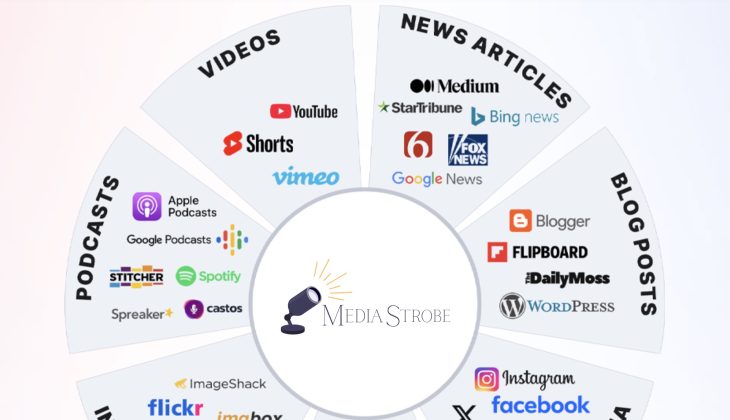
Media Strobe’s MultiCast campaign is expertly created to answer highly relevant questions about your products that your future customers are asking (all over the internet) before they make their purchase decision. Your MultiCast is distributed to hundreds of high authority sites IN THE EXACT WAY that Google and AI love, and in 8 formats so that your answers show up everywhere people are asking questions.
How the MultiCast campaign delivers true done-for-you execution:
- Complete system handled for you — research, content creation, optimization, and multi-channel distribution
- Automatically transforms your brand story into 8 different formats (articles, guides, Q&A, video scripts, social posts, email sequences, infographics, checklists)
- Mass media placement to hundreds of high-authority sites without manual outreach or relationship building
- Builds permanent traffic assets that keep working while you focus on running your store
- Creates the “as seen on” credibility stack that converts browsers into buyers
- Perfect for ecommerce brands wanting organic growth without hiring a content team
The benefits of running a MultiCast campaign:
- Increased visibility (leading to increased ranking) across Google and AI search results
- Increased warm/hot traffic from buyers actively researching before purchase
- Reduced customer acquisition costs as organic traffic compounds monthly
- Predictable growth that can be scaled across product categories
- Generate more revenue with higher net profit (no CPC costs)
- True control over your lead generation without ad platform dependency
- Better return on paid ads when amplified by strong organic content presence
Frequently Asked Questions
These are the questions ecommerce store owners ask most often when they’re evaluating whether a done-for-you content strategy is the right move for their business. The answers below cut through the noise and give you a clear picture of what to expect — including the realistic timelines, the types of stores that see the strongest results, and exactly how DFY differs from the content marketing approaches most brands are already running.
One thing worth stating upfront: DFY content marketing is not a magic switch. It’s a system — and like any well-engineered system, it delivers its best results when it’s given time to compound. The brands that see results like 195% and 417.8% traffic increases aren’t the ones who tried it for a month. They’re the ones who committed to consistent execution across a multi-channel strategy and let the compounding effects of media distribution and organic search authority build over time.
With that context in place, here are the answers to the questions that matter most before you decide whether DFY content marketing is the right next move for your ecommerce store.
What is DFY content marketing for ecommerce and how does it work?
DFY content marketing — or Done-For-You content marketing — is a fully managed system where a team handles every stage of your content strategy on your behalf. That includes buyer-intent keyword research, long-form content creation, SEO optimization, multi-channel distribution, media placements on high-authority publications, content repurposing across formats, and performance tracking. For ecommerce specifically, the system is built to drive organic search traffic to your store, build brand authority that converts browsers into buyers, and create compounding digital assets that keep generating results long after the content is published.
How long does it take to see results from a DFY content marketing strategy?
Most ecommerce brands begin seeing measurable improvements in organic traffic within 60 to 90 days of consistent execution — particularly from media distribution placements that generate backlinks and brand mentions quickly. Significant compounding results, like the 195% to 417.8% traffic increases documented in real ecommerce case studies, typically develop over a 6 to 12 month window as domain authority builds, content indexes across platforms, and distribution placements accumulate. The timeline is longer than a paid ad campaign but the results are permanent rather than rented — every placement and ranking you build continues working without ongoing spend to maintain it.
Is DFY content marketing better than paid advertising for ecommerce brands?
For ecommerce brands focused on long-term, sustainable growth, DFY content marketing builds compounding assets that paid advertising never can. Paid ads deliver traffic precisely as long as you’re paying for them — the moment budget stops, traffic stops. Content marketing builds search rankings, media authority, and brand credibility that keep generating traffic indefinitely.
That said, the two approaches aren’t mutually exclusive. Many high-performing ecommerce brands use paid ads for immediate revenue while simultaneously building their organic content infrastructure — shifting budget toward organic over time as the compounding results reduce dependence on paid channels.
What types of ecommerce businesses benefit most from DFY content marketing?
DFY content marketing delivers the strongest results for ecommerce brands selling products where buyers research before purchasing — categories like furniture, home goods, electronics, fitness equipment, pet products, beauty, health supplements, and sustainable or specialty products. These are categories where buyers are actively searching Google for information, comparisons, and reviews before making a decision, which means there’s significant opportunity to capture that buyer-intent traffic with strategically placed content.
That said, virtually any ecommerce brand selling a product that requires even minimal consideration before purchase can benefit from a DFY content strategy. The brands that see the fastest results are typically those with a clearly defined target customer, a product category with documented search volume, and a willingness to commit to a consistent distribution strategy over a 6 to 12 month window. Shopify stores, WooCommerce brands, and Amazon-adjacent ecommerce businesses selling through their own direct-to-consumer channels have all documented strong results from this approach.
How does media distribution differ from standard content marketing for ecommerce?
Standard content marketing for ecommerce typically means publishing blog posts on your own website, posting on your social media channels, and sending emails to your existing list. It’s valuable, but it’s limited by the size and authority of the audience you’ve already built. Media distribution takes that same content and places it across external, high-authority platforms — major news networks, industry publications, content syndication services, and niche authority sites — dramatically expanding the reach of every piece of content you create.
The practical difference is authority and scale. When your content appears on a trusted external publication, Google treats the backlink to your store as a vote of confidence from an authoritative source — which directly improves your search rankings. When a buyer encounters your brand on a major news site, the credibility transfer is immediate and powerful in a way that a post on your own Instagram account simply cannot replicate. Media distribution is what transforms content from a visibility tool into a brand authority engine.
In 2026, media distribution also directly influences whether your brand gets cited in AI-generated search results. Google’s AI Overviews and tools like ChatGPT pull from authoritative, widely-distributed sources when generating answers to buyer queries. Ecommerce brands with strong media distribution footprints are far more likely to appear in these AI-generated responses — creating a new category of organic visibility that most competitors haven’t started building for yet. The brands investing in DFY content distribution right now are positioning themselves to own that advantage as AI search continues to reshape how buyers discover and evaluate products online. Understanding multicast distribution in technical terms provides additional context for how information spreads efficiently across networks.
Why Choose a MultiCast Campaign by Media Strobe?
All MultiCast campaigns are expertly created to answer highly relevant questions about your service/product that your future customers are asking (all over the internet) before they make their purchase decision. Your MultiCast is distributed to hundreds of high authority sites IN THE EXACT WAY that Google and AI love, and in 8 formats so that your answers show up everywhere people are asking questions.
The benefits of running a MultiCast campaign are:
- Increased visibility (leading to increased ranking)
- Increased warm/hot traffic
- Reduced customer acquisition costs
- Predictable growth that can be scaled
- Generate more revenue with higher net profit
- True control over your lead generation
- Better return on paid ads