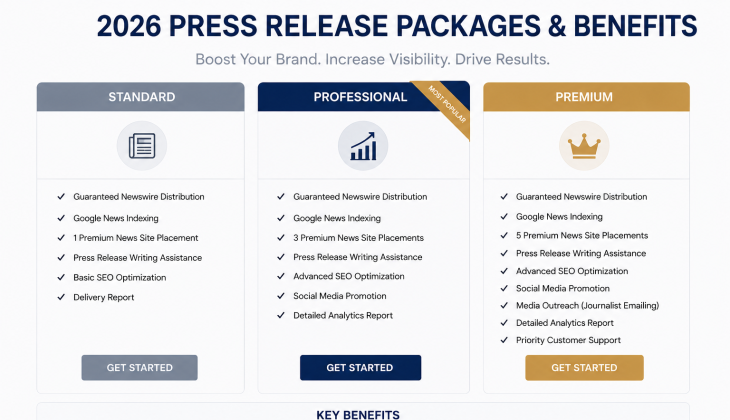
Press Release Pricing · PR Strategy · 2026 Guide
Article at a Glance
- Basic press releases typically cost between $200 and $800, covering writing and standard wire distribution — but coverage results can be limited.
- Full visibility campaigns range from $3,000 to $10,000+, bundling multimedia, journalist outreach, SEO optimization, and national syndication into one strategy.
- The price gap between a basic press release and a full campaign isn’t just about budget — it reflects a fundamental difference in what you’re trying to achieve.
- Choosing the wrong tier for your announcement can mean wasted spend or a missed opportunity to build serious brand authority.
- Keep reading to find out exactly which option fits your business stage — and how to measure whether it actually worked.
Table of Contents
- A Basic Press Release Costs $200–$800. A Full Visibility Campaign Can Run $10,000 or More
- What a Basic Press Release Includes
- What a Full Visibility Campaign Includes
- Side-by-Side Price Breakdown
- The Real Cost of Choosing the Wrong Option
- Which Option Fits Your Business Right Now
- How to Measure ROI From Either Approach
- Make the Right Call for Your PR Budget
- How Media Strobe Can Help
- Frequently Asked Questions
Your press release budget can either open doors or quietly waste money, and the difference comes down to knowing exactly what you’re buying when evaluating 2026 press release prices, benefits, and what to expect.
Most businesses approach press releases with one goal: get noticed. But “getting noticed” means something very different depending on whether you’re spending $300 or $5,000. The structure, reach, and outcomes of a basic press release versus a full visibility campaign are worlds apart — and confusing the two is one of the most common PR mistakes brands make. Media Strobe works directly in this space, helping businesses navigate press release pricing and match their investment to their actual goals.
A Basic Press Release Costs $200–$800. A Full Visibility Campaign Can Run $10,000 or More
That price range isn’t arbitrary. Each tier reflects a specific level of service, reach, and expected outcome. A basic press release at the lower end of the spectrum gets your announcement written and pushed through a wire service. A full visibility campaign wraps that core service in layers of strategy, media relationships, multimedia production, and performance tracking.
What Each Option Actually Delivers
A basic press release delivers a professionally written, formatted document distributed to a network of journalists and news aggregators via wire. You get visibility — but it’s broad and largely passive. Journalists receive hundreds of releases daily, so standing out without additional outreach is a real challenge. What you’re paying for is access to the wire, not a guaranteed story.
A full visibility campaign, by contrast, is an active strategy. It pairs the written release with targeted journalist pitching, multimedia assets like images or video, SEO-optimized content for long-term search visibility, and syndication to national or even international outlets. The difference in outcomes can be dramatic when understanding 2026 press release prices, benefits, and what to expect.
Why the Price Gap Exists
The gap exists because of labor, relationships, and reach. Writing a 400-word press release takes a few hours. Building a media list, pitching individual journalists, producing a branded infographic, and monitoring coverage across dozens of outlets takes a team working over days or weeks. You’re not just paying for content — you’re paying for infrastructure and expertise that most businesses don’t have in-house.
What a Basic Press Release Includes
At its core, a basic press release package is a two-part service: writing and distribution. Understanding what those two parts actually cover helps set realistic expectations before you spend a dollar.
Standard Writing and Formatting
A standard press release follows a specific format that journalists and editors expect. Deviating from it signals amateur work and reduces the chance of pickup. A properly written basic press release will include:
- A headline and subheadline crafted for clarity and news value
- A dateline with city and date of release
- A strong lead paragraph answering who, what, when, where, and why
- Two to three supporting body paragraphs with relevant details and quotes
- A company boilerplate at the end
- Contact information for media follow-up
Freelance writers typically charge $100 to $500 for this work alone, depending on their experience and the complexity of your announcement. PR agencies charge more — sometimes several thousand dollars — because writing is bundled with strategy and editing layers. If you’re hiring separately for writing and distribution, budget for both independently.
Formatting matters more than most people realize. Some wire services and media outlets have strict submission guidelines around word count, image embedding, and hyperlink usage. Getting this wrong doesn’t just look unprofessional — it can result in your release being rejected outright. Formatting corrections from a professional typically run an additional $50 to $200.
Wire Distribution vs. Targeted Media Outreach
This is where basic press releases and full campaigns diverge most sharply. Wire distribution is automated. You pay a service, your release goes out to their network, and that’s it. Targeted media outreach is human-driven — a PR professional identifies specific journalists who cover your niche and personally pitches your story.
Here’s how the two approaches compare in practical terms:
Wire Distribution vs. Targeted Outreach
- Wire distribution: Reaches hundreds to thousands of outlets simultaneously but offers no personalization and minimal relationship-building
- Targeted outreach: Reaches fewer contacts but with dramatically higher relevance and response rates
- Basic services (wire only): Cost between $100 and $500
- Premium wire services with industry targeting: Cost between $1,000 and $3,000
- Media outreach campaigns added on top: Range from $1,000 to $5,000+ depending on scope
Wire services like PR Newswire and Business Wire sit at the higher end of basic distribution pricing. Their networks are large and credible, which helps with SEO and brand legitimacy. But for actual journalist engagement, personalized outreach adds a layer that wire services simply can’t replicate.
What You Can Realistically Expect in Coverage
With a basic press release and wire distribution only, expect your release to appear on news aggregator sites and potentially a handful of regional outlets. A major media pickup — think Forbes, Reuters, or industry trade publications — is unlikely without personalized outreach or a genuinely newsworthy story. Basic press releases work well for local announcements, minor product updates, and maintaining a consistent presence online.
What a Full Visibility Campaign Includes
A full visibility campaign is built for brands that need more than a mention — they need momentum. This tier combines everything in a basic press release with additional services that actively push the story into the hands of the right people and keep it visible long after the initial distribution date.
The investment reflects real production and relationship costs. Campaigns at this level typically involve multiple team members across writing, design, outreach, and analytics — all working toward a single launch goal.
Multimedia Assets and SEO-Optimized Content
A full campaign includes visual assets that make your release more shareable and compelling. A single branded image or infographic can cost between $100 and $500 to produce. Video elements or interactive content push that cost higher — but they also significantly increase the likelihood of pickup by digital media outlets that prioritize visual content. Beyond visuals, SEO optimization means your release is written to rank in search engines, extending its lifespan far beyond the initial news cycle.
Journalist Outreach and Media Relationship Building
This is the most valuable — and most labor-intensive — component of a full visibility campaign. A PR professional or agency builds a targeted media list of journalists, editors, and influencers in your specific industry. Each contact receives a personalized pitch, not a mass email. Follow-up is handled professionally. This level of outreach dramatically increases the chance of earned media coverage in publications your target audience actually reads. Media outreach campaigns add $1,000 to $5,000 or more to overall costs, but the quality of coverage that results is fundamentally different from what wire-only distribution produces.
Syndication Across National and International Outlets
Full visibility campaigns include syndication strategies that place your release in front of national and international audiences. This goes well beyond standard wire distribution. PR teams with established media relationships can secure placement in industry trade publications, regional business journals, and major national outlets — the kind of coverage that builds brand credibility fast. A press release targeting a national or international audience through premium syndication channels typically ranges from $1,000 to $5,000, depending on the service used and the number of outlets targeted.
Ongoing Monitoring and Performance Reporting
Once your release is live, a full campaign doesn’t stop working. Monitoring tools track where your release was picked up, how much traffic it generated, which backlinks were earned, and how your brand mentions shifted across the web. This data isn’t just useful for reporting — it directly informs your next PR move.
Without tracking, you’re guessing. With it, you can measure the real return on your PR investment and make smarter decisions about future campaigns. Most full-service PR firms include performance reporting as part of their campaign package, while others charge it as an add-on. Either way, it’s a component worth insisting on.
Side-by-Side Price Breakdown
Understanding how each tier is priced makes it easier to match your budget to your actual goals. The numbers below reflect real-world pricing across freelancers, distribution platforms, and full-service PR firms — not theoretical ranges.
Basic Press Release: $200 to $800
This tier covers professional writing, standard formatting, and wire distribution to a broad network of outlets. It’s the entry point for businesses that need an announcement made without a large PR budget. Expect your release to appear on news aggregator sites, potentially a few regional publications, and across search engines where wire content is indexed. Don’t expect feature stories or journalist follow-up calls at this price point.
Mid-Range Campaign: $1,000 to $3,000
Mid-Range Campaign Components
- Professional writing and editing with strategy input
- Premium wire distribution targeting specific industries or regions
- Basic multimedia elements such as one branded image or logo inclusion
- Limited journalist outreach to a curated media list
- Distribution to a larger, more targeted network of outlets
- Basic performance reporting showing pickup locations and reach
This is the sweet spot for businesses that have something genuinely newsworthy to announce and want more than passive distribution. A product launch, a funding round, a new executive hire, or a significant partnership all justify this level of investment.
The cost difference between basic and mid-range comes down to targeting and personalization. At this tier, your release isn’t just blasted to a generic network — it’s placed in front of journalists and outlets who actually cover your industry. That specificity significantly improves the odds of real media pickup.
Mid-range campaigns are also where SEO starts to become a meaningful benefit. Premium distribution services at this price point typically guarantee placement on high-authority news sites, which generates quality backlinks that improve your domain authority over time. For brands investing in long-term organic visibility, this alone can justify the cost.
Full Visibility Campaign: $3,000 to $10,000 and Beyond
This tier is a comprehensive PR push, not just a release. It combines every element of the mid-range campaign with significantly deeper media relationships, richer multimedia production, and active outreach that puts your story directly in front of the journalists most likely to cover it. For businesses looking to enhance their brand presence, understanding brand building strategies can be crucial.
Full Visibility Campaign Elements
- Full press release writing with strategic messaging and brand alignment
- National and international syndication across premium outlets
- Custom multimedia production — images, infographics, and potentially video
- Personalized journalist pitching with follow-up
- Press kit development including executive bios, company backgrounders, and supporting materials
- Media training or strategic consultation if needed
- Comprehensive performance monitoring and detailed ROI reporting
Press kit development alone can run between $500 and $2,000, and media training or strategic consultations can add several thousand dollars more depending on scope. These aren’t optional extras for high-stakes announcements — they’re what separates a story that gets told from one that gets ignored.
Brands launching IPOs, entering new markets, managing reputation crises, or announcing major partnerships are the primary candidates for this tier. The investment is significant, but so is the potential impact on brand authority, investor perception, and customer trust.
2026 Press Release Pricing Tiers Compared
| Press Release Tier | What’s Included | Typical Cost Range |
|---|---|---|
| Basic | Writing + wire distribution | $200 – $800 |
| Mid-Range | Writing + premium distribution + limited outreach | $1,000 – $3,000 |
| Full Visibility Campaign | Writing + multimedia + journalist outreach + syndication + reporting | $3,000 – $10,000+ |
| Media Outreach Add-On | Personalized journalist pitching and follow-up | $1,000 – $5,000+ |
| Formatting Services | Outlet-specific formatting and multimedia embedding | $50 – $200 |
| Multimedia Production | Images, infographics, or video assets | $100 – $500+ per asset |
The Real Cost of Choosing the Wrong Option
Overspending on PR you don’t need is wasteful. But underspending on a high-stakes announcement can be far more damaging. The real cost of mismatching your PR tier to your business moment isn’t just wasted budget — it’s missed opportunity, lost credibility, and coverage that never happened.
The decision isn’t just financial. It’s strategic. A $300 press release for a company-defining product launch is like printing a billboard and leaving it in a warehouse. Conversely, spending $8,000 on a full campaign to announce a minor operational update is a budget error that could have funded a quarter of real marketing activity.
When a Basic Press Release Falls Short
Basic press releases have clear limitations that become expensive in the wrong context. If your announcement has genuine news value — a major funding round, a celebrity partnership, a market-disrupting product — a basic press release will likely bury that story in a flood of wire content that journalists mostly ignore.
Wire services distribute to broad networks, but broad doesn’t mean relevant. A journalist covering fintech startups isn’t scrolling through a generic newswire looking for stories — they’re working their personal contacts and specific beats. Without targeted outreach, your release never reaches them.
There’s also the visibility window to consider. A basic wire release generates most of its traffic in the first 24 to 48 hours after distribution. Without SEO-optimized content and high-authority placements, that window closes fast and the release disappears from search results within days.
For businesses trying to establish themselves as industry authorities, a pattern of low-visibility basic releases can actually work against brand perception. Credibility is built through consistent, quality coverage — not volume of releases that no one reads.
Limitations of Basic Press Releases
- High-stakes announcements (funding, launches, partnerships) need more than wire distribution
- Without targeted outreach, relevant journalists will likely never see your release
- Basic releases lose visibility quickly without SEO and high-authority backlinks
- Volume of low-visibility releases does not build brand authority
When a Full Campaign Is Overkill
Not every announcement justifies a $5,000 PR campaign. Routine updates — a new hire below the executive level, a minor website relaunch, a small event announcement — are well-served by a basic or mid-range press release. Spending full-campaign budgets on low-news-value content won’t generate better results because no level of outreach can manufacture journalist interest in a story that isn’t compelling.
Small businesses and startups in early growth stages are often better served by consistent basic press releases that keep their name visible and build an SEO footprint over time. Saving full campaign budgets for genuinely newsworthy moments — and investing in basic releases for routine updates — is a smarter long-term PR strategy than blowing the budget on one over-produced announcement.
Which Option Fits Your Business Right Now
The right choice depends on three things: the news value of your announcement, your current stage of brand development, and what you need the press release to actually accomplish — immediate coverage, long-term SEO, investor visibility, or customer awareness.
Startups and Small Businesses on Tight Budgets
For startups and small businesses, the goal is usually to establish a media presence without overextending. A basic press release at $200 to $800 is a reasonable starting point for routine announcements, and stepping up to the mid-range tier at $1,000 to $3,000 makes sense when you have a genuinely newsworthy story — a funding announcement, a notable client win, or a product launch with real market relevance.
The most effective strategy at this stage is consistency. Regular, well-written basic releases build an indexed news archive that strengthens your brand’s search presence over time. When a major announcement does come, that foundation makes it easier to secure credible coverage because your brand already has a visible online history.
Established Brands Launching High-Stakes Announcements
For established brands, a basic press release isn’t a budget-savvy choice — it’s a credibility risk. When a recognized company makes a major announcement, the media expectation is a fully supported story with multimedia assets, accessible spokespeople, and a press kit ready to go. Showing up with a bare-bones wire release signals that the announcement isn’t worth the investment, which quietly signals to journalists that it might not be worth covering either. Full visibility campaigns at the $3,000 to $10,000+ tier are built precisely for these moments — product launches entering competitive markets, C-suite leadership changes, mergers and acquisitions, or any announcement where brand perception is directly on the line.
How to Measure ROI From Either Approach
Spending money on a press release without a way to measure what it produced is one of the most common PR mistakes businesses make. Whether you invest $300 or $8,000, the return should be trackable — and the metrics you use should match the goal you set before you spent a dollar. ROI from press releases isn’t always immediate or obvious, but it is measurable when you know what to look for.
Media Pickups and Backlink Quality
The most direct measure of press release success is how many credible outlets picked up your story and whether those outlets linked back to your website. Not all backlinks are equal — a mention on a high-authority news site carries far more SEO weight than a dozen low-domain aggregator links. Track both the number of pickups and the domain authority of each source. Tools like Ahrefs, Moz, or SEMrush let you monitor backlink acquisition in real time, so you can see exactly which placements are moving the needle on your domain authority.
Website Traffic and Domain Authority Gains
A well-distributed press release should generate a measurable spike in referral traffic to your website within 48 to 72 hours of distribution. Beyond the immediate traffic surge, the long-term SEO benefit comes from the indexed placements on high-authority news sites that continue driving search visibility weeks and months later. Monitor your Google Analytics referral sources during and after your release window, and track any changes to your domain authority score in the weeks following distribution. For full visibility campaigns, these numbers should show a more sustained lift compared to the short-term bump typical of basic wire releases.
Make the Right Call for Your PR Budget
The decision between a basic press release and a full visibility campaign isn’t about how much money you have — it’s about matching your investment to your actual objective. A $200 to $800 basic press release is a legitimate, effective tool for building consistent online visibility, maintaining an indexed news presence, and announcing routine business updates. It’s not a shortcut for major brand moments.
Full visibility campaigns exist because some announcements carry real stakes. A product entering a competitive market, a brand repositioning, a major funding announcement — these moments need more than wire distribution. They need strategy, relationships, and follow-through. The $3,000 to $10,000+ investment buys all three, and when applied to the right announcement at the right time, the returns in brand authority and earned media are measurable and lasting.
The smartest approach most businesses can take is a tiered strategy — consistent basic releases throughout the year to build SEO presence and media familiarity, with full campaign investment reserved for two or three high-impact announcements annually. That balance stretches your PR budget further while ensuring your most important stories get the attention they deserve when evaluating 2026 press release prices, benefits, and what to expect.
How Media Strobe Can Help
Amplify Your PR Strategy With Strategic Content Distribution
Press releases are powerful for timely announcements, but building lasting brand authority requires consistent visibility across trusted platforms. Media Strobe’s MultiCast campaign complements your PR efforts by positioning your expertise across hundreds of high-authority sites in formats optimized for search engines and AI-powered discovery tools.
For businesses investing in press releases, a MultiCast campaign creates the foundational authority layer that makes future PR efforts more effective. When journalists research your brand, they find consistent expert content across credible publications — not just press releases.
Strategic advantages for brands using press releases:
- Establish subject matter authority that makes journalists more likely to cover your announcements
- Reach decision-makers during research phases when they’re evaluating your credibility
- Support press release campaigns with third-party validation distributed across trusted platforms
- Generate organic authority that compounds over time and survives algorithm changes
- Build sustainable visibility that doesn’t require ongoing PR spend for every announcement
- Create competitive advantage through consistent expert positioning across your industry
Frequently Asked Questions
Press release pricing can feel opaque — especially when you’re comparing freelancers, wire services, and full-service agencies side by side. These questions address the most common points of confusion so you can make a faster, more confident decision. For those interested in optimizing their product data in e-commerce, understanding pricing strategies can be crucial.
Each answer below is grounded in real pricing data and practical experience with how press releases actually perform across different budget tiers.
What is the average cost of a press release in 2026?
The average cost of a press release in 2026 depends heavily on what you’re buying. Writing alone from a freelancer runs $100 to $500. Add basic wire distribution and you’re looking at $200 to $800 total. Step up to a mid-range package with targeted distribution and you’re in the $1,000 to $3,000 range. Full-service campaigns with multimedia, journalist outreach, and performance reporting start at $3,000 and can exceed $10,000 for national or international campaigns.
Comprehensive 2026 Press Release Cost Breakdown
| Press Release Tier | What’s Included | Typical Cost Range |
|---|---|---|
| Basic | Writing + wire distribution | $200 – $800 |
| Mid-Range | Writing + premium distribution + limited outreach | $1,000 – $3,000 |
| Full Visibility Campaign | Writing + multimedia + journalist outreach + syndication + reporting | $3,000 – $10,000+ |
| Media Outreach Add-On | Personalized journalist pitching and follow-up | $1,000 – $5,000+ |
| Formatting Services | Outlet-specific formatting and multimedia embedding | $50 – $200 |
| Multimedia Production | Images, infographics, or video assets | $100 – $500+ per asset |
PR agencies typically bundle writing, strategy, and distribution into a single package price, which can make comparison shopping difficult. When evaluating agency quotes, always ask for a line-by-line breakdown so you know exactly what each dollar is covering. A higher price doesn’t automatically mean better results — it means more services, which only deliver value if those services match what your announcement actually needs.
For businesses on tight budgets, the most cost-efficient entry point is a professionally written release combined with a reputable wire service that offers industry targeting. Avoid the cheapest possible wire options — they distribute to low-authority aggregator sites that generate minimal SEO value and even less journalist attention.
Is a basic press release enough to get media coverage?
A basic press release can generate media coverage, but it rarely does on its own. Wire distribution places your release in front of large networks of journalists — but most working journalists don’t source stories by browsing wire feeds. Coverage is far more likely when your release is paired with a personalized pitch, a compelling hook, and a story angle that’s directly relevant to a specific journalist’s beat. For truly newsworthy announcements, a basic press release is a starting point, not a complete strategy.
What does a full visibility campaign include that a press release does not?
A full visibility campaign adds four critical layers that a standalone press release completely lacks: active journalist outreach, multimedia production, strategic SEO content, and performance monitoring. These aren’t upgrades — they’re fundamentally different activities. A press release is a document. A full campaign is a coordinated effort to place that document in front of the right people and measure what happens when it lands.
The most impactful addition is personalized journalist outreach. Instead of your release sitting in a wire feed hoping someone notices it, a PR team is actively pitching your story to specific contacts who cover your industry. That human element — the relationship, the timing, the tailored angle — is what converts a written release into actual media coverage. No wire service can replicate it, regardless of how large their distribution network is.
How long does it take to see results from a press release vs. a full campaign?
A basic press release typically generates most of its measurable activity within the first 24 to 48 hours after distribution. During that window, you’ll see referral traffic spikes, initial pickup on aggregator sites, and any organic journalist pickups that result from the wire. After that window closes, visibility drops quickly unless the release has strong SEO placement on high-authority sites.
A full visibility campaign has a longer and more layered results timeline. Initial wire pickup and traffic spikes happen in the same first 48-hour window, but journalist outreach responses, feature story placements, and media interview requests can continue rolling in for one to three weeks after the initial distribution date. SEO benefits from high-authority placements build over months, not days.
The difference in timeline reflects the difference in strategy. A wire release is a single moment of broadcast. A full campaign is an ongoing push that keeps your story active and visible across multiple channels and timeframes simultaneously, which can be crucial for local brand building.
Press Release Results Timeline Comparison
| Timeline Milestone | Basic Press Release | Full Visibility Campaign |
|---|---|---|
| Initial traffic spike | 24 – 48 hours | 24 – 48 hours |
| Journalist pickup window | 24 – 72 hours | 1 – 3 weeks |
| SEO backlink impact | Days to weeks (limited authority) | Weeks to months (high authority) |
| Domain authority lift | Minimal | Measurable over 60 – 90 days |
| Sustained brand visibility | Short-term | Long-term with ongoing monitoring |
If your goal is immediate visibility around a time-sensitive announcement, both options can deliver initial exposure. But if you’re measuring success by sustained brand authority and earned media quality, the full campaign timeline produces results that a basic press release simply cannot match.
Can a small business afford a full visibility campaign?
A full visibility campaign at $3,000 to $10,000+ is a significant investment for a small business — but “afford” is the wrong frame. The better question is whether the potential return justifies the cost for a specific announcement. A small business launching a genuinely disruptive product, announcing a notable funding round, or entering a high-competition market has as much to gain from a full campaign as any established brand. The ROI calculation is the same regardless of company size.
For most small businesses, a more practical approach is selective investment. Reserve full campaign budgets for two to three high-stakes announcements per year, and use basic or mid-range press releases for routine updates throughout the year. That strategy delivers the brand-authority benefits of a full campaign where it counts, without overextending the PR budget on every release.
There’s also a middle path worth considering — a mid-range campaign at $1,000 to $3,000 that includes premium distribution and limited journalist outreach. For small businesses with a legitimately newsworthy story, this tier often delivers strong coverage results at a price point that’s genuinely accessible. The key is investing in professional writing and targeted distribution rather than cutting corners on either — because a poorly written release distributed widely is still a poorly written release.
In today’s competitive market, businesses need to leverage various strategies to stand out. One effective approach is to build a strong brand presence. This can be achieved through a well-crafted brand building strategy that resonates with the target audience. By focusing on authenticity and delivering consistent value, companies can foster trust and loyalty among consumers, ultimately driving long-term success.
Why Choose a MultiCast campaign by Media Strobe?
All MultiCast campaigns are expertly created to answer highly relevant questions about your service/product that your future customers are asking (all over the internet) before they make their purchase decision. Your MultiCast is distributed to hundreds of high authority sites IN THE EXACT WAY that Google and AI love, and in 8 formats so that your answers show up everywhere people are asking questions. The benefits of running a MultiCast campaign are increased visibility (leading to increased ranking), increased warm/hot traffic, reduced customer acquisition costs, predictable growth that can be scaled, generate more revenue with higher net profit, true control over your lead generation, and better return on paid ads.