Article-At-A-Glance
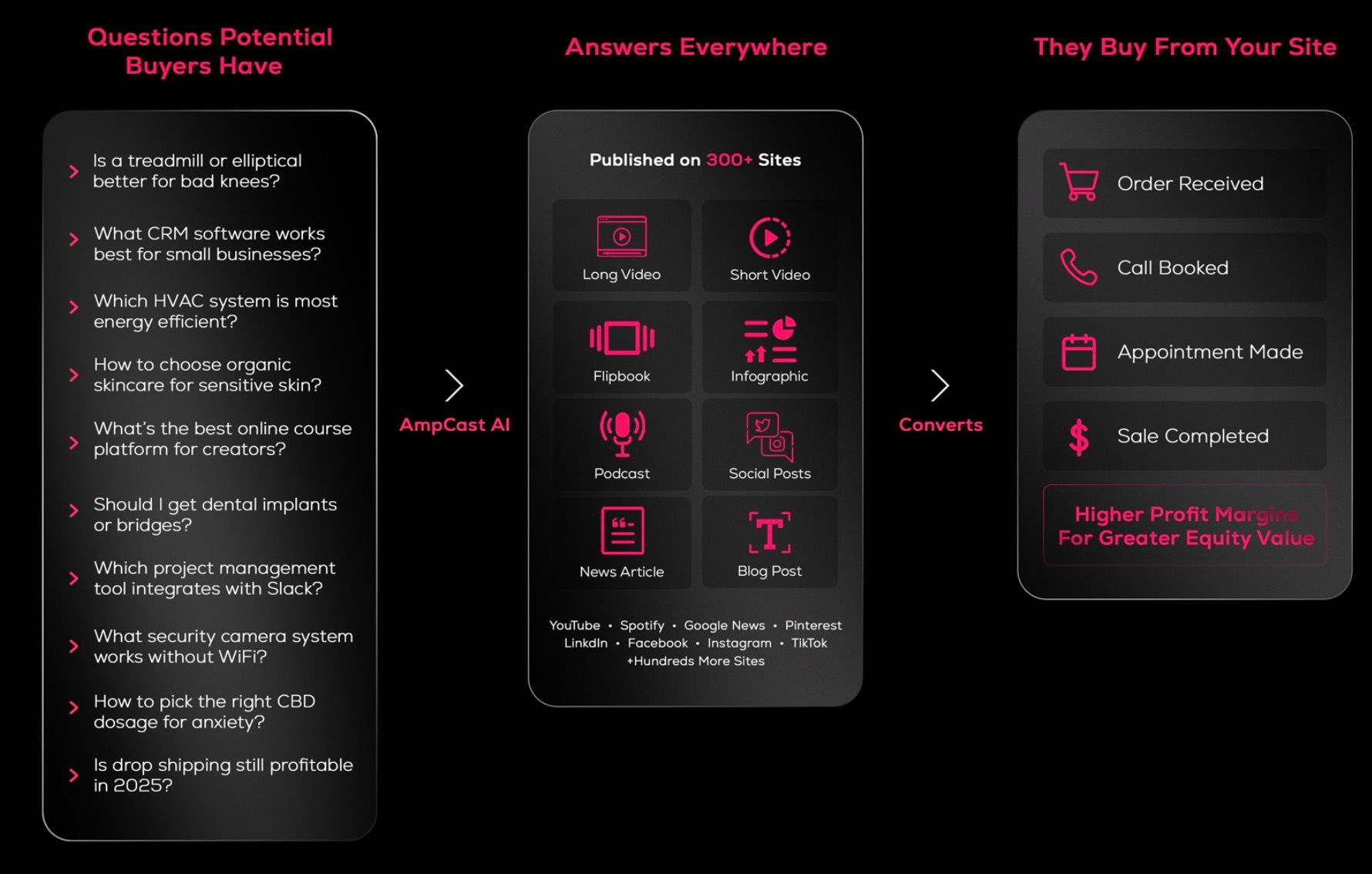
- A multicasting marketing strategy turns one content topic into 8 formats published across 300+ platforms, capturing buyers at every stage of their research journey.
- Brands relying solely on paid ads are bleeding money — 19 out of 20 clicks leave a competitor’s funnel to research elsewhere, and most brands are invisible during this critical phase.
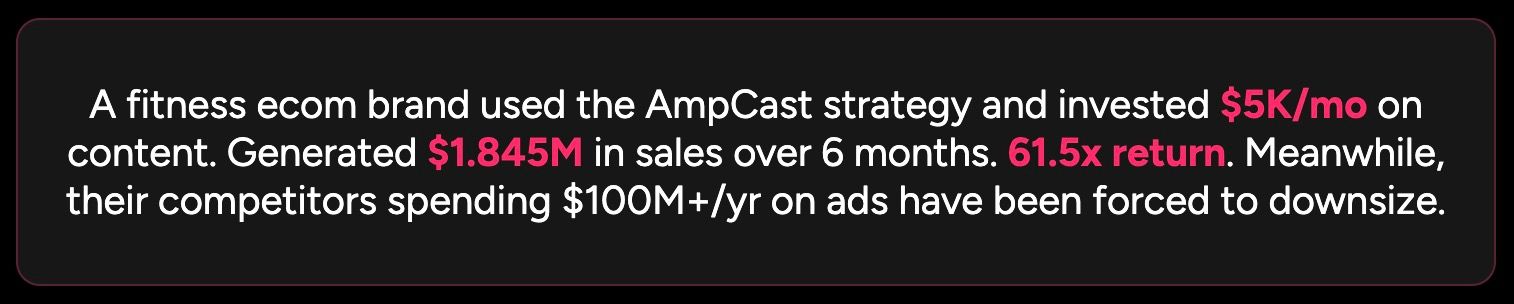
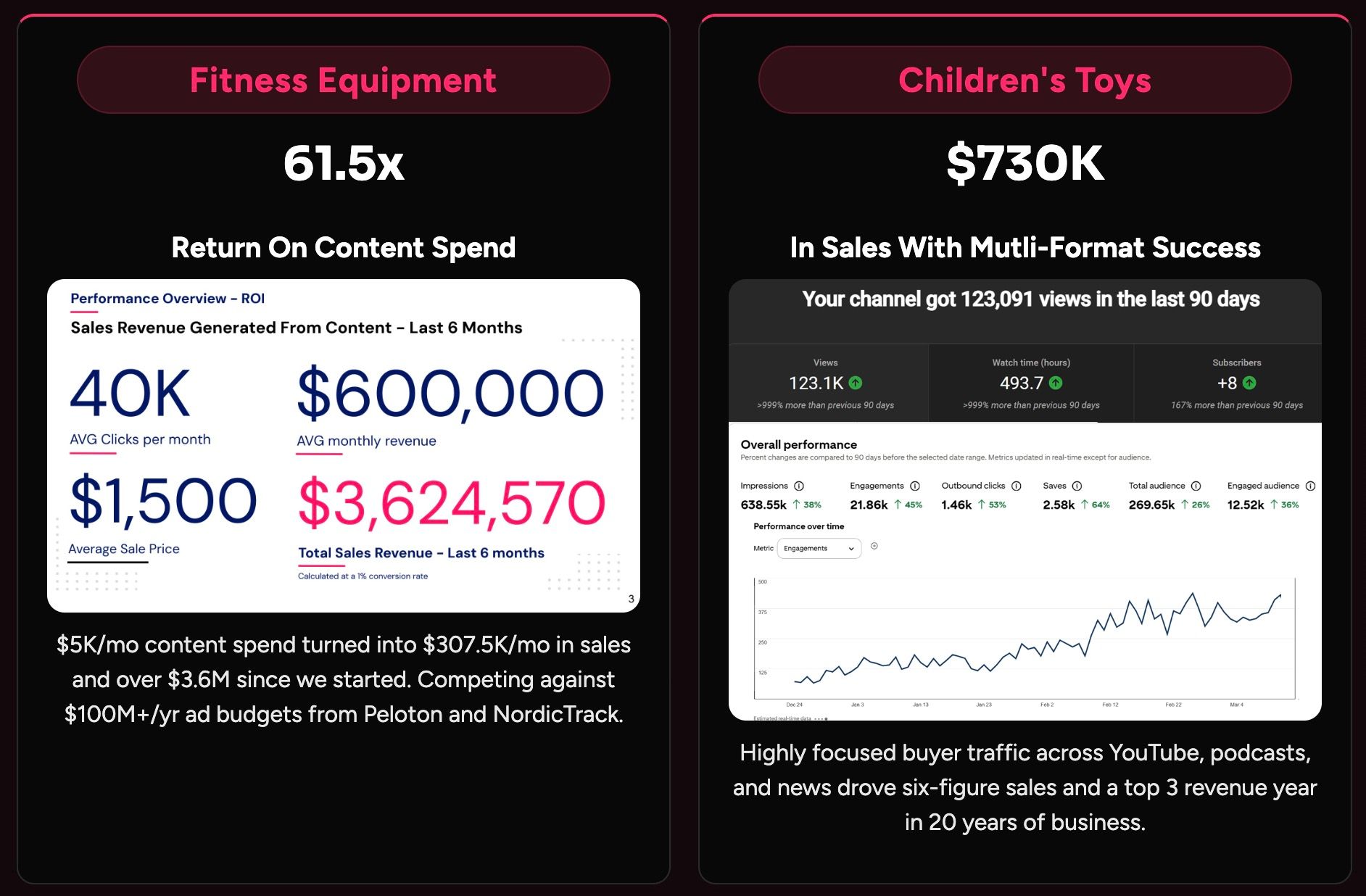
- A fitness equipment brand spending just $5K/month on content generated $307,500/month in sales — a 61.5x return — while competing against TWO $1B behemoth competitors with $100M+ ad budgets.
- MultiCast AI powers this multicasting approach, replacing entire content teams with a workflow that takes as little as 10–20 minutes per day.
- The compounding nature of multicasting campaigns means traffic and sales keep growing long after content is published — find out how the math works inside.
Most marketers are fighting billion-dollar brands with a slingshot — and MultiCast AI just figured out how to make that slingshot win every time.
The idea that outspending your competition is the only path to market dominance is one of the most expensive myths in modern marketing. When two of the biggest names in fitness equipment are dropping over $100 million annually on advertising, the conventional wisdom says smaller brands simply cannot compete. But a little-known fitness equipment company quietly disproved that theory by spending $5,000 a month on content and walking away with $307,500 in monthly sales — a return of 61.5x. The strategy behind that result is called multicasting, and it is reshaping how smart brands win buyers without burning through ad budgets.
A $5K/Month Content Budget Just Outperformed a $100M+ Ad Spend
The numbers sound impossible until you understand the mechanics. Over 12 months, this fitness brand published content consistently using a multicasting model. By month 12, they were generating $307K+ per month in attributable sales. Over the full run, that translated to more than $3.6 million in total revenue — all driven by a content investment that most brands would consider a rounding error on their marketing budget.
The David vs. Goliath Setup in Modern Marketing
Here is what makes this story more than just a feel-good underdog tale. These billion-dollar entities are not poorly run companies — they have massive teams, sophisticated ad tech, and decades of brand recognition. Yet during the same period this small brand was scaling through content, their giant competitors were being forced to downsize. That is not a coincidence. It is a signal that the rules of buyer attention have fundamentally changed.
Buyers no longer move in a straight line from ad to purchase. They see an ad, get curious, and immediately go research. They search Google, watch YouTube videos, listen to podcasts, scroll through social media, and read blog comparisons before making a decision. The brand that shows up during that research phase — consistently, helpfully, and across multiple formats — wins the sale. A massive paid ad budget only covers the first touchpoint. Multicasting covers all the rest.
Why Massive Ad Budgets Are Losing Ground to Multicasting
Paid advertising operates on a brutal economic model: the moment you stop paying, the traffic stops. Every dollar spent on ads is a one-time transaction. Your margins shrink as competitors bid up the same keywords and audiences. Your ROI drops as your ad spend scales. And every single day, you are starting from scratch with zero compounding benefit from yesterday’s investment.
Content published through a multicasting strategy behaves in the exact opposite way. A single piece of content published today can still be driving qualified buyer traffic in month 12, 24, and beyond. Each new piece of content builds on the last. Traffic diversifies across platforms. And the longer you publish consistently, the wider the gap grows between you and every competitor still handcuffed to paid ads alone. According to HubSpot and Jobera Multi-Channel Marketing Statistics, brands using content-driven multicasting strategies see up to 300% more leads at 66% lower lead costs compared to paid-ad-only approaches.
What Multicasting Marketing Strategy Actually Is
Multicasting is not simply “being on multiple platforms.” That misses the point entirely. A multicasting marketing strategy is a systematic approach to taking a single high-value topic and transforming it into multiple content formats, each one optimized for the platform it lives on, then distributing all of it simultaneously to capture buyer attention across every channel where research happens.

Think of it as owning the entire research journey rather than just one touchpoint. When a buyer sees your ad and then goes to Google, your article is there. When they search YouTube for a comparison video, your content appears. When they ask ChatGPT for a recommendation, your brand has the authority signals that push it into the answer. This is not marketing spray-and-pray — it is deliberate, compounding, buyer-intent-driven visibility at scale.
One Topic Turned Into 8 Content Formats
The operational engine of multicasting is format multiplication. One topic — say, “best home fitness equipment for small spaces” — gets transformed into eight distinct content formats, each designed to perform on its native platform. This is not repurposing in the lazy “copy and paste” sense. Each format is built for how people actually consume content in that environment.
Content Format
Primary Platform
Buyer Touchpoint
Long-Form Blog Article
Google / Website
Search research phase
YouTube Video
YouTube / Google Video
Visual comparison research
Podcast Episode
Spotify / Apple Podcasts
Passive awareness & trust building
Short-Form Reel
Instagram / TikTok / YouTube Shorts
Discovery & social proof
Infographic
Pinterest / Social / Blog
Quick-decision visual reference
Social Post
LinkedIn / Facebook / X
Community trust & engagement
Flipbook / Slide Deck
SlideShare / Email
Deep-dive authority content
News / PR Article
News sites / Google News
Brand credibility & trust signals
That single topic, published across these eight formats, does not just reach more people — it reaches the same buyer multiple times, in different contexts, through different trust signals. By the time that buyer is ready to purchase, your brand is not one option among many. It is the obvious choice.
The 300+ Platform Distribution Engine
Publishing eight formats manually across every relevant platform would require a full content team working overtime. The multicasting model solves this through automated distribution — pushing optimized content to 300+ platforms simultaneously. This includes search engines, video platforms, podcast directories, social networks, news aggregators, and AI-indexed content hubs. The result is omnipresence without the operational overhead that would normally make it impossible for a small brand to execute.
How It Captures the 93% of Buyers Researching Before They Buy
Here is a number that should change how every marketer thinks about their strategy: 93% of buyers conduct independent research before making a purchase decision. They are not just clicking your ad and buying. They are leaving, investigating, comparing, reading reviews, watching videos, and asking questions — often across dozens of touchpoints. Most brands invest everything into the 7% moment when someone is ready to buy and ignore the entire journey that determines whether a buyer ever reaches that moment. Multicasting inverts that equation entirely, building brand presence across the full 100% of the buyer journey.
Why Big Ad Budgets Are Bleeding Out
“Traffic stops when you stop paying. Margins shrink as competition bids up. ROI drops as ad spend scales. And you start from scratch every single day.”
The paid advertising model has a structural flaw that no amount of optimization can fix. It is fundamentally extractive rather than compounding. Every dollar you spend buys a moment of attention — not an asset. The second your campaign pauses, your visibility disappears. Meanwhile, your competitors are bidding on the same audiences, driving up your cost-per-click, and shrinking your margins with every passing quarter.
There is also the trust problem. Buyers have become increasingly sophisticated at recognizing and dismissing ads. Banner blindness is real. Ad fatigue is accelerating. And with the rise of ad blockers, a significant slice of your target audience may never see your paid content at all. The brands winning right now are the ones that show up organically — as helpful, credible resources — during the moments when buyers are actively looking for answers.
Compare the two models side by side and the compounding advantage of multicasting becomes undeniable. Paid ads offer 0.5x to 5x typical returns, with traffic that evaporates the moment spending stops, no cumulative benefit, and a single point of failure that puts your entire revenue stream at risk. A multicasting content strategy, by contrast, delivers 5x to 50x typical returns according to Media Strobe data, with traffic that compounds month over month, each new piece building on the last, and diversified traffic sources that insulate your business from any single platform change.
The Leaky Funnel Problem Costing Brands Millions
Imagine spending $50,000 a month driving traffic to a landing page, only to have 95% of those visitors leave without buying — and then get captured by a competitor’s content. That is not a hypothetical. That is the standard paid-ads-only funnel, and it hemorrhages money at every stage. Visitors arrive, feel uncertain, go research, and if your brand has no content presence during that research phase, you have just paid to send a warm lead directly to whoever does.
The fix is not spending more on ads. It is plugging the leak with content that follows buyers through their research journey and keeps bringing them back to your brand.
19 Out of 20 Clicks Leave to Research Elsewhere
The data behind the leaky funnel is striking. Approximately 19 out of 20 clicks that enter a competitor’s funnel leave to research elsewhere before converting. That means up to 95% of the buyer demand your competitors are paying to generate is potentially capturable — if your brand has the content presence to intercept those buyers mid-research. This is what Media Strobe refers to as capturing clicks “leaking” from competitor funnels, and it is one of the most underutilized competitive advantages in digital marketing today.
Where 51 Billion Daily Searches Are Actually Happening
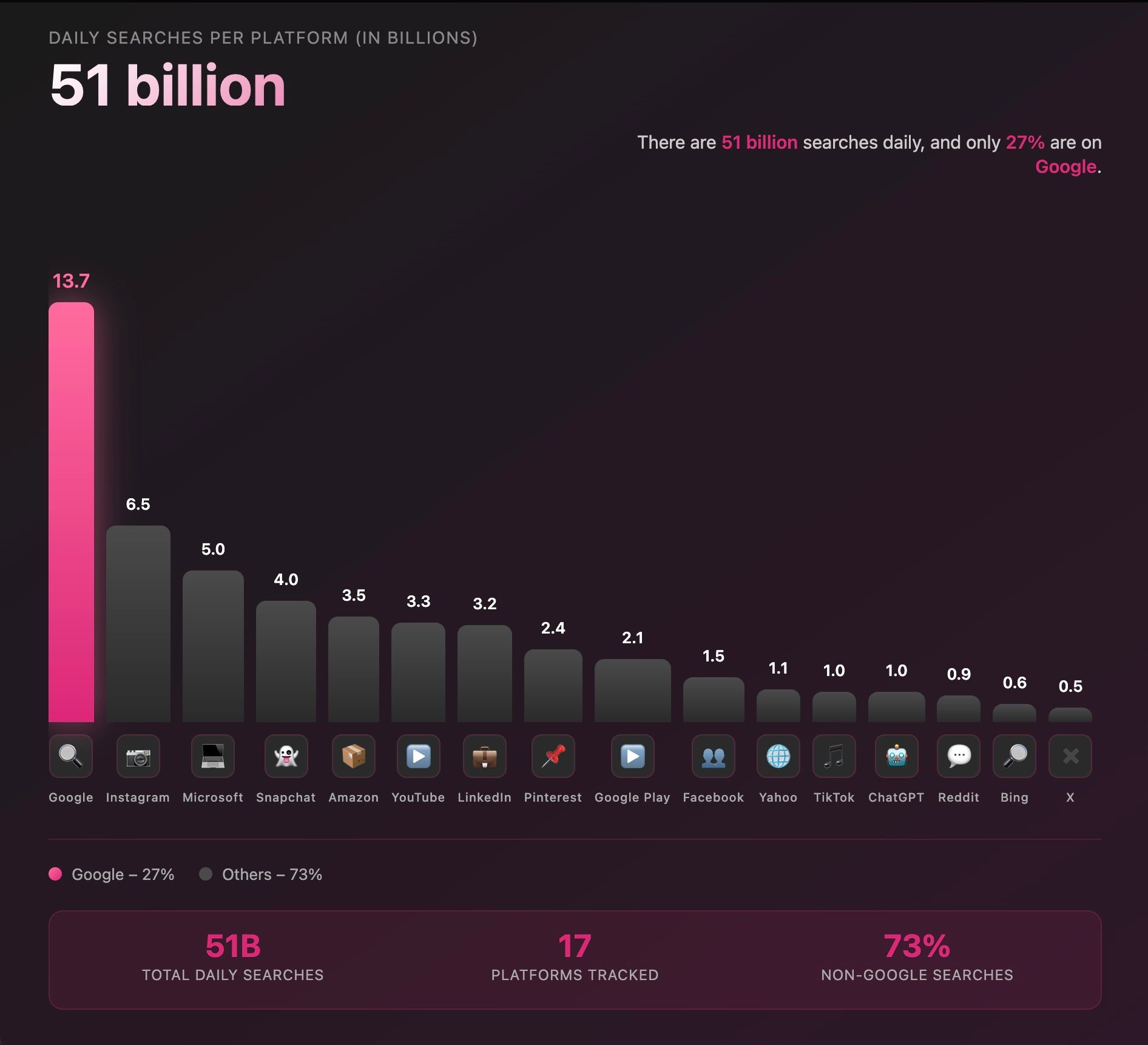
Google processes approximately 8.5 billion searches per day. But when you factor in YouTube, TikTok, Amazon, Pinterest, Reddit, ChatGPT, and every other platform where buyers actively search for information, the total daily search volume across the internet climbs to an estimated 51 billion queries. The brands publishing multicasted content across all of these platforms are fishing in every pond simultaneously. Brands running paid ads on one or two platforms are fishing in a single stream — and paying premium prices for every cast.
The M.A.R.C. Method: How Multicasting Works in Practice
Every effective multicasting strategy runs on four interlocking principles. Miss one and the whole system underperforms. Get all four working together and the results compound in ways that make paid-ad-only strategies look primitive by comparison. The M.A.R.C. method — Multiformat, Authority, Reach, Convert — is the operational framework that turns content publishing into a predictable revenue engine.
Be Multiformat: Reach Buyers in Every Way They Consume Content
Different buyers consume information differently. Some read long-form articles. Others watch YouTube videos while cooking dinner. Some listen to podcasts during their commute. A significant and growing segment asks ChatGPT directly for product recommendations. A multicasting strategy does not pick one format and hope for the best — it shows up in all of them. When one buyer topic gets transformed into videos, podcasts, articles, reels, infographics, blog posts, social posts, and flipbooks simultaneously, your brand stops being a single voice in one channel and becomes an omnipresent authority across the entire research landscape.
Gain Authority: Publish Where Google and AI Already Trust
Authority is not just about what you publish — it is about where you publish it. Google and AI platforms like ChatGPT pull answers from sources they have already determined to be credible. When your content lives on high-authority news sites, established podcast directories, and indexed video platforms, it inherits a layer of trust that a brand-new website cannot manufacture overnight. Publishing through a multicasting model means your content is appearing on platforms that search engines and AI engines already trust, which accelerates how quickly your brand gets surfaced during buyer research queries.
Reach and Compound: How Traffic Stacks Over Time
This is where multicasting creates its most unfair advantage. A paid ad delivers a burst of traffic that ends the moment the campaign stops. A piece of multicasted content published today becomes a permanent asset. It gets indexed, shared, referenced, and discovered — continuously — without any additional spend. Publish consistently for 12 months and you do not have 12 isolated content pieces. You have a compounding library of interconnected assets, each one reinforcing the others, each one adding to a cumulative traffic base that grows month after month. The fitness equipment brand in our case study did not hit $307K/month in sales on day one. They hit it because they published consistently and let the compounding effect do its work.
Convert: Winning the Research Phase Wins the Sale
The research phase is where most purchase decisions are actually made — and most brands are completely invisible there. A buyer who has encountered your brand across multiple formats, multiple platforms, and multiple touchpoints during their research journey arrives at the purchase moment already trusting you. They are not comparing you against competitors anymore. They have already done that comparison, and your content guided the outcome. Winning the research phase does not just improve conversion rates — it makes the actual conversion almost inevitable.
Real Results From Multicasting Across Different Niches
Theory is only as valuable as the results it produces. The multicasting model has been stress-tested across wildly different industries — from fitness equipment to fine wine to medical devices — and the pattern holds across all of them. Brands that commit to consistent, multiformat content publishing see compounding returns that paid advertising simply cannot replicate. These are not projections or estimates. These are documented outcomes from real brands in real markets.
Fitness Equipment: 61.5x Return Against 2 Enormous Competitors
The flagship case study in the multicasting playbook is a fitness equipment brand that invested $5,000 per month in content while competing directly against two seperate billion-dollar companies with combined advertising budgets exceeding $100 million annually. The outcome was not a moral victory. It was a financial demolition. The brand generated $307,500 per month in content-attributable sales, a 61.5x return on content spend. Over the full period tracked, total revenue driven by the multicasting strategy exceeded $3.6 million.
What makes this result even more striking is what happened to the competition during the same period. While this small brand was compounding its content advantage month over month, the big boys were making headlines for layoffs, restructuring, and declining market positions. Massive ad budgets did not protect them. A brand that owned the research journey did not need the same budget to win the buyer.
Children’s Toys: $730K in Sales From Multi-Format Content
A children’s toy brand applied the multicasting strategy and generated $730,000 in sales through multi-format content distribution. The toy market is brutally competitive, dominated by legacy brands with deep retail relationships and substantial marketing infrastructure. Yet by consistently showing up during parent research moments — the late-night Google searches, the YouTube “best toys for 5-year-olds” queries, the parenting blog comparisons — this brand captured buyer attention that competitors with bigger budgets completely missed.
Fine Wine: 1,100% Growth With Zero Ad Spend
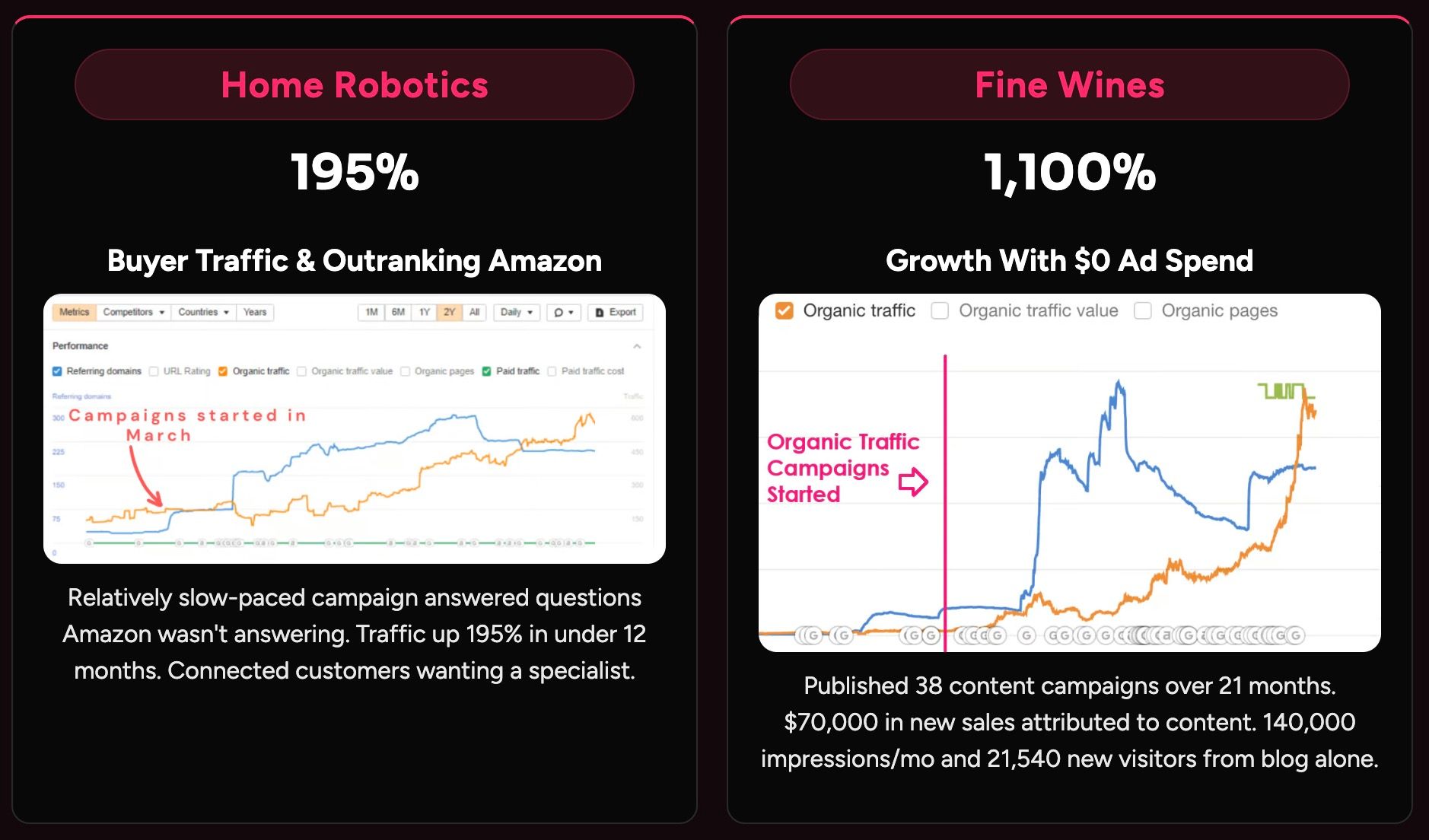
Fine wine is a category where brand heritage and prestige typically do all the marketing heavy lifting. A challenger brand with no legacy reputation and zero paid ad spend used multicasting to achieve 1,100% growth — an outcome that should be impossible by traditional marketing logic. The strategy worked because wine buyers are among the most research-intensive consumers in any category. They read reviews, watch sommelier videos, listen to wine podcasts, and compare varietals across dozens of touchpoints before purchasing.
By publishing across all of those formats simultaneously, the brand became the most helpful, most visible presence across the entire fine wine research journey — not through prestige or heritage, but through sheer content omnipresence. The key drivers of that growth included:
- Long-form blog content targeting specific varietal and pairing search queries
- YouTube video content featuring tasting notes and cellar recommendations
- Podcast appearances and branded audio content on wine enthusiast platforms
- Infographics on food pairing distributed across Pinterest and lifestyle publications
- News and PR content published on high-authority food and lifestyle media sites
- Social content optimized for the visual storytelling expectations of wine audiences
The 1,100% growth figure is not a spike from a single viral moment. It is the accumulated result of sustained multicasting that built brand authority across every channel where wine buyers spend their research time — and kept compounding long after the initial content was published.
Tech Accessories: 76% More Leads in 90 Days While Outranking Apple
In the tech accessories space, outranking Apple in search results is the kind of goal that sounds like a joke until you see the screenshot. A tech accessories brand using the multicasting strategy achieved a 76% increase in leads within 90 days and secured top-3 search rankings for competitive product queries — rankings that pushed Apple-branded content down the results page. This is what happens when a brand consistently publishes highly targeted, buyer-intent-aligned content across multiple formats while a tech giant relies on brand authority alone to carry its search presence.
Medical Device: Millions in Sales From 113 Content Pieces
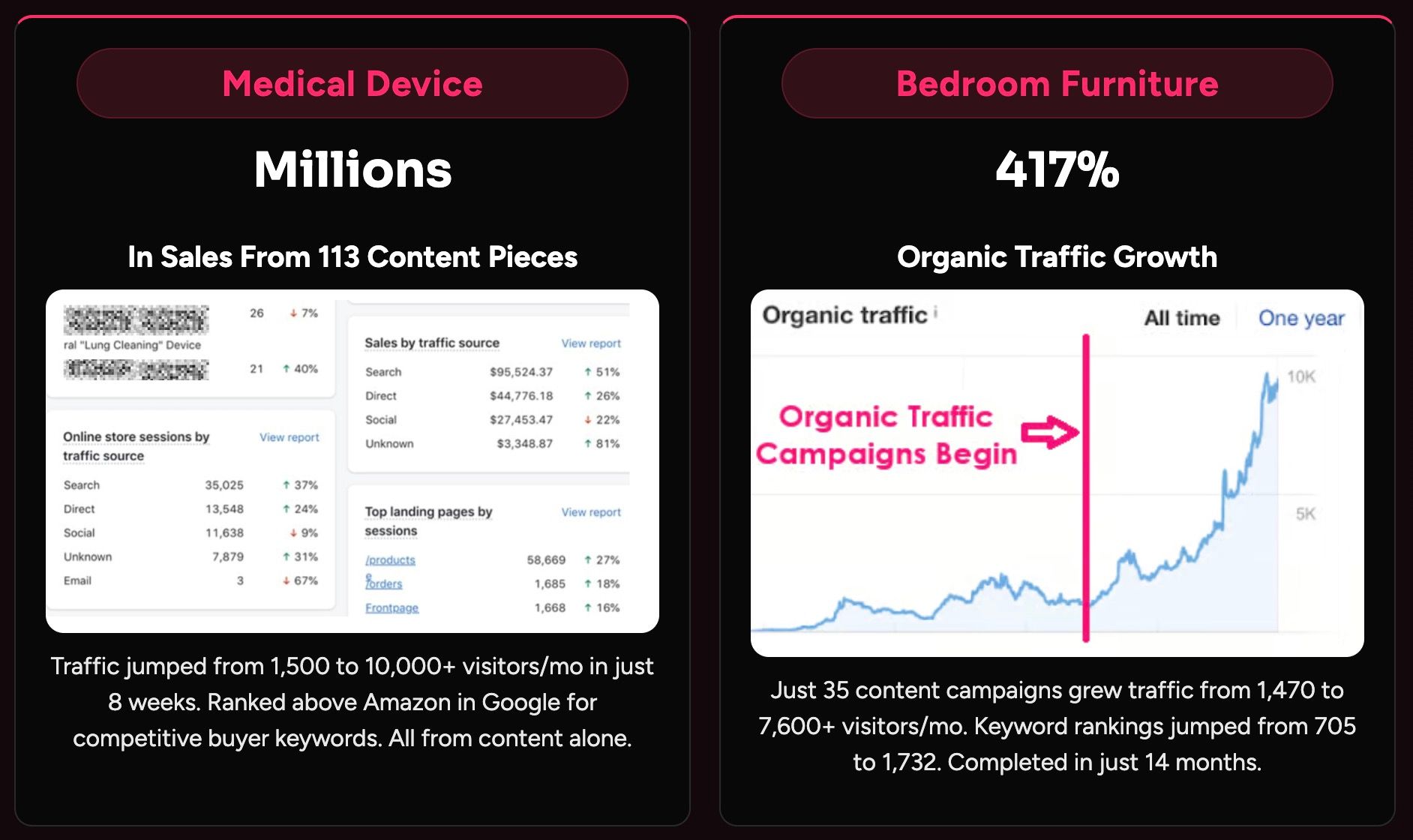
The medical device case study demonstrates that multicasting works even in highly regulated, high-consideration purchase categories. Publishing 113 content pieces across multiple formats — each one carefully addressing the specific questions, concerns, and research needs of medical device buyers — generated millions in attributable sales. In a category where trust is the primary purchase barrier, consistent multicasting built exactly the kind of credibility that cold advertising cannot manufacture. Buyers arrived already educated, already confident, and already sold — because the content had done all the trust-building work long before any sales conversation began.
How Multicasting Makes Your Paid Ads Work Harder
One of the most powerful and underappreciated dynamics of a multicasting strategy is what it does to your existing paid ad performance. The relationship is not competitive — it is multiplicative. When a buyer sees your paid ad and then goes to research your brand, finding rich, helpful, credible content across multiple platforms does not just reassure them. It actively accelerates their path to purchase. Your ad created the curiosity. Your multicasted content closes the gap between curiosity and conversion. The result is that your paid ad budget goes further, your cost-per-acquisition drops, and your overall marketing ROI climbs without increasing ad spend by a single dollar.
The compounding effect runs in both directions. Better-performing ads generate more awareness, which drives more research queries, which your multicasted content captures and converts. More content authority signals push your organic rankings higher, which reduces the volume of paid traffic you need to buy in the first place. Brands running both strategies in parallel — paid ads for immediate demand capture and multicasting for research phase dominance — are operating with a structural advantage that brands relying on either channel alone simply cannot match. According to HubSpot Content Marketing Statistics 2024, content-supported campaigns consistently outperform ad-only campaigns on lead quality, conversion rate, and long-term customer lifetime value.
Content Builds Trust During the Research Phase After Ad Exposure
When a buyer sees your ad, the clock starts on their research journey — not their purchase journey. The average buyer exposed to a brand through paid advertising will conduct between 3 and 12 additional research touchpoints before converting. If your brand has no content presence during those touchpoints, you have effectively paid to generate interest for whoever does show up during the research phase. Multicasted content fills that gap, meeting buyers with helpful, authoritative information at precisely the moment they are most receptive to it. By the time they are ready to buy, the trust is already built.
Lower Lead Costs and Higher Conversion Rates Working Together
The math on multicasting-supported ad campaigns is compelling. When buyers arrive at your offer already familiar with your brand from organic content touchpoints, they convert at significantly higher rates than cold traffic. Higher conversion rates mean your fixed ad spend generates more customers, which mechanically lowers your cost per lead. According to Jobera Multi-Channel Marketing Statistics, brands using multi-channel content strategies alongside paid advertising report up to 66% lower lead costs compared to paid-only approaches. That cost reduction does not come from spending less on ads — it comes from making every ad dollar work harder through content-driven trust.
How to Start Multicasting Without a Big Team or Budget
The single biggest misconception about multicasting is that it requires a large content team, a significant production budget, and months of setup before anything goes live. None of that is true. The operational barrier to multicasting has collapsed almost entirely with the emergence of AI-powered content platforms that handle research, creation, formatting, and distribution automatically. What once required a team of writers, video editors, graphic designers, podcast producers, and a dedicated distribution manager can now be executed by a single person in a fraction of the time.
- Topic Research: AI tools surface thousands of high-profit buyer questions in seconds, eliminating hours of manual keyword and competitor research
- Content Creation: A single input topic gets transformed into 8 optimized content formats automatically, each one built for its specific platform
- Distribution: Automated publishing pushes content to 300+ platforms simultaneously without manual uploading or scheduling across individual accounts
- Performance Compounding: Each published piece builds on previous content, strengthening domain authority and search visibility month over month
- Budget Efficiency: The entire system operates for roughly 800 credits per full content campaign, with flexible format mixing based on your specific goals
The entry point for multicasting is genuinely accessible. Brands that have historically been priced out of content marketing — because they could not afford to hire and manage a full content production team — can now execute a professional-grade multicasting strategy at a fraction of the cost. The fitness equipment brand generating $307,500 per month in sales was doing it on a $5,000 per month content budget. That is the kind of math that makes multicasting not just attractive but urgent for any brand still relying exclusively on paid advertising.
The key is consistency over perfection. Multicasting rewards brands that publish regularly and let the compounding effect accumulate over time. A brand that publishes consistently for 12 months will have built a content library and authority base that a competitor cannot replicate overnight, regardless of how much they are willing to spend to catch up. The earlier you start, the wider the competitive moat grows.
The 10 to 20 Minutes Per Day Content Workflow
The reason most brands never execute a content strategy is time — or more accurately, the perception that content requires enormous amounts of it. A properly structured multicasting workflow, supported by AI-powered tools, requires approximately 10 to 20 minutes of active work per day. That time covers topic selection, light input and direction-setting, and reviewing automated outputs before distribution. The AI handles the heavy lifting: research, writing, formatting, visual creation, and publishing across all platforms simultaneously.
This is not a “set it and forget it” system that produces generic, low-quality content. It is a guided process where your brand’s expertise and positioning inform the inputs, and the AI executes the production and distribution at a scale that would be impossible for a human team to match manually. The output quality is professional-grade across all eight formats — not because AI has replaced human judgment, but because human judgment is applied strategically at the input stage, where it matters most.
Replacing Writers, Editors, and Designers With AI-Powered Publishing
MultiCast AI was built specifically to replace the operational overhead of a full content team — writers, video editors, graphic designers, podcast producers, and distribution managers — with a single platform that executes all of those functions automatically. For brands that have previously tried to build content programs and burned out under the operational weight of managing multiple specialists and workflows, this changes the entire equation. The content production capability of a six-person team is now accessible through a workflow that one person can manage in under 20 minutes a day, at a cost that delivers 5x to 50x returns on investment based on documented case study results.

Multicasting Is the Long Game That Keeps Paying Off
Paid advertising is a sprint. Multicasting is a marathon that keeps accelerating. Every piece of content you publish becomes a permanent asset — indexed, discoverable, and generating buyer attention without any additional spend. After 6 months of consistent publishing, you have a compounding library working for you around the clock. After 12 months, the gap between your brand’s content authority and a competitor who started later is almost impossible to close quickly, regardless of budget. The fine wine brand that achieved 1,100% growth did not get there through a single campaign. The fitness equipment brand generating $307K per month did not hit that number in week one. Both results are the product of consistent multicasting that stacked over time until the momentum became self-sustaining.
The brands that will dominate their markets over the next decade are not necessarily the ones with the biggest ad budgets. They are the ones building content authority right now — showing up during buyer research, earning trust across every platform, and letting the compounding effect of consistent multicasting create a competitive moat that paid advertising simply cannot buy. The window to build that advantage before your competitors figure it out is open. But it will not stay open indefinitely.
Frequently Asked Questions
The following questions come up consistently from marketers evaluating whether a multicasting strategy is right for their brand. The answers cut through the noise and get straight to what matters.
What is a Multicasting Marketing Strategy?
A multicasting marketing strategy is the practice of taking a single buyer-focused content topic and transforming it into multiple content formats — videos, podcasts, articles, reels, infographics, blog posts, social posts, and flipbooks — then distributing all of them simultaneously across every platform where your buyers research and make decisions. It is designed to create omnipresent brand visibility across the full buyer research journey, not just at the single touchpoint where a paid ad lands.
How Does Multicasting Compare to Traditional Paid Advertising?
Traditional paid advertising delivers immediate but temporary traffic that stops the moment you stop spending. It offers typical returns of 0.5x to 5x, with margins that shrink as competition increases and costs that rise with scale. Multicasting delivers compounding traffic that grows over time, with typical returns of 5x to 50x based on documented case studies. Content published today keeps generating buyer attention for years. Paid advertising and multicasting are not mutually exclusive — when used together, multicasting dramatically improves the performance and ROI of paid ad campaigns by building trust during the research phase that follows ad exposure. For more insights, explore this comparison of paid ads vs. SEO as an eCommerce traffic strategy.
How Long Does It Take to See Results From a Multicasting Strategy?
The timeline for multicasting results depends on publishing consistency, niche competitiveness, and content quality — but the general pattern across documented case studies follows a predictable arc:
- Months 1 to 3: Content gets indexed and begins building authority signals across platforms; early organic traffic emerges from long-tail search queries
- Months 3 to 6: Traffic begins compounding as individual pieces gain traction and interconnected content strengthens overall domain authority
- Months 6 to 12: Significant, measurable revenue attribution becomes visible; the tech accessories brand saw 76% more leads within 90 days of consistent publishing
- Month 12 and beyond: Full compounding effect kicks in; the fitness equipment brand hit $307,500 per month in attributable sales by this stage
The brands that see the fastest results are those that publish consistently from day one rather than treating content as a periodic initiative. Multicasting rewards volume and consistency — not sporadic publishing bursts.
It is also worth noting that multicasting does not require you to wait months before it impacts your paid ad performance. The trust-building effect of content can improve ad conversion rates relatively quickly, as buyers who encounter your organic content during research are pre-qualified and pre-sold before they ever interact with a sales page or rep.
Unlike paid advertising, where results are immediate but finite, every week of consistent multicasting publishing adds compounding value to everything that came before it. The question is not whether it works — the case studies across fitness, toys, wine, tech, and medical devices confirm that it does. The question is simply how long you are willing to let it compound before evaluating the return.
Do You Need a Large Team or Budget to Execute a Multicasting Strategy?
No. The entire operational premise of AI-powered multicasting platforms like Media Strobe is that you do not need writers, video editors, graphic designers, podcast producers, or a distribution team to execute a professional-grade multicasting strategy. The documented case studies include brands operating on content budgets as low as $5,000 per month — and generating returns of 61.5x on that spend. The workflow requires approximately 10 to 20 minutes of active daily input from a single person, with AI handling all production and distribution functions automatically. The barrier to entry is lower than at any previous point in the history of content marketing.
Can Multicasting Work Alongside an Existing Paid Ad Campaign?
Not only can it work alongside paid advertising — it actively makes your paid ads perform better. When buyers see your ad and then research your brand, discovering rich multicasted content across multiple platforms, they convert at higher rates than cold traffic. This directly lowers your cost per lead and increases the ROI of every dollar you are already spending on paid ads.
The two strategies operate in complementary phases of the buyer journey. Paid ads capture immediate demand at the moment of intent. Multicasting builds and captures demand throughout the extended research phase that precedes and follows ad exposure. Brands running both simultaneously benefit from traffic diversification, compounding organic growth, lower paid ad costs, and the risk protection that comes from not being 100% dependent on a single traffic source that stops the moment the budget does.
Why Choose a MultiCast Campaign by Media Strobe?
All MultiCast campaigns are expertly created to answer highly relevant questions about your service/product that your future customers are asking (all over the internet) before they make their purchase decision. Your MultiCast is distributed to hundreds of high authority sites IN THE EXACT WAY that Google and AI love, and in 8 formats so that your answers show up everywhere people are asking questions.
The benefits of running a MultiCast campaign are:
- Increased visibility (leading to increased ranking)
- Increased warm/hot traffic
- Reduced customer acquisition costs
- Predictable growth that can be scaled
- Generate more revenue with higher net profit
- True control over your lead generation
- Better return on paid ads