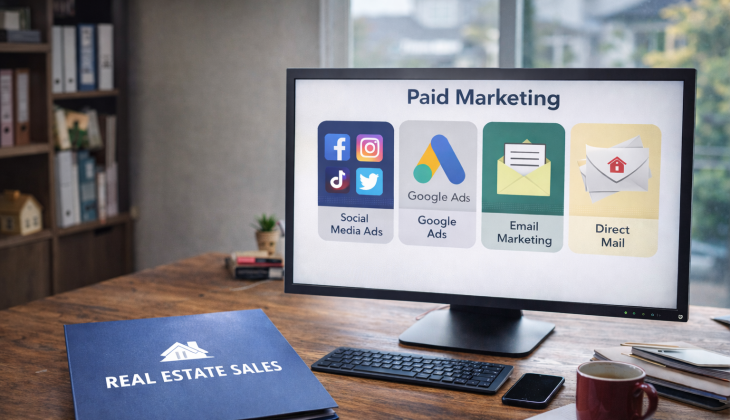
Paid Advertising Strategy · 2026 Framework · Local Business
The playbook for local paid ads has completely changed. What worked last year is now obsolete. With automated platforms and dying cookies, here are the 3 rules to stop burning cash and start building your 2026 advertising engine.
Media Strobe Strategy Team · Updated 2026 · 12 min read
Key Takeaways
Creative is the new targeting — your ads message and visuals are now the primary tool to find your ideal customer as third-party cookies die and automation takes over.
First-party data ownership is mandatory — collect customer information with consent through email lists, purchase history, and phygital experiences to compete effectively.
AI amplifies human-led creative — use artificial intelligence for budget allocation and testing while focusing on powerful human-centric messaging that machines can’t replicate.
The 70-20-10 budget rule prevents waste — allocate 70% to proven winners, 20% to optimization, 10% to experimentation for balanced growth without reckless spending.
Measure what matters — focus on conversion rate, customer lifetime value (CLV), and return on ad spend (ROAS) instead of vanity metrics like likes and views.
The playbook for local paid advertising has completely changed. What worked in 2025 is now obsolete. If you’re still running ads the old way, platforms are automatically burning your budget while delivering diminishing returns.
The biggest shift in 2026: your ad creative is your targeting. With fully automated ad platforms and dying cookies, old-school audience selection is losing its power fast. Your ads message and visuals are the primary tools you have left to find your ideal customer online.
In this guide, we’ll build the complete 2026 strategy — mastering data, using AI effectively, and creating ads that actually convert.
Watch the Complete Video Breakdown
Media Strobe’s complete breakdown of the 3 rules to stop burning cash on paid advertising in 2026.
What Broke the Old Paid Advertising System
It all starts with one thing: the death of the third-party cookie. For years, advertisers bought data from brokers to track users across the web, building detailed profiles that enabled precise targeting.
Strict new privacy regulations have made this model obsolete. The winners of 2026 will be businesses who own their customer data — collected with consent. This includes email lists, purchase history, and behavioral signals from direct customer interactions.
⚠️ Critical Shift: Privacy Regulations
New state laws are actively banning the sale of precise location data. Browser restrictions block third-party tracking by default. Consumer privacy expectations have fundamentally changed.
Bottom line: Relying on old data sources is now a major legal and financial risk. First-party data isn’t optional — it’s mandatory for survival.
How Data Scarcity Changes Search and Display Advertising
This data scarcity fundamentally changes how paid ads work. Relying only on exact keywords is no longer enough to succeed. Success now means targeting audiences based on behavior signals and your own first-party data.
Think broader terms matched with clear intent. If targeting is automated and third-party data is gone, how can a local business possibly compete effectively?
The answer is by partnering with artificial intelligence. AI is now a mandatory tool for budget allocation, testing, and behavioral prediction.
The 3 Rules to Stop Burning Cash in 2026
To succeed in this new environment, local businesses must master three interconnected pillars. These aren’t optional tactics — they’re survival requirements.
Three Pillars of 2026 Paid Advertising Success
|
Rule 01 Build & Own First-Party Data Collect customer information with consent through email lists, purchase history, loyalty programs, and phygital experiences. Your data is your competitive moat. |
Rule 02 Use AI to Amplify Human-Led Creative Let AI handle automation, budget allocation, and testing. You focus on powerful human-centric creative that machines can’t replicate. Creative is your new targeting. |
Rule 03 Measure What Matters Focus on conversion rate, customer lifetime value (CLV), and return on ad spend (ROAS). Vanity metrics like likes and views don’t pay bills. |
Rule 1: Build and Own Your First-Party Data
The winners of 2026 will be businesses who own their customer data — collected with explicit consent through valuable exchanges. This isn’t about buying lists or scraping contacts. It’s about building direct relationships where customers willingly share information because you provide genuine value.
First-Party Data Collection Methods for Local Businesses
| Data Source | Collection Method | Value Exchange |
|---|---|---|
| Email Lists | Newsletter signups, lead magnets, gated content | Market insights, exclusive offers |
| Purchase History | Transaction tracking, CRM integration | Personalized recommendations |
| Phygital Experiences | QR codes, AR filters, interactive campaigns | Instant discounts, engagement |
| Loyalty Programs | Points systems, member accounts | Rewards, VIP access |
Rule 2: Use AI to Amplify Human-Led Creative
You compete by letting AI handle the automation while you focus on the one thing it can’t replicate: powerful human-centric creative. Remember the hook — creative is the new targeting. The AI finds people who react to your message. A better message finds better people.
High-Performing Creative Formats for 2026
Short-form video dominates — driving up to 30% more clicks than static formats. The key is the 3-second rule: you must immediately show the problem you solve.
Phygital experiences bridge channels — A QR code on a cup can unlock an AR filter and instant discount, creating memorable brand interactions that collect valuable data.
Search is now conversational — People converse with AI for advice. Your goal is to become the trusted answer the AI recommends through helpful, authoritative content.
But be warned: AI is not a magic bullet. Without careful human guidance, it will inefficiently burn through your budget testing variations that don’t align with your business goals.
The 70-20-10 Budget Allocation Rule
70%Proven Winners — Allocate the majority to campaigns, creatives, and channels that consistently deliver results
20%Optimization — Invest in testing variations of successful campaigns to incrementally improve performance
10%Pure Experimentation — Reserve budget for trying completely new approaches, channels, or creative formats
The Biggest Execution Mistake: Sending Traffic to Your Homepage
Sending paid traffic to your homepage is marketing suicide. Homepages serve multiple purposes — they confuse paid traffic that needs a single clear action.
Use a dedicated landing page with one clear action. Match the landing page message to the ad creative. Remove navigation distractions. Make the conversion path obvious and frictionless.
Your ads are running. Traffic is flowing. But how do you know if it’s truly profitable? The old metrics are misleading you.
Rule 3: Measure What Matters — Not Vanity Metrics
Likes and views are vanity metrics. They feel good, but don’t pay the bills. The businesses thriving in 2026 focus exclusively on metrics that directly tie to profitability.
Vanity Metrics vs Profit Metrics — What to Track in 2026
| Metric Category | What It Measures | Priority |
|---|---|---|
| Conversion Rate | Percentage of visitors who complete desired action (purchase, signup, call) | Critical |
| Customer Lifetime Value (CLV) | Total revenue expected from customer over entire relationship | Critical |
| Return on Ad Spend (ROAS) | Revenue generated for every dollar spent on advertising (e.g., 3:1 = $3 per $1 spent) | Critical |
| Likes & Views | Social engagement signals — feel good but don’t indicate buying intent | Low |
| Impressions | How many times ad was displayed — awareness metric without action | Low |
Connecting the Dots: How Everything Works Together
These three rules aren’t isolated tactics — they form an integrated system where each element amplifies the others.
The 2026 Paid Advertising Feedback Loop
Your Google Business Profile isn’t a static listing — It’s a dynamic signal to AI. Regular posts and fast review responses prove you’re active, improving ad platform algorithms’ confidence in your business.
Phygital QR codes aren’t just gimmicks — They’re data engines. Offer a discount for an email. Your creative becomes your first-party data collection mechanism.
This creates the ultimate 2026 advantage — Great creative captures valuable data, which fuels smarter AI to find more customers, generating more data, improving targeting accuracy in continuous cycles.
The Ultimate Secret: Shift from Selling to Helping
This reveals the ultimate secret for 2026: shift from selling to helping. Your creative solves a problem. Your landing page offers a clear path. And first-party data deepens understanding of customer needs.
This is the complete 2026 paid advertising machine — a feedback loop where great creative captures valuable data which then fuels smarter AI to find more customers.
Media Strobe’s MultiCast Campaign System
Implementing these three rules requires more than just running ads — it demands a complete content ecosystem that amplifies your message across every platform simultaneously.
Media Strobe MultiCast System
Publish Once, Distribute Everywhere — Automatically
Media Strobe’s MultiCast campaign system takes your core message and automatically distributes it across 300+ high-authority platforms simultaneously — including Google News, AP, Entrepreneur, and major industry publications.
How it amplifies your paid ads: When prospects see your paid ad, then discover you featured in Google News and Entrepreneur, your perceived authority skyrockets. This dramatically improves conversion rates because you’re building trust before the sale.
MultiCast transforms your content into first-party data collection engines across every channel — creating the exact feedback loop required for 2026 advertising success.
Don’t believe the myth that this is only for big corporations. These tools level the playing field, allowing smart local businesses to outmaneuver slower competitors.
Your 2026 Paid Advertising Action Plan
The online advertising environment is changing, but it is not chaotic. This strategic framework is your map to achieving real, sustainable growth.
Master These Three Pillars
1. Build and own your first-party data — Collect customer information with consent through valuable exchanges like email lists, loyalty programs, and phygital experiences
2. Use AI to amplify human-led creative — Let machines handle automation and testing while you focus on powerful messaging. Creative is your new targeting.
3. Measure what matters: ROAS and CLV — Focus exclusively on conversion rate, customer lifetime value, and return on ad spend. Vanity metrics are distractions.
Stop guessing and start building your 2026 advertising engine today. The businesses that master these three rules won’t just survive the changes — they’ll dominate their markets while competitors burn cash on outdated tactics.
2026 Paid Advertising Solutions
Media Strobe MultiCast Campaigns
Transform your paid advertising with Media Strobe’s complete MultiCast system — creating the feedback loop of great creative, first-party data collection, and AI-powered optimization that dominates 2026. Publish once, distribute across 300+ platforms, and watch your authority multiply while competitors struggle with outdated tactics.
Disclaimer: This article is for informational purposes only. Advertising results vary based on industry, market conditions, competition, creative quality, budget allocation, and numerous other factors. Performance statistics cited represent industry research findings and typical results for illustrative purposes. Media Strobe recommends developing customized paid advertising strategies based on your specific business objectives, target audience, and competitive environment. Always conduct appropriate testing and measurement before committing substantial advertising budgets.