Ecommerce Strategy · AI Search Optimization · Free Traffic Growth
How? As clearly as possible, answer the pre-purchase questions your future customers are asking as they research your product/service, and get your answer(s) distributed across all the platforms they’re searching on for answers.
Article at a Glance
- AI search free traffic is now critical for ecommerce profit margins: AI tools like ChatGPT, Google AI Overviews, and Perplexity now influence over 40% of searches — and the brands getting cited are capturing trust, clicks, and sales before a competitor’s ad even loads
- Free organic and AI-driven traffic directly improves your profit margins — every visitor who finds you without a paid click costs you nothing and compounds over time
- There are 5 specific signals that determine whether AI recommends your brand — and most ecom stores are missing at least three of them right now
- Small brands are already outranking bigger competitors in AI search — not because of budget, but because of content structure and cross-platform distribution
- A fitness ecom brand used this exact strategy to grow from 300 to 3,000 daily visitors — the breakdown of how it happened is inside this article
Table of Contents
- AI Is Already Sending Traffic to Your Competitors — Here’s How to Get Your Share
- The Research Journey: What Happens After Someone Sees Your Ad
- The 5 Signals That Determine If AI Recommends Your Brand
- The Authority Shortcut Small Brands Use to Outrank Bigger Competitors
- How to Own the Research Journey Across Every Platform
- Real Results: A Fitness Ecom Brand Goes From 300 to 3,000 Daily Visitors
- How Free Traffic Directly Increases Ecom Profit Margins
- How to Implement This Strategy for Your Ecom Brand This Week
- How Media Strobe Can Help
- Frequently Asked Questions
Your paid ads are working — but every sale they generate is quietly being taxed by the cost-per-click, and that tax never goes away.
Right now, a customer sees your ad, closes it, and types your brand name or product category into ChatGPT or Google. What comes back in that AI-generated answer determines whether they buy from you or your competitor. Most ecom brands have no idea this research moment exists, let alone that they can control it. Understanding AI search free traffic generation has become critical for ecommerce profit optimization.
The shift is already happening at scale. Google’s AI Overviews now appear in more than 40% of searches. Perplexity is growing rapidly as a pre-purchase research tool. ChatGPT is answering product questions for millions of buyers daily. Being cited in those answers is not a vanity metric — it is a revenue channel that costs nothing per click and builds on itself every month.
AI Search Free Traffic: How Competitors Are Already Winning
The businesses showing up in AI-generated answers are not always the biggest players in your category. They are the ones whose content is structured, distributed, and formatted in a way that AI tools can read, trust, and repeat back to users. That is an advantage any ecom brand can build — regardless of domain authority or ad budget. For comprehensive strategies on AI search visibility, Media Strobe tracks exactly how AI tools select and surface content for ecom brands.
How ChatGPT, Google AI Overviews, and Perplexity Decide Who to Recommend
Each AI platform pulls from a different mix of sources, but the selection logic follows a common pattern. AI tools are looking for content that directly and clearly answers a specific question, comes from sources that other credible sites reference or link to, and appears consistently across multiple platforms rather than just one. A ten-page website that answers buyer questions with precision will outperform a five-hundred-page site filled with thin, poorly structured content in almost every AI citation environment.
Ranking in Google and being cited by an AI tool are two related but distinct outcomes. You can hold the number one organic spot and still not appear in the AI Overview sitting above it. Conversely, a piece of content published on a high-authority third-party platform — a guest article, a podcast transcript, a mention in an industry newsletter — can get picked up by ChatGPT even if your own website never ranks for that keyword. The smartest ecom content strategies today are built to achieve both outcomes simultaneously.
Why 90% of Buyers Research Online Before Purchasing — and What That Means for Your Revenue
The pre-purchase research phase is where buying decisions are actually made. Industry data consistently shows that the overwhelming majority of online shoppers conduct some form of research before completing a purchase. That research used to mean visiting multiple websites and reading reviews. Today, it increasingly means asking an AI tool and accepting the answer it provides. If your brand is not part of that answer, you are invisible at the most critical moment in the customer journey. Learn more about product data optimization to ensure your brand is included in these answers.
The Pre-Purchase Research Reality
90%+ of buyers research online before purchasing
Research channels replacing traditional browsing:
- ChatGPT for product recommendations
- Google AI Overviews for quick answers
- Perplexity for comparison research
- YouTube for product reviews
- Reddit and forums for authentic opinions
If your brand isn’t part of the AI answer, you’re invisible during the decision moment
The Research Journey: What Happens After Someone Sees Your Ad
There is a gap between ad exposure and purchase that most ecom brands are not monetizing. Understanding what fills that gap — and who currently owns it — is the first step to reclaiming it.
Why Paid Traffic Alone Leaves Money on the Table
Paid ads create awareness. They do not create trust. A customer who clicks your ad and lands on your product page for the first time is still in evaluation mode. If that customer then searches for reviews, comparisons, or expert opinions and finds nothing about your brand — or worse, finds content about a competitor — your ad spend just subsidized someone else’s sale. Every dollar you put into paid traffic without a supporting organic and AI presence is working at a fraction of its potential efficiency.
The Buying Sequence: Ad Exposure, Research, Trust, Purchase
The actual buying sequence for most ecom purchases today follows a predictable arc. A buyer sees an ad or social post, gets curious, researches the brand or product category using AI or search, evaluates what comes back, and then decides. The brands that show up during the research phase — in AI answers, in review roundups, in YouTube comparisons, in community discussions — are the ones that convert that curiosity into a transaction. Paid ads start the sequence. Free content closes it.
The Modern Ecommerce Buying Sequence
Step 1: Awareness
Customer sees paid ad or social media post
Step 2: Research
Types brand or category into ChatGPT, Google, Perplexity
Step 3: Evaluation
Reads AI-generated answers, reviews, comparisons
Step 4: Trust
Brand cited by AI = credibility and authority signal
Step 5: Purchase
Buyer returns to brand and converts
Brands appearing in Step 3 capture the sale. Brands missing from Step 3 lose to competitors.
How AI-Powered Research Has Replaced Traditional Googling
Traditional search required a buyer to evaluate multiple blue links and decide which one to click. AI search does that evaluation for them. ChatGPT synthesizes information from across the web and delivers a single consolidated answer. Google’s AI Overview sits above all organic results and pulls cited content directly into the search results page. Perplexity cites sources inline, giving users a curated research digest instead of a list of links.
This shift has a direct impact on click behavior. The content cited inside an AI Overview often captures more trust — and sometimes more traffic — than the number one organic result sitting beneath it. Being part of the AI answer is now more valuable than ranking first in many high-intent search categories.
The implication for ecom brands is straightforward. If you want to be recommended during pre-purchase research, your content needs to exist in a format and on platforms that AI tools are already drawing from. That means your own website, third-party authority sites, video platforms, and community forums — all working together as a coordinated presence rather than isolated assets.
The 5 Signals That Determine If AI Recommends Your Brand
AI tools do not cite content randomly. There is a consistent set of signals that push certain content into AI-generated answers while leaving other content completely invisible. Understanding these signals is not optional for ecom brands that want free traffic — it is the foundation of the entire strategy.
Here is what is actually driving AI citation in 2026:
1. Content That Directly Answers Buyer Questions
AI tools are optimized to answer questions. Content that is written in a clear question-and-answer format — with specific, accurate, direct responses — is dramatically more likely to be cited than content written to impress search algorithms with keyword density. If a buyer is asking “what is the best collagen supplement for joint pain,” the content that gets cited will be the one that answers that question immediately, specifically, and with enough detail to be genuinely useful. Write for the question, not the keyword.
2. Cross-Platform Presence Across Social, Video, and Search
A single well-optimized website page is not enough. AI tools build their understanding of a brand’s authority by seeing consistent, credible mentions across multiple platforms. Content on your website shows up in Google. Content published on other sites gets picked up in AI. Content on YouTube, Pinterest, and community platforms feeds into the broader authority profile that AI tools use to evaluate trustworthiness. The brands winning in AI search right now are publishing systematically across all of these channels — not just on their own domain.
3. Third-Party Citations From Authority Sites
When credible external sources reference your brand, product, or content, it sends a trust signal that AI tools respond to directly. This is not just about backlinks for SEO — it is about the breadth of your presence across the web. A podcast interview, a mention in an industry publication, a guest article on a relevant authority site, a citation in a roundup post — each of these contributes to the authority profile that determines whether ChatGPT or Perplexity includes your brand in a recommendation.
The fastest path to building this kind of authority does not require a PR firm or a massive outreach budget. It requires a systematic approach to getting your content and expertise onto platforms that AI tools already trust. Third-party content often gets picked up by AI tools faster than your own website, because the platform it lives on already has established credibility with those AI systems.
Guest posting on industry blogs, being interviewed on niche podcasts, contributing data or quotes to journalist requests, and earning product mentions in review roundups are all high-leverage moves. Each piece of earned media compounds — it contributes to your AI citation profile immediately and continues working long after it is published.
4. Content Freshness and Update Frequency
AI tools favor current information, especially for categories where product quality, pricing, or recommendations change frequently. Content that includes the current year, uses terms like “best” and “reviews,” and is updated regularly performs better in AI citation environments than evergreen content that has not been touched in two years. A consistent publishing cadence — even at modest volume — signals to AI systems that your content is a reliable, up-to-date source worth citing. For more strategies on maintaining relevance, explore this ecommerce multicasting strategy.
5. Structured Data and On-Site Optimization
Schema markup tells AI tools and search engines exactly what your content is about — and content with proper structure consistently outperforms unstructured content in AI citation environments. At minimum, ecom brands should implement FAQ schema on product and category pages, product schema with pricing and review data, and article schema on any blog or guide content. Beyond schema, on-site optimization for AI means using clear H2 and H3 headings that mirror the exact questions buyers ask, keeping answers concise and positioned immediately below the relevant heading, and avoiding content bloat that forces AI tools to dig through paragraphs of filler to find the actual answer.
The 5 AI Citation Signals
Signal 1: Direct Question Answers
Clear Q&A format with specific, accurate responses
Signal 2: Cross-Platform Presence
Consistent mentions across website, video, social, forums
Signal 3: Third-Party Citations
Authority sites, podcasts, industry publications reference your brand
Signal 4: Content Freshness
Regular updates, current year, “best” and “reviews” terminology
Signal 5: Structured Data
FAQ schema, product schema, article schema implemented
Most ecom stores are missing at least 3 of these signals right now
The Authority Shortcut Small Brands Use to Outrank Bigger Competitors
A small ecom brand with a $500 monthly content budget can build an AI citation footprint that outperforms a competitor spending ten times that amount on ads — if that budget is spent on cross-platform authority building rather than on-site content alone. The reason is structural. AI tools are not measuring the size of your website. They are measuring the consistency and credibility of your presence across the web. That is a playing field where agility and strategy beat raw spending power every time.
How to Get Featured on High-Authority Sites Without a PR Budget
The most accessible entry point is journalist and blogger outreach through platforms like Help a Reporter Out (HARO) and similar source request services. When journalists are writing product roundups, category guides, or expert opinion pieces, they need sources. Responding quickly with a specific, well-articulated quote or data point gets your brand name into high-authority publications — publications that AI tools are already drawing from when they construct answers about your category.
Beyond HARO, look at the content already ranking in your product category and identify which sites are publishing roundups and comparison guides. A direct outreach email offering a product sample for review, or pitching a guest contribution on a related topic, costs nothing but time. Focus on sites that already appear in Google AI Overviews for your target keywords — those are exactly the platforms AI tools trust, and a citation from them carries immediate weight in your authority profile.
Why AI Picks Up Third-Party Content Faster Than Your Own Website
When you publish a new page on your own website, AI tools evaluate it through the lens of your domain’s existing authority. A brand-new ecom store with limited backlinks and a thin citation profile will wait months before new content gets meaningfully picked up. But when that same brand publishes a guest article on a site that already has established AI credibility — a well-known industry blog, a major review platform, a high-traffic media outlet — the content inherits that platform’s trust immediately. This is why off-site content often generates AI citations faster than anything you publish on your own domain, especially in the early stages of building your presence.
High-Leverage Authority Building Tactics
- HARO responses: Get quoted in journalist articles on high-authority sites
- Guest articles: Publish on sites already appearing in AI Overviews for your keywords
- Product reviews: Send samples to review sites and YouTube creators
- Podcast interviews: Appear on niche podcasts with published transcripts
- Roundup inclusions: Get featured in “best of” category lists
- Community participation: Contribute genuinely to Reddit and niche forums
Each placement creates a new citation surface AI tools can discover and reference
How to Own the Research Journey Across Every Platform
Owning the research journey means being present at every touchpoint a buyer might encounter between seeing your ad and completing their purchase. That is not one platform — it is a coordinated presence across search, video, social, and community spaces, all reinforcing the same core message about why your product is the right answer.
Your Website Content Strategy for Google AI Overviews
The pages on your website most likely to be cited in Google AI Overviews are not your product pages — they are your answer pages. These are blog posts, guides, and FAQ content specifically written to address the questions buyers ask before they purchase. Structure each page around a single clear question, answer it in the first two sentences, and then expand with supporting detail. This mirrors the format Google’s AI system is trained to extract and surface.
Prioritize updating your highest-traffic existing pages before creating new content. A well-ranked page that already has Google’s trust will start appearing in AI Overviews faster than a brand-new piece of content. Add FAQ sections with schema markup, tighten the opening paragraphs to deliver direct answers immediately, and include the current year in titles and headings where relevant. These updates alone can shift existing content into AI citation territory within weeks rather than months.
Off-Site Content That Gets Picked Up by ChatGPT and Perplexity
ChatGPT and Perplexity pull from a broader and more diverse source pool than Google’s AI Overviews. Industry publications, review aggregators, forum discussions, podcast transcripts published online, and content on platforms like Medium and Substack all feed into the training and retrieval systems these tools use. A guest article on a respected industry blog, a detailed product review on a category-specific publication, or a cited mention in a major media outlet can push your brand into ChatGPT recommendations for relevant queries — often independent of how your own website ranks.
Social and Video Platforms Where Buyers Research Before They Buy
YouTube is the second largest search engine in the world, and it is a primary research destination for buyers evaluating products in visual categories — fitness equipment, skincare, kitchen tools, apparel, and more. A product review video, a comparison video, or a tutorial featuring your product functions as a citation source that AI tools can reference. Even if you do not produce video yourself, getting your product into the hands of creators who do is a high-leverage move. TikTok and Instagram Reels also factor into research behavior, particularly for younger demographics making purchases under $200.
Pinterest and Community Platforms as Underrated Research Touchpoints
Pinterest indexes content in a way that both Google and AI tools recognize, and it drives significant pre-purchase traffic in categories like home goods, fashion, fitness, and wellness. A well-optimized Pinterest presence — with keyword-rich descriptions, organized boards, and consistent pinning — creates an additional citation surface that most ecom brands completely ignore.
Community platforms like Reddit and niche forums carry outsized weight in AI citation environments because they represent authentic, user-generated content that AI tools treat as credible signals of real-world opinion. When your brand is mentioned positively in a relevant subreddit thread or niche community discussion, those mentions are indexed and pulled into AI answers for product recommendation queries. Engaging genuinely in these communities — answering questions, contributing useful information, and occasionally referencing your product where it is genuinely relevant — builds the kind of citation presence that no paid ad can replicate.
Cross-Platform Research Journey Ownership
Your Website: Answer pages with FAQ schema, direct question responses
Authority Sites: Guest articles, product reviews, roundup inclusions
YouTube/TikTok: Product reviews, comparisons, tutorials featuring your product
Pinterest: Keyword-rich boards, organized product pins
Reddit/Forums: Genuine participation, helpful answers, authentic mentions
Podcasts: Industry interviews with published transcripts
Coordinated presence across all platforms = maximum AI citation surface area
Real Results: A Fitness Ecom Brand Goes From 300 to 3,000 Daily Visitors
The results of applying this strategy are not theoretical. A fitness ecom brand implementing a coordinated AI and organic content approach saw daily visitor counts grow from roughly 300 to 3,000 — a 10x increase driven not by increased ad spend, but by systematic content distribution and AI citation optimization.
The brand’s content started appearing inside Google AI Overviews for category keywords that previously required paid placement to be visible for. ChatGPT began recommending their products in response to fitness equipment queries. Perplexity cited their buying guides when users asked comparison questions. Each citation created a new entry point that cost nothing per click and continued generating traffic indefinitely.
The strategy that produced these results followed a consistent framework across every platform. It was not about producing massive volumes of content — it was about producing the right content, in the right format, and distributing it to the right platforms in a coordinated sequence.
What the Fitness Brand Actually Did
- Answer pages built around specific pre-purchase questions published on the brand’s own site with FAQ schema
- Guest articles placed on fitness and wellness authority sites already appearing in AI Overviews
- Product featured in YouTube comparison videos by mid-tier creators in the fitness niche
- Pinterest boards optimized with keyword-rich descriptions targeting category research queries
- Positive brand mentions cultivated in relevant Reddit fitness communities
- Consistent content updates maintaining freshness signals across all active pages
Result: 300 daily visitors → 3,000 daily visitors (10x growth)
Zero increase in ad spend. All growth from AI citations and organic search.
How Free Traffic Directly Increases Ecom Profit Margins
Every organic visitor who lands on your store through an AI citation or a search result costs you exactly zero dollars in acquisition. Compare that to a paid click in a competitive ecom category, where cost-per-click figures routinely reach $2 to $8 or higher. A store generating 3,000 daily organic visitors instead of paying for that traffic is saving between $6,000 and $24,000 per day in ad spend — and that is before accounting for the trust premium that comes with being recommended by an AI tool rather than appearing as a sponsored result.
The margin impact compounds as free traffic scales. A store running on 80% paid traffic operates on fundamentally different economics than one running on 50% paid and 50% organic. Lower customer acquisition costs mean more room to reinvest in product development, improve unit economics, or simply capture more profit per transaction. The brands that dominate ecom categories long-term are almost always the ones that cracked free traffic early and built paid advertising on top of an organic foundation — not the other way around.
This is not a slow burn strategy with no near-term payoff. Existing high-traffic pages can start appearing in AI Overviews within weeks of proper optimization. Third-party content placed on authority sites can generate citations within days of publication. The compounding effects take months to fully materialize, but the initial wins arrive quickly when the strategy is executed with precision and focus.
The Traffic Economics Comparison
| Traffic Source | Cost Per Visitor | Trust Level | Compounds Over Time? |
|---|---|---|---|
| Paid Search Ads | $2 – $8+ | Low (labeled as ad) | No — stops when spend stops |
| Google Organic | $0 | High | Yes — builds over time |
| AI Overview Citation | $0 | Very High (AI-endorsed) | Yes — accelerates with authority |
| ChatGPT / Perplexity | $0 | Very High (AI-recommended) | Yes — grows with citations |
| Third-Party Content | Low (one-time creation) | High (authority borrowed) | Yes — evergreen citations |
Paid ads are the only traffic source that stops the moment spending stops. Every other channel compounds indefinitely.
Why Organic and AI Traffic Improves Paid Ad Performance by 5 to 50%
There is a measurable halo effect when buyers encounter your brand organically before seeing your paid ad. A customer who has already seen your brand cited in a ChatGPT answer, read a guest article mentioning your product, or watched a YouTube review is significantly more likely to convert when they see your retargeting ad. The organic and AI touchpoints have already done the trust-building work. The paid ad becomes a closing mechanism rather than a cold introduction — and conversion rates improve accordingly. Industry data from brands applying this combined approach shows paid ad performance improvements ranging from 5% to 50% depending on category and execution quality.
The Compounding Effect: How Research Content Stacks Up Over Time
Unlike paid ads that deliver results linearly — spend X, get Y clicks, stop spending, get zero — research content operates on a compounding model. A buying guide published today earns a citation in a Google AI Overview this month. That citation drives traffic, which improves the page’s authority signals, which earns more citations. The third-party article you placed on an authority site gets referenced by another publication six months from now. Your Pinterest boards accumulate saves and impressions over years, not days. Each piece of content in this strategy is an asset that works indefinitely once it is in place.
The practical implication is that the brands starting this strategy today have a growing advantage over those who start six months from now. AI citation authority builds over time, and the gap between an established content footprint and a brand starting from scratch widens every month. The best time to begin is immediately — even a single optimized answer page and one well-placed guest article moves the needle faster than most ecom operators expect.
“A store generating 3,000 daily organic visitors instead of paying for that traffic is saving between $6,000 and $24,000 per day in ad spend — and that’s before accounting for the trust premium that comes with being AI-recommended rather than appearing as a sponsored result.”
How to Implement This Strategy for Your Ecom Brand This Week
The gap between knowing this strategy exists and actually executing it is where most ecom brands stall. The implementation sequence below is deliberately ordered to produce early wins quickly — starting with your existing assets rather than building everything from scratch.
You do not need a content team, an agency, or a six-month runway to start seeing results. The first three steps can be completed in a single focused week, and the fourth step runs on autopilot once it is set up. Here is exactly how to move from zero to a functioning AI citation strategy without overcomplicating the process.
Step 1: Find the Questions Buyers Ask Before They Purchase
Start with the questions your customers are already asking. Pull your customer service emails and live chat transcripts from the last 90 days and list every question that came in before a purchase was made. These are your highest-value content targets — real questions from real buyers that AI tools are being asked every day. Supplement this list by typing your product category into Google and reviewing the “People Also Ask” section, which shows you the exact phrasing buyers use when researching. Tools like AnswerThePublic and AlsoAsked can expand this list quickly.
Prioritize questions that signal buying intent over general curiosity. A question like “how long does [product] last” or “is [product] worth it for [use case]” is closer to a purchase decision than “what is [product category].” These high-intent questions are exactly what AI tools are asked during pre-purchase research — and content that answers them clearly and specifically is the content that gets cited.
Step 2: Create Answers Optimized for AI and Search
Take your top ten buyer questions and build a dedicated answer page for each one. Each page should open with a direct, two-sentence answer to the question — no preamble, no throat-clearing, just the answer. Then expand with supporting detail: comparisons, specifications, use cases, and anything that adds genuine value for a buyer evaluating their options. Add FAQ schema markup to every page so that Google and AI tools can immediately identify and extract the structured question-and-answer content. Keep the language clear and direct — write at a level that is easy to understand without dumbing down the specifics that make your answer genuinely useful.
Step 3: Distribute Content Across Platforms Systematically
Once your on-site answer pages are live, the next step is extending your presence to the platforms AI tools draw from most heavily. Identify two or three authority sites in your product category that already appear in Google AI Overviews for your target keywords — these are your highest-priority guest posting targets. Pitch a specific, useful article topic rather than a generic request, and link back to your most relevant answer page within the content. Simultaneously, repurpose your answer content into a Pinterest board with keyword-rich descriptions, and if budget allows, reach out to one or two mid-tier YouTube creators in your niche about featuring your product in a comparison or review video.
Consistency matters more than volume here. Publishing one high-quality guest article per month on a relevant authority site will outperform ten thin pieces of content scattered across low-authority directories. Focus on platforms that AI tools already trust and let the quality of your content do the work. Each placement is a new citation surface — a new doorway through which AI tools and buyers can find your brand during the research phase.
Step 4: Track AI Citations and Organic Traffic Growth
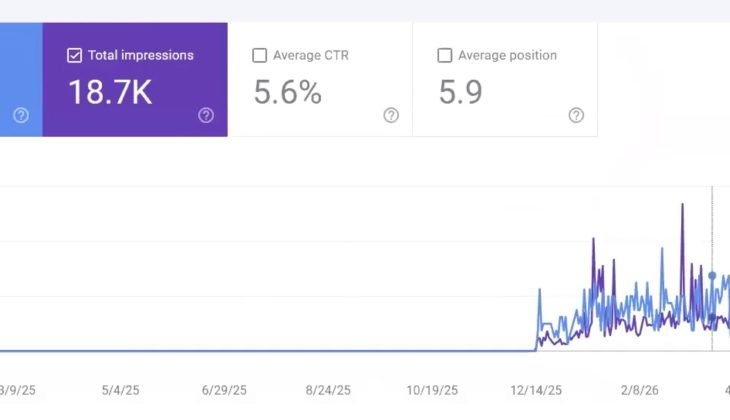
Tracking your AI citation footprint requires a slightly different toolkit than standard SEO reporting. Use Google Search Console to monitor impressions and clicks from AI Overview appearances. Manually spot-check ChatGPT and Perplexity by entering the exact questions your content answers and noting whether your brand or content appears in the response. Perplexity’s interface shows citations inline, making it straightforward to verify whether your content is being pulled. Set a monthly reminder to run these checks, log the results, and use the gaps you find to prioritize your next round of content creation and distribution. Over time, this tracking system becomes a competitive intelligence tool — showing you exactly where your presence is growing and where competitors are still owning the conversation.
Week 1 Implementation Checklist
Day 1-2: Question Research
- Pull 90 days of customer service questions
- Review Google “People Also Ask” for your category
- Use AnswerThePublic to expand question list
- Prioritize high-intent buying questions
Day 3-4: Answer Page Creation
- Build 3-5 answer pages for top questions
- Open with direct 2-sentence answer
- Add FAQ schema markup to every page
- Include current year in titles/headings
Day 5-6: Platform Distribution
- Identify 2-3 authority sites appearing in AI Overviews
- Pitch guest article with specific topic
- Create Pinterest board with keyword descriptions
- Reach out to 1-2 YouTube creators
Day 7: Tracking Setup
- Configure Google Search Console monitoring
- Manually check ChatGPT and Perplexity citations
- Set monthly tracking reminder
Free Traffic Is Not Optional Anymore — It Is a Profit Strategy
The ecom brands that will dominate their categories over the next three years are not necessarily the ones with the largest ad budgets. They are the ones building citation authority now, while the majority of competitors are still treating organic and AI traffic as a secondary concern. Every AI citation your brand earns today is a compounding asset — one that continues generating trust, traffic, and sales long after the work that created it is finished. Paid ads will always have a role in an ecom growth strategy, but their ROI is permanently capped by cost-per-click economics. Free traffic has no ceiling.
The strategy outlined in this article is not complicated — but it does require consistent execution over time. Start with your existing pages, add the structured answer content AI tools are looking for, place a single high-quality guest article on an authority site this month, and track where you appear. That is enough to generate early citations and begin the compounding process. The brands reading this article and acting on it today are the ones that will look back in twelve months and recognize this as the moment their traffic economics fundamentally changed.
How Media Strobe Can Help
Get Your Brand Cited by ChatGPT, Google AI Overviews, and Perplexity
Building AI citation authority requires systematic content creation, strategic distribution across multiple platforms, and ongoing optimization based on which citations are generating results. Media Strobe’s MultiCast campaigns are specifically designed to get ecommerce brands cited by AI tools during the pre-purchase research phase.
Each MultiCast campaign creates content structured exactly how AI tools prefer to cite it — clear question-answer formats, proper schema markup, and distribution across the high-authority platforms that ChatGPT, Google, and Perplexity already trust. Your content appears where buyers are researching, in the format AI tools are trained to recommend.
What MultiCast campaigns deliver for AI search free traffic:
- Content optimized for AI citation in ChatGPT, Google AI Overviews, and Perplexity
- Distribution across hundreds of high-authority sites AI tools already trust
- 8 content formats ensuring your answers appear everywhere buyers research
- Structured data and schema markup built into every piece
- Cross-platform presence creating compound citation authority
- Free organic traffic that improves profit margins month after month
Learn how MultiCast campaigns build AI citation authority for ecommerce brands
Frequently Asked Questions
Below are the most common questions ecom brand owners ask when first learning about AI citation strategy and organic traffic optimization.
Can Small Ecom Brands Really Show Up in ChatGPT Recommendations?
Yes — and small brands are often better positioned to do this quickly than large ones. AI tools do not measure brand size or ad spend. They measure content clarity, citation breadth, and platform authority. A small ecom brand that publishes specific, well-structured answer content and earns placements on two or three authority sites in their category can appear in ChatGPT recommendations within weeks. The fitness ecom brand example referenced in this article started from a modest baseline and achieved significant AI citation visibility without a large team or budget — purely through systematic content structure and cross-platform distribution.
How Long Does It Take to Start Getting Free Traffic From AI Search?
The timeline varies depending on your starting point, but results arrive faster than most people expect. Optimizing an existing high-traffic page with FAQ schema and tighter answer formatting can produce Google AI Overview appearances within two to four weeks. A guest article placed on a high-authority site can generate ChatGPT citations within days of publication, because the platform it lives on already has established credibility with AI retrieval systems.
Building a meaningful, compounding organic traffic stream typically takes three to six months of consistent execution. However, the first measurable wins — new AI citations, improved impressions in Search Console, incremental organic traffic from answer pages — generally appear within the first thirty days when the strategy is implemented with focus. The key is starting with your best existing assets rather than waiting until you have built everything from scratch. For insights on optimizing your content for better performance, check out our guide on product data optimization.
Does This Strategy Work If You Are Already Running Paid Ads?
Not only does it work alongside paid ads — it actively improves paid ad performance. When a buyer encounters your brand in an AI citation or organic search result before seeing your retargeting ad, the ad converts at a higher rate because the trust-building work has already been done. Brands implementing both paid and organic AI strategies report paid ad performance improvements ranging from 5% to 50%. Think of organic and AI traffic as warming the audience that your paid ads then close. The two channels are not competing — they are multiplying each other’s effectiveness.
What Type of Content Gets Picked Up by Google AI Overviews and ChatGPT?
The content most consistently cited by AI tools shares a specific set of characteristics: it opens with a direct answer to a clear question, uses structured headings that mirror the way buyers phrase their queries, includes specific and accurate details rather than vague generalities, and lives on a platform that AI tools already recognize as credible. FAQ-formatted content with schema markup, buying guides that compare specific products by name, and expert opinion pieces published on authority sites all perform well in AI citation environments. Content that includes the current year, uses terms like “best” and “reviews,” and is updated regularly also earns preferential treatment from AI retrieval systems.
Do You Need a Large Content Budget to Make This Work?
No. The most important input in this strategy is not budget — it is specificity. A single well-structured answer page that directly addresses a high-intent buyer question will outperform ten generic blog posts in AI citation environments. The brands winning in AI search right now are not necessarily producing more content than their competitors. They are producing better-targeted content and placing it strategically on the platforms AI tools trust.
A realistic starting budget for this strategy could be as low as a few hundred dollars per month — enough to produce two or three high-quality answer pages and fund one well-placed guest article. As citations begin to compound and organic traffic grows, the ROI of that initial investment increases rather than decays. The content you create this month continues generating citations and traffic twelve months from now, which is a fundamentally different economic model than paid advertising.
If you are ready to build an AI and organic traffic presence that compounds month over month, Media Strobe specializes in exactly this — helping ecom brands get cited by ChatGPT, Google AI Overviews, and Perplexity so that free traffic becomes a permanent, growing part of their revenue engine.
Why Choose a MultiCast Campaign by Media Strobe?
All MultiCast campaigns are expertly created to answer highly relevant questions about your service/product that your future customers are asking (all over the internet) before they make their purchase decision. Your MultiCast is distributed to hundreds of high authority sites IN THE EXACT WAY that Google and AI love, and in 8 formats so that your answers show up everywhere people are asking questions. The benefits of running a MultiCast campaign are increased visibility (leading to increased ranking), increased warm/hot traffic, reduced customer acquisition costs, predictable growth that can be scaled, generate more revenue with higher net profit, true control over your lead generation, and better return on paid ads. Learn more about MultiCast campaigns.