Local Business Marketing · Google Reviews · Reputation Management · 2026 Guide
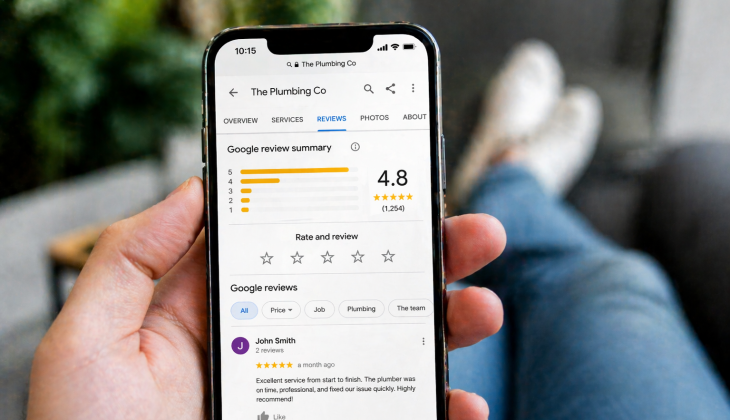
If you’re a local service business wondering why competitors are fully booked while your phone stays quiet, the answer might be simpler than you think. A single star improvement in your Google rating could boost conversions by 44%—but only if you’re collecting reviews the right way.
Key Takeaways
- Improving your Google review rating by just one star (from 3.0 to 4.0) can increase conversions by 44%
- Over 97% of consumers check Google reviews before visiting local businesses, making reviews essential for customer acquisition
- Mixed reviews with some negative feedback actually build 52% more trust than perfect scores when businesses respond professionally
- Simple strategies like QR codes, automated follow-ups, and direct requests can dramatically increase review volume without violating Google’s policies
- Optimizing your Google Business Profile first creates the foundation for successful review collection campaigns
Table of Contents
- Why One Star Improvement Drives 44% More Conversions
- Optimize Your Google Business Profile First
- Strategic Methods for Requesting Reviews
- Google’s Review Policies You Must Follow
- Why Mixed Reviews Build More Trust Than Perfect Scores
- Start Building Your Review Strategy Today
- How Media Strobe Can Help
- Frequently Asked Questions
Google reviews have become the digital equivalent of word-of-mouth recommendations. For local service businesses, these star ratings and customer comments can make the difference between a thriving practice and an empty waiting room. The statistics are clear: businesses with strong review profiles don’t just look more trustworthy – they convert significantly more customers and rank higher in local search results. Understanding how to get more Google reviews is essential for any local business looking to dominate their market in 2026.
Why One Star Improvement Drives 44% More Conversions
The impact of Google reviews extends far beyond simple social proof. Research reveals that increasing your average rating by one full star – moving from 3.0 to 4.0 stars, for example – results in a 44% boost in conversions. This dramatic improvement occurs because consumers use star ratings as a primary filter when choosing between local service providers.
Businesses ranking in the top three positions of Google’s Local Pack receive 126% more consumer traffic than lower-ranked competitors. Review quality and quantity directly influence both search visibility and customer decision-making processes. For broader context on effective local service provider marketing strategies, understanding review impact is fundamental.
The conversion advantage comes from reduced customer hesitation. When potential clients see consistent positive feedback, they spend less time comparing options and move faster toward booking appointments or making purchases. This accelerated decision-making process translates directly into revenue growth for service-based businesses.
Optimize Your Google Business Profile First
Before launching any review collection strategy, establishing a complete and optimized Google Business Profile creates the foundation for success. An incomplete or poorly maintained profile undermines even the most positive customer reviews. Managing your Google Business Profile and reviews properly sets the stage for effective review collection.
1. Claim and verify your listing
Many local service businesses operate with unclaimed Google Business Profiles, missing opportunities to control their online presence. The claiming process requires verification through email, phone, or postcard confirmation. Once verified, business owners gain access to review management tools, customer messaging features, and performance analytics that provide valuable insights into customer behavior patterns.
2. Complete all profile sections
Google rewards complete profiles with better search visibility. Essential sections include accurate Name, Address, Phone (NAP) information, detailed business descriptions, service categories, operating hours, and website links. Each completed section signals to Google that the business is legitimate and active, improving local search rankings and making the profile more attractive to potential customers.
Google Business Profile Optimization Checklist
- NAP Consistency: Ensure Name, Address, Phone match across all online directories
- Business Description: Write a compelling 750-character description with relevant keywords
- Service Categories: Select primary and secondary categories that match your offerings
- Operating Hours: Keep hours updated including holidays and special events
- Website Link: Add your main website URL and booking page if applicable
- Service Area: Define geographic areas you serve for mobile services
- Business Attributes: Enable relevant attributes like “wheelchair accessible” or “free Wi-Fi”
3. Add photos and business categories
Visual content significantly impacts customer engagement and review likelihood. High-quality photos of the business exterior, interior workspace, team members, and completed projects help customers feel more confident about their choice. Selecting accurate primary and secondary business categories ensures the profile appears in relevant local searches, reaching customers actively seeking specific services.
Strategic Methods for Requesting Reviews
Successful review collection requires systematic approaches that make leaving feedback convenient for satisfied customers while respecting their time and preferences. Learning how to get more Google reviews effectively means implementing multiple collection methods simultaneously.
1. Ask customers directly after positive interactions
Direct requests remain the most effective review collection method, with 68% of customers willing to leave reviews when personally asked. Timing proves crucial – approach customers immediately after completing successful service or resolving problems satisfactorily. The request should feel natural and appreciative rather than demanding, acknowledging that reviews help other customers find quality service providers.
The Timing Sweet Spot: The best moment to ask for a review is within 24-48 hours after service completion. Customers remember their experience clearly while maintaining positive feelings about the interaction, resulting in more detailed and enthusiastic feedback.
2. Use QR codes and NFC cards at checkout
Technology solutions eliminate friction from the review process. QR codes printed on business cards or displayed at checkout counters allow customers to quickly access review pages using smartphone cameras. Near-field communication (NFC) cards enable one-tap access when customers tap their phones against the card. These tools have proven effective for many local businesses implementing them at their checkout counters.
| Collection Method | Response Rate | Best For | Implementation Difficulty |
|---|---|---|---|
| Direct In-Person Request | High (68%) | Face-to-face service businesses | Easy |
| QR Code/NFC Cards | Medium-High | Retail and service counters | Easy |
| Automated Email Follow-Up | Medium | All service businesses | Medium |
| SMS Text Follow-Up | High | Mobile-responsive customers | Medium |
| Website Review Widget | Low-Medium | High-traffic websites | Medium-Hard |
3. Send automated email and SMS follow-ups
Automated communication systems capture reviews from customers who might otherwise forget to provide feedback. Email campaigns sent 24-48 hours after service completion achieve optimal timing – customers remember their experience clearly while maintaining positive feelings about the interaction. SMS follow-ups demonstrate even higher engagement rates, with many small businesses achieving strong response rates through automated text messaging.
4. Add review widgets to your website
Website integration creates multiple touchpoints for review collection while showcasing existing positive feedback. Review widgets can be embedded on service pages, thank you pages, or contact forms, providing convenient access to Google Business Profiles. These widgets also display current ratings and recent reviews, building trust with website visitors before they contact the business. Understanding Google review strategies helps businesses implement these widgets effectively.
Google’s Review Policies You Must Follow
Understanding Google’s review guidelines prevents policy violations that can result in removed reviews, suspended accounts, or reduced search visibility.
What’s prohibited: Incentives and fake reviews
Google explicitly prohibits offering money, discounts, giveaways, or other incentives in exchange for reviews. This policy extends to conditional incentives where positive reviews receive rewards while negative reviews receive no compensation. Purchasing fake reviews or asking friends and family to leave unearned positive feedback violates platform guidelines and can trigger algorithmic penalties that harm search rankings.
Google Review Policy Violations to Avoid
Prohibited Actions:
- Offering discounts, money, or gifts in exchange for reviews
- Purchasing reviews from third-party services
- Asking employees, friends, or family to leave fake positive reviews
- Writing reviews for your own business from multiple accounts
- Review gating (directing happy customers to Google, unhappy ones elsewhere)
Consequences:
- Immediate removal of violating reviews
- Temporary or permanent Google Business Profile suspension
- Reduced visibility in local search results
- Loss of customer trust if violations become public
How to avoid review gating penalties
Review gating involves directing satisfied customers to Google while redirecting dissatisfied customers to private feedback channels. This practice creates artificially positive review profiles and violates Google’s policies. Instead, businesses should encourage all customers to leave honest feedback while addressing negative reviews professionally and publicly, demonstrating commitment to customer satisfaction and continuous improvement.
Why Mixed Reviews Build More Trust Than Perfect Scores
Counter-intuitively, businesses with exclusively five-star reviews often appear less trustworthy than those with varied feedback including some negative comments.
The 52% trust factor from Bizrate’s consumer research
Bizrate’s consumer behavior research reveals that 52% of buyers trust products and services more when they include some negative reviews alongside positive feedback. This trust increase stems from authenticity perception – consumers recognize that perfect experiences rarely occur consistently, so mixed reviews suggest genuine customer feedback rather than manipulation or selective editing. This aligns with broader principles of reputation marketing and authentic brand building.
How to respond professionally to criticism
Professional responses to negative reviews can actually strengthen business reputations and improve conversion rates. Responding to 100% of reviews, including negative ones, increases conversions by 16.4%. Effective responses acknowledge specific concerns, apologize for shortcomings, explain corrective actions taken, and invite continued dialogue. These public responses demonstrate accountability and customer service commitment to future clients reading the reviews.
Professional Review Response Template
For Positive Reviews:
“Thank you [Customer Name] for taking the time to share your experience! We’re thrilled that [specific detail they mentioned] exceeded your expectations. We look forward to serving you again soon.”
For Negative Reviews:
“Thank you [Customer Name] for bringing this to our attention. We sincerely apologize for [specific issue]. We’ve [corrective action taken] to prevent this from happening again. Please contact us directly at [phone/email] so we can make this right.”
Key Elements Every Response Should Include:
- Personalized greeting using customer’s name
- Acknowledgment of specific details they mentioned
- Genuine gratitude for feedback (positive or negative)
- Concrete action taken or invitation to resolve privately
- Professional tone without defensive language
Start Building Your Review Strategy Today
Implementing a Google review strategy requires consistency and patience, but the results justify the investment. Begin with Google Business Profile optimization, establish systematic review request processes, and maintain regular monitoring and response routines. Recent reviews carry more weight with both Google’s algorithm and consumer decision-making – 73% of consumers trust reviews from the last 30 days, making ongoing collection efforts essential for sustained success.
The most successful local service businesses treat review management as an ongoing marketing activity rather than a one-time project. Regular attention to customer feedback, professional responses, and strategic collection efforts compound over time, creating competitive advantages that drive long-term growth and market dominance in local search results.
30-Day Review Strategy Implementation Plan
Week 1: Foundation
- Claim and verify Google Business Profile
- Complete all profile sections
- Upload 10+ high-quality photos
- Create review request script for staff
Week 2: Systems
- Order QR code business cards
- Set up automated email follow-up
- Add review widget to website
- Train staff on asking for reviews
Week 3-4: Execution
- Request reviews from all customers
- Respond to every review within 24 hours
- Monitor review volume and ratings
- Adjust messaging based on response rates
For local service businesses ready to dominate their market through strategic digital marketing, Media Strobe provides solutions that amplify online visibility and drive sustainable growth.
How Media Strobe Can Help
MultiCast Campaigns: Built to Amplify Your Online Reputation
All MultiCast campaigns are expertly created to answer highly relevant questions about your service/product that your future customers are asking (all over the internet) before they make their purchase decision. Your MultiCast is distributed to hundreds of high authority sites IN THE EXACT WAY that Google and AI love, and in 8 formats so that your answers show up everywhere people are asking questions.
The benefits of running a MultiCast campaign are:
- Increased visibility (leading to increased ranking)
- Increased warm/hot traffic
- Reduced customer acquisition costs
- Predictable growth that can be scaled
- Generate more revenue with higher net profit
- True control over your lead generation
- Better return on paid ads
Frequently Asked Questions
How Many Google Reviews Do I Need to Rank in the Local Pack?
There’s no magic number that guarantees Local Pack placement, as Google’s algorithm weighs review quantity alongside quality, recency, and relevance. However, competitive analysis shows that businesses ranking in the top three positions typically have 50+ reviews with average ratings of 4.3 stars or higher. More important than hitting a specific number is maintaining consistent review acquisition – businesses earning 3-5 new reviews monthly signal ongoing customer satisfaction to Google’s algorithm.
Can I Delete Negative Google Reviews?
You cannot delete legitimate negative reviews, but you can flag reviews that violate Google’s policies for prohibited content, spam, conflicts of interest, or fake content. Google will investigate flagged reviews and remove those that breach guidelines. For legitimate negative feedback, the best approach is responding professionally and publicly, demonstrating to future customers that you take feedback seriously and work to resolve issues.
How Long Does It Take to See Results from Review Collection Efforts?
Most local service businesses implementing systematic review collection strategies see measurable improvements within 30-60 days. The timeline depends on existing review volume, current star rating, and collection method effectiveness. Businesses starting from zero reviews may need 90-120 days to build sufficient review volume for meaningful Local Pack ranking improvements. The key is consistency – businesses that collect 3-5 reviews monthly see compounding benefits over 6-12 months.
Should I Respond to Every Google Review?
Yes, responding to 100% of reviews increases conversions by 16.4% according to consumer research. Response efforts signal active business management to both Google’s algorithm and potential customers reading reviews. Responses to positive reviews show appreciation and reinforce customer relationships, while responses to negative reviews demonstrate accountability and problem-solving commitment. Aim to respond within 24-48 hours for maximum impact.
What Percentage of Customers Will Leave Reviews If Asked?
Research indicates that 68% of customers are willing to leave reviews when personally asked. However, actual response rates vary based on ask method, timing, and customer satisfaction levels. In-person requests immediately after positive service experiences achieve the highest response rates (50-70%), while email follow-ups generate lower but still significant responses (15-25%). Combining multiple collection methods maximizes overall review volume.
Can Google Detect and Penalize Fake Reviews?
Yes, Google uses sophisticated machine learning algorithms to identify fake, purchased, or incentivized reviews. Detection methods include analyzing review patterns, IP addresses, account histories, and review content. Businesses caught violating review policies face penalties including review removal, reduced search visibility, and potential Google Business Profile suspension. The risk far outweighs any short-term benefits, making authentic review collection the only sustainable strategy.
Why Choose a MultiCast Campaign by Media Strobe?
All MultiCast campaigns are expertly created to answer highly relevant questions about your service/product that your future customers are asking (all over the internet) before they make their purchase decision. Your MultiCast is distributed to hundreds of high authority sites IN THE EXACT WAY that Google and AI love, and in 8 formats so that your answers show up everywhere people are asking questions. The benefits of running a MultiCast campaign are: increased visibility (leading to increased ranking), increased warm/hot traffic, reduced customer acquisition costs, predictable growth that can be scaled, generate more revenue with higher net profit, true control over your lead generation, and better return on paid ads.