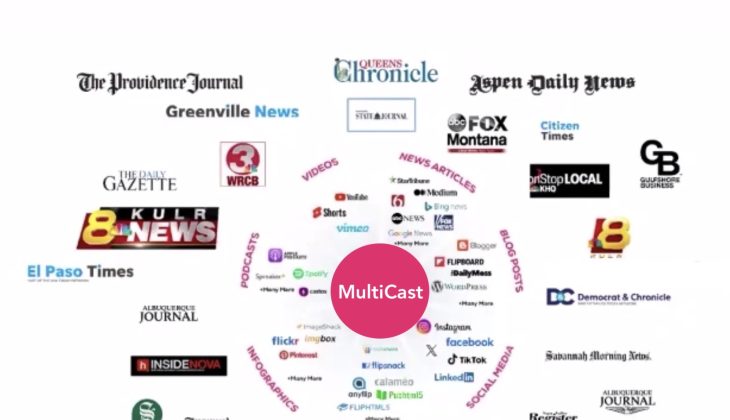
Multicasting transforms a single core message into multiple formats distributed simultaneously across channels—delivering 287% higher purchase rates than single-channel approaches. Instead of betting your entire business on Instagram or email alone, multicast marketing creates compound visibility that works even when algorithms change or ad costs spike.
Key Takeaways
- Multicast marketing transforms a single core message into multiple formats and distributes them across channels simultaneously. Well-executed multichannel strategies involving multiple formats can lead to significantly higher recognition and purchase rates, with integrated campaigns across 4+ channels outperforming single or dual-channel campaigns by 287% in purchase rates.
- Unlike multichannel marketing that operates in silos, multicast marketing creates a cohesive ecosystem where content reinforces itself across platforms, generating higher recognition and conversion rates while reducing dependency on any single platform’s algorithm changes.
- Multi-channel strategies can lead to higher customer lifetime value (30% higher for multichannel customers) and significantly higher purchase rates (287% higher for campaigns using three or more channels).
- The strategic foundations of successful multicast marketing include message amplification for recognition, format diversification for customer preferences, and synchronized distribution for building brand authority.
- Common mistakes that kill multicast effectiveness include message inconsistency across platforms and mismatching formats to audience preferences, but proper implementation delivers compound visibility effects that accelerate purchase decisions.
Table of Contents
- Why Single-Channel Marketing Is Killing Your eCommerce Growth
- The Strategic Foundations of Multicast Marketing Success
- Multicast vs. Multichannel vs. Omnichannel Marketing
- Building Your First Multicast Campaign
- Demonstrable eCommerce Results from Multicast Principles
- Common Mistakes That Kill Multicast Effectiveness
- Start Your Multicast Strategy Before Competitors Catch Up
- How Media Strobe Can Help
- Frequently Asked Questions
Why Single-Channel Marketing Is Killing Your eCommerce Growth
Single-channel marketing strategies are systematically destroying eCommerce growth potential in today’s fragmented digital landscape. When businesses rely on one primary channel—whether it’s Facebook ads, Instagram posts, or email marketing—they’re essentially betting their entire visibility on platforms they don’t control. This approach creates dangerous vulnerabilities that can devastate growth overnight when algorithms change or advertising costs spike.
The mathematics of single-channel marketing simply don’t work anymore. With over 7 million blog posts published daily and hundreds of hours of video uploaded every minute, standing out through isolated content pieces has become mathematically improbable. Facebook’s organic reach averaged just 1.37% in 2024, while digital advertising costs have increased by 10-15% year-over-year in many industries. These trends force eCommerce businesses into expensive bidding wars for increasingly scarce attention.
Perhaps most critically, single-channel approaches ignore how modern consumers actually discover and evaluate brands. Research shows customers typically need 7-12 brand impressions before converting, but single-channel marketing delivers these impressions inefficiently—if at all.
When potential customers encounter a brand only once or twice through the same format, recognition remains weak and purchase decisions get delayed indefinitely. Multicast marketing addresses these challenges by creating strategic omnipresence that accelerates familiarity and shortens the path to conversion.
The Strategic Foundations of Multicast Marketing Success
Multicast marketing succeeds because it’s built on three strategic foundations that work together to create compound visibility effects. Unlike random content distribution or simple cross-posting, effective multicast marketing operates as a systematic approach where each element reinforces the others to accelerate brand recognition and conversion rates.
1. Strategic Message Amplification Creates Recognition
Strategic message amplification transforms one carefully crafted core message into multiple format variations that reinforce the same fundamental value proposition. This approach uses the psychological principle known as the mere exposure effect—people develop preferences for things simply because they become familiar with them. When potential customers encounter variations of the same strategic message across multiple touchpoints, recognition compounds and trust accelerates.
The amplification process begins with identifying a single, strategically significant message that directly supports business objectives. This isn’t about broad topics but specific, compelling value propositions that differentiate the brand. For eCommerce businesses, this might be positioning around product quality, customer service excellence, or unique solving capabilities. The more focused this core message, the more effectively it translates across formats while maintaining consistency that builds cumulative recognition.
2. Format Diversification Caters to Diverse Customer Preferences
Format diversification acknowledges that different audience segments consume information differently based on preference, context, and available time. Some customers prefer reading detailed product descriptions, others want quick video demonstrations on YouTube or TikTok, and still others listen to podcasts during commutes. By transforming one core message into multiple formats—articles, videos, infographics, social content—eCommerce brands ensure their message connects regardless of consumption preferences.
This diversification isn’t merely repurposing content after creation but planning for multi-format distribution from conception. A well-executed multicast campaign might transform one strategic product positioning message into a detailed blog post, product demonstration video, customer testimonial audio, visual comparison chart, and interactive product quiz. Each format optimizes for its medium while maintaining message consistency, creating multiple entry points to the brand’s ecosystem without forcing customers to adapt to the company’s preferred delivery format.
3. Synchronized Distribution Builds Brand Authority
Synchronized distribution ensures content appears across owned, earned, and shared media simultaneously, creating a perception of ubiquity that builds brand authority. This strategic omnipresence might include the company website, email newsletters, social platforms like Pinterest and Instagram, industry publications, and partner channels—all carrying format-appropriate variations of the same core message. The power comes not from being everywhere but from the synchronized appearance that creates compound recognition effects.
For eCommerce businesses, synchronized distribution is particularly powerful because it reduces dependency on any single platform’s algorithm or policy changes. When product launches or promotional messages appear simultaneously across multiple channels in various formats, the resulting visibility wave generates momentum that single-channel approaches simply cannot achieve. This distribution strategy also enables brands to capture customers regardless of where they begin their product research journey.
Multicast vs. Multichannel vs. Omnichannel Marketing
While these marketing approaches may sound similar, they differ fundamentally in strategy, execution, and resource requirements. Understanding these distinctions helps eCommerce businesses choose the most effective approach for their specific situation and growth objectives.
Multicast vs. Multichannel vs. Omnichannel: Key Differences
| Approach | Strategy | Complexity | Best For |
|---|---|---|---|
| Multicast | One message, multiple formats, synchronized distribution | Medium | eCommerce scaling |
| Multichannel | Multiple channels, disconnected strategies per platform | High | Platform presence only |
| Omnichannel | Unified customer experience across all touchpoints | Very High | Enterprise integration |
Why Traditional Multichannel Approaches Waste Resources
Multichannel marketing simply means being present on multiple platforms, typically with disconnected strategies and messaging for each channel. Each platform operates in its own silo with separate goals, content approaches, and success metrics, lacking the strategic cohesion that creates compound visibility effects. For eCommerce businesses, this approach often leads to conflicting product messaging across platforms and diluted brand positioning.
Resource inefficiency represents the greatest weakness of traditional multichannel approaches. Creating unique content for each channel from scratch requires substantially more time, talent, and budget than transforming one strategic message into multiple formats. Marketing teams end up trapped in endless content production cycles, constantly creating new material for each platform rather than strategically amplifying core messages that drive business results.
Multichannel strategies also create dangerous vulnerabilities to platform disruption. When Instagram and Facebook strategies exist independently of blog and email approaches, algorithm changes on any single platform can devastate overall visibility. The siloed nature of multichannel marketing creates brittle systems dependent on platform stability rather than resilient ecosystems that withstand external changes.
The Hidden Costs of Complex Omnichannel Systems
Omnichannel marketing addresses some multichannel limitations by focusing on consistent customer experiences across platforms, but introduces significant technical integration challenges that many eCommerce businesses find prohibitive. True omnichannel requires connecting customer interactions across physical locations, digital properties, and third-party platforms into unified views—technical hurdles that often delay implementation and limit effectiveness.
The infrastructure requirements for omnichannel approaches typically include substantial investments in cross-platform tracking systems, unified customer databases, and integrated marketing automation platforms. For small and mid-sized eCommerce businesses, these technology barriers create entry costs that don’t exist with multicast marketing, which focuses on message consistency rather than technical integration.
Additionally, omnichannel systems often require ongoing maintenance and specialized technical expertise that diverts resources from actual marketing activities. While the customer experience benefits can be significant for large enterprises, many eCommerce businesses achieve better results focusing on strategic message amplification through multicast approaches that deliver compound visibility without complex technical requirements.
Building Your First Multicast Campaign
Implementing multicast marketing doesn’t require wholesale transformation of existing marketing operations. eCommerce businesses can begin with a single campaign focused on one strategic message, then expand as they validate the approach and develop systematic processes. Success depends on planning for multiformat distribution from the beginning rather than creating content in one format and attempting to repurpose it afterward.
1. Identify Your Core Value Message
Every effective multicast campaign begins with a single, strategically significant message that directly supports business objectives. For eCommerce businesses, this might be a unique product benefit, superior customer service approach, or compelling brand story that differentiates from competitors. The key is selecting messages with genuine strategic importance rather than topics that simply seem “content-worthy.”
Document this core message in format-neutral language that captures its essence without platform-specific terminology. This documentation becomes the strategic anchor for all format variations, ensuring that whether someone encounters the video, article, or social post, they absorb the same fundamental value proposition. The more focused and specific this message, the more effectively it will translate across formats while maintaining consistency that builds recognition.
2. Transform Content Into Multiple Formats
With the core message defined, systematic transformation into multiple formats begins. This process adapts content to each format’s strengths while maintaining message integrity. For eCommerce businesses, this might include transforming a product positioning concept into detailed blog posts, demonstration videos, customer testimonial audio, comparison infographics, social media carousels, and email newsletter features.
Each format requires respecting platform-specific best practices while ensuring the core message remains intact. A product video isn’t simply a narrated blog post, and an infographic isn’t just visualized text—each requires format-specific adaptation that preserves strategic messaging while optimizing for how customers consume that particular media type. This specialized transformation separates true multicast marketing from simple cross-posting that often fails to engage audiences effectively.
3. Map Formats to High-Impact Channels
Strategic channel selection prioritizes platforms based on audience presence, competitive opportunity, and format compatibility rather than attempting to be everywhere simultaneously. For eCommerce businesses, this might mean focusing video content on YouTube and TikTok, visual content on Instagram and Pinterest, detailed articles on the company blog and industry publications, and audio content on podcast platforms.
Consider owned, earned, and shared channels in the distribution strategy. Owned channels like company websites and email lists provide control, while earned channels like media coverage and guest appearances extend reach. Shared channels like social platforms and marketplace listings increase visibility but require format adaptation to platform requirements. The most effective multicast campaigns use all three types to create maximum visibility with minimal vulnerability to any single platform.
4. Launch Synchronized Distribution
Synchronized distribution means publishing format variations across selected channels simultaneously rather than staggering releases over time. This approach creates visibility waves that generate momentum and compound recognition effects. For eCommerce product launches, synchronized multicast distribution might include blog posts, social media content, email announcements, and marketplace updates all appearing within the same timeframe to maximize impact.
Distribution timing should account for platform-specific audience behavior and optimal posting schedules while maintaining overall synchronization. The goal is creating a perception of ubiquity where potential customers encounter the brand message across multiple touchpoints within compressed timeframes, accelerating familiarity and purchase consideration.
Demonstrable eCommerce Results from Multicast Principles
Real-world implementation of multicast marketing principles has generated measurable improvements in recognition, engagement, and conversion metrics for eCommerce businesses across various industries and company sizes. These results provide concrete evidence of multicast effectiveness beyond theoretical benefits.
High ROI Through Multi-Format Content
Multi-Format Content Delivers Measurable ROI
Best-in-class performers: Over 300% ROI from multichannel marketing
High-performing eCommerce content: Blended ROI of $15-25 per dollar invested
Video content advantage: Double the reach of static formats
Most effective platforms: Instagram Reels and TikTok demonstrations
Companies implementing multi-format social strategies typically see significant returns from organic distribution, largely because eCommerce content like product demonstrations and customer testimonials is inherently social and conversion paths remain relatively short. The key is maintaining strategic message consistency while adapting format and presentation to each platform’s unique audience expectations and algorithmic preferences.
CTR Improvement with Platform-Specific Adaptations
AI in e-commerce platforms can increase CTR by 30-50% compared to generic recommendations. Additionally, Office Shoes increased their click-through rate (CTR) by 240% by using multichannel data for customer segmentation. Success comes from understanding that each platform’s audience consumes content differently and adapting format accordingly while preserving strategic messaging.
Fashion brands have achieved remarkable results by adapting editorial photography for Instagram, creating infographics and aspirational visuals for Pinterest, and developing video content for TikTok—all carrying the same brand positioning but optimized for platform-specific consumption patterns. This approach respects audience preferences while building cumulative brand recognition across multiple touchpoints.
Common Mistakes That Kill Multicast Effectiveness
Despite its potential effectiveness, multicast marketing implementation can encounter predictable challenges that undermine results. Understanding these common pitfalls helps eCommerce businesses avoid creating impressive-looking activity that fails to drive meaningful business outcomes.
Message Inconsistency Across Platforms
The most common failure point in multicast marketing occurs when format transformation inadvertently alters core messaging, creating confusion rather than compound recognition. This happens when teams focus primarily on platform optimization without maintaining strategic message integrity, resulting in contradictory positioning across channels that weakens rather than strengthens brand recognition.
Message inconsistency often develops gradually as different team members adapt content for various platforms without central oversight of strategic messaging. Social media teams might emphasize product fun and entertainment value while email marketing focuses on practical benefits and blog content highlights technical specifications. While each approach might work individually, the lack of consistent core messaging prevents the compound recognition effects that make multicast marketing powerful.
Format Mismatching to Audience Preferences
Format mismatching occurs when content creators force inappropriate formats onto platforms where they don’t align with audience consumption patterns. This might include posting long-form content on platforms designed for quick consumption, using static images where video performs better, or creating overly promotional content for platforms where educational approaches generate more engagement.
Successful multicast marketing requires understanding not just what content to create but how each platform’s audience prefers to consume information. Professional networks favor educational and industry-focused content, visual platforms respond to aesthetically appealing imagery and video, and entertainment-focused platforms reward engaging and shareable material. Mismatching format to platform expectations wastes resources and fails to generate the recognition effects multicast marketing is designed to create.
Start Your Multicast Strategy Before Competitors Catch Up
The competitive advantage of multicast marketing comes partially from its current relative rarity among eCommerce businesses. While most companies still operate with siloed, single-channel approaches or attempt resource-intensive omnichannel strategies, multicast marketing offers a middle path that delivers compound visibility effects without corresponding complexity or costs.
Early adopters of multicast principles gain significant advantages in brand recognition and market positioning that become harder to achieve as more competitors implement similar strategies. The network effects and compound visibility that multicast marketing creates become less distinctive when every brand in a market segment employs similar approaches, making implementation timing strategically important for maximizing competitive benefits.
For eCommerce businesses ready to move beyond platform-dependent marketing approaches, multicast marketing provides systematic methods for building recognition, accelerating customer acquisition, and creating resilient growth systems that withstand external platform changes. The question isn’t whether multicast marketing will become standard practice, but whether your business will implement it before or after competitors gain first-mover advantages in recognition and market positioning.
How Media Strobe Can Help
Media Strobe MultiCast Campaigns: Transform One Core Message Into Maximum Visibility
Media Strobe’s MultiCast campaigns are expertly created to answer the highly relevant questions about your products and services that your future customers are asking all over the internet before they make their purchase decision. Instead of creating separate content for each platform, MultiCast campaigns take one strategically significant message and transform it into 8 different formats distributed across hundreds of high-authority sites.
Key Benefits of Media Strobe MultiCast Campaigns:
- Increased Visibility — Leading to increased ranking and brand authority
- Warm & Hot Traffic — Customers finding you when they’re actively seeking solutions
- Reduced Customer Acquisition Costs — Organic reach reduces paid advertising dependency
- Predictable Growth — Scalable systems that compound over time
- Higher Net Profit — More revenue with less ad spend
- True Lead Generation Control — Your message, your positioning, your audience
- Better ROI on Paid Ads — Warmer audiences convert at higher rates
Ready to implement multicast marketing? Learn how Media Strobe MultiCast campaigns work and start building compound visibility for your eCommerce business.
Frequently Asked Questions
What’s the difference between multicasting and just cross-posting content?
Cross-posting takes content created for one platform and pastes it unchanged onto other platforms—usually resulting in poor engagement because each platform’s audience has different expectations and consumption preferences. Multicasting, by contrast, begins with one strategically significant message and transforms that message into format variations optimized for each platform’s unique audience and algorithmic preferences. A blog post becomes an infographic for Pinterest, a video for YouTube, social snippets for Instagram, and audio content for podcasts—all carrying the same strategic message but adapted to how each audience prefers to consume information. The result is dramatically higher engagement and compound visibility effects that simple cross-posting simply cannot achieve.
How much does it cost to implement a multicast campaign?
Multicast campaign costs vary based on the number of formats created, distribution scope, and whether content creation is handled in-house or outsourced. The primary cost driver is strategic message development and format creation rather than distribution, which can often leverage existing owned channels and partnerships at minimal additional cost. Many eCommerce businesses find that the compound ROI from multicast approaches (287% higher purchase rates from properly executed campaigns) justifies the investment many times over compared to traditional single-channel or disconnected multichannel approaches. The key is viewing multicast as a systematic investment in brand positioning and visibility rather than a single-time content expense.
How long does it take to see results from multicast marketing?
Early visibility improvements often appear within 2-4 weeks as content distributes across channels and begins generating organic impressions. However, the compound recognition effects that make multicast truly powerful typically require 60-90 days of consistent implementation to become measurable as increased brand recall, improved conversion rates, and higher customer lifetime value. Think of multicast as building brand infrastructure rather than running a short-term promotional campaign—the longer your consistent implementation runs, the stronger the compound visibility effects become and the more durable your competitive advantages.
Can small eCommerce businesses effectively implement multicast marketing?
Absolutely. In fact, small eCommerce businesses often see faster and more dramatic results from multicast approaches than larger enterprises because they can move quickly and maintain message consistency across all touchpoints more easily. The barriers to multicast implementation are strategic and organizational rather than financial—the investment required is primarily management attention and strategic focus rather than large budgets. Many small eCommerce businesses begin with a single multicast campaign focused on their most strategically important product or value proposition, then expand as they develop systematic processes and see measurable results. Starting smaller and scaling based on proven results often delivers better long-term outcomes than attempting massive, complex implementation from the beginning.
Why choose a MultiCast campaign by Media Strobe?
All MultiCast campaigns are expertly created to answer highly relevant questions about your service and product that your future customers are asking all over the internet before they make their purchase decision. Your MultiCast is distributed to hundreds of high authority sites in the exact way that Google and AI love, and in 8 formats so that your answers show up everywhere people are asking questions. The benefits of running a MultiCast campaign include increased visibility (leading to increased ranking), increased warm and hot traffic, reduced customer acquisition costs, predictable growth that can be scaled, generate more revenue with higher net profit, true control over your lead generation, and better return on paid ads. Instead of hoping your scattered social media posts catch the right person at the right time, Media Strobe MultiCast campaigns position your business directly in front of customers who are actively seeking solutions. Learn more about Media Strobe MultiCast campaigns.