Article-at-a-Glance
- The digital advertising landscape in 2026 is split between multicasting strategies and traditional paid ads, with the right choice potentially doubling your ROAS.
- Multicasting has evolved from simple broadcasting to an AI-driven, hyper-personalized approach that reaches precise audience segments across multiple channels simultaneously.
- Modern paid ads face increasing challenges with privacy regulations, higher costs, and platform consolidation, yet offer unmatched speed and precision for immediate results.
- Budget considerations heavily influence your strategy choice, with multicasting typically requiring higher initial investment but delivering better long-term value.
- Media Strobe’s MultiCast tool provides marketers with leverage that can optimize both multicasting and paid ad campaigns for maximum performance.

The Digital Advertising Dilemma: Why Your Channel Choice Matters More in 2026
In 2026, the gap between winning and losing digital marketing strategies has never been wider. The choice between multicasting and traditional paid ads isn’t just a tactical decision—it’s increasingly strategic, with the right approach potentially doubling your ROAS while the wrong one drains budgets with diminishing returns. As platform costs rise and audience attention fractures across dozens of channels, marketers face unprecedented pressure to allocate resources efficiently.
The stakes are particularly high as we navigate a post-cookie reality where third-party data limitations have transformed targeting capabilities. What worked in 2023 is increasingly ineffective today. According to recent industry research, companies that adapted their channel strategy to these new realities saw 37% higher customer acquisition rates than those maintaining pre-2024 approaches.
This guide cuts through the noise to help you make data-driven decisions about whether multicasting, paid ads, or a strategic hybrid approach will deliver the best results for your specific situation. With advertising technologies and new organic instruments like MultiCasting evolving at breakneck speed and providing unprecedented insight into cross-channel performance, marketers now have the tools to make these critical choices with confidence rather than guesswork.
What is Multicasting in 2026 and How Has It Evolved?
Multicasting in 2026 bears little resemblance to its predecessor from even three years ago. Today’s multicasting represents the simultaneous distribution of content across multiple channels and platforms, but with unprecedented levels of personalization and targeting specificity that previous technologies couldn’t support. What began as a simple one-to-many broadcasting concept has transformed into an intricate, AI-orchestrated approach that delivers tailored messages to precise audience segments across diverse digital touchpoints.
The Evolution from Traditional Broadcasting to Modern Multicasting
The journey from traditional broadcasting to today’s sophisticated multicasting models has been dramatic. Early digital multicasting simply replicated content across channels—the same message appeared everywhere, just in different formats. By 2023, basic segmentation allowed for some customization, but the real transformation came with the integration of advanced AI systems in 2024-2025. Today’s multicasting incorporates real-time data signals, predictive analytics, and dynamic creative optimization that can instantly adjust messaging based on audience response patterns. This evolution means multicasting now delivers hyper-relevant content to specific audience segments while maintaining the scale advantages that made it attractive in the first place.
Key Technologies Powering Multicasting in 2026
Modern multicasting rests on a foundation of integrated technologies that would have seemed like science fiction just a few years ago. Content distribution networks (CDNs) with edge-computing capabilities now deliver near-zero latency personalization across global audiences. Advanced content management systems (CMS) automatically reformat and optimize content for dozens of platforms simultaneously, eliminating the production bottlenecks that once made multicasting labor-intensive. Perhaps most significantly, natural language processing (NLP) and generative AI have reached sophistication levels where they can create channel-specific variations that maintain brand voice while optimizing for each platform’s unique attributes and audience expectations.
“Business uses of natural language …” from fastdatascience.com and used with no modifications.
How AI-Driven Audience Segmentation Changed the Game
The true revolution in multicasting came when AI-driven audience segmentation reached maturity around 2024. Unlike traditional demographic or behavioral segmentation, today’s systems identify micro-segments based on thousands of data points, including content consumption patterns, purchase intent signals, and even emotional response indicators. These systems continuously refine audience definitions based on engagement data, creating a virtuous cycle of improving relevance. For marketers, this means multicasting now combines the reach advantages of broad distribution with the precision traditionally associated with targeted paid advertising—a powerful combination that has transformed campaign performance metrics across industries.
Paid Advertising in 2026: The New Landscape
Paid advertising has undergone seismic shifts since 2023, creating both new challenges and opportunities for marketers. The days of relatively straightforward paid media campaigns with predictable costs and outcomes have given way to a more complex ecosystem where success depends on sophisticated technology stacks, advanced targeting strategies, and agile optimization approaches. While still powerful for specific objectives, paid advertising now operates under constraints that have fundamentally altered its economics and effectiveness.
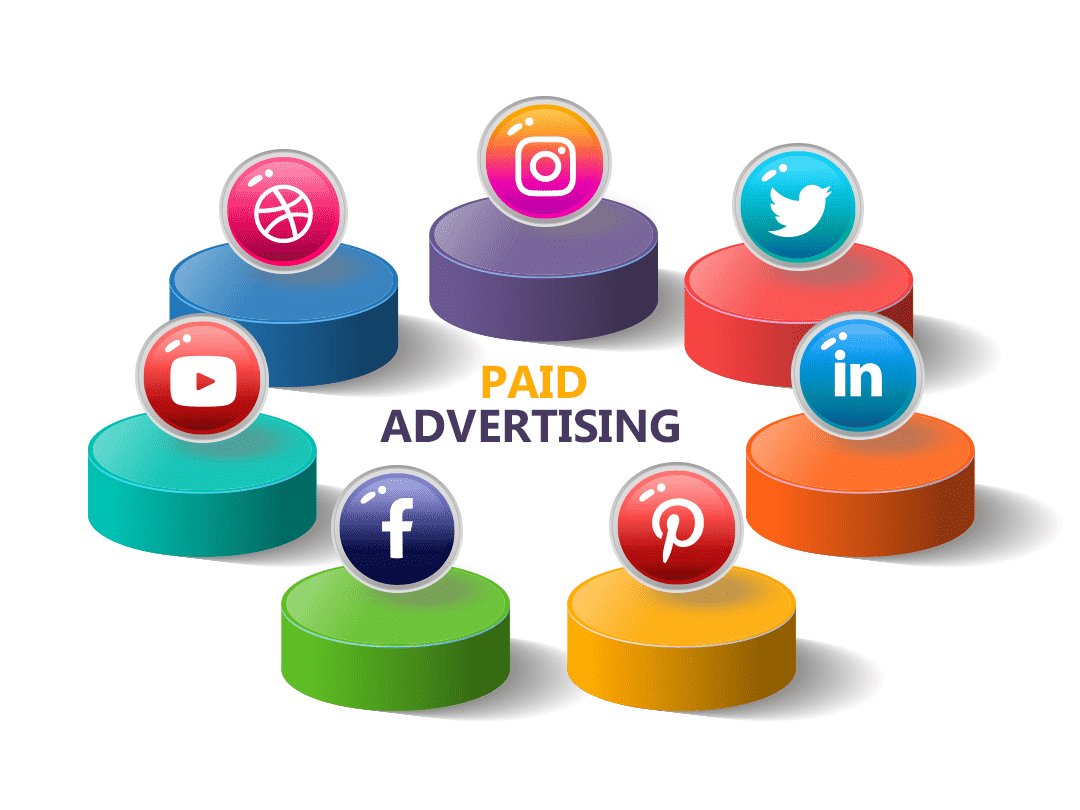
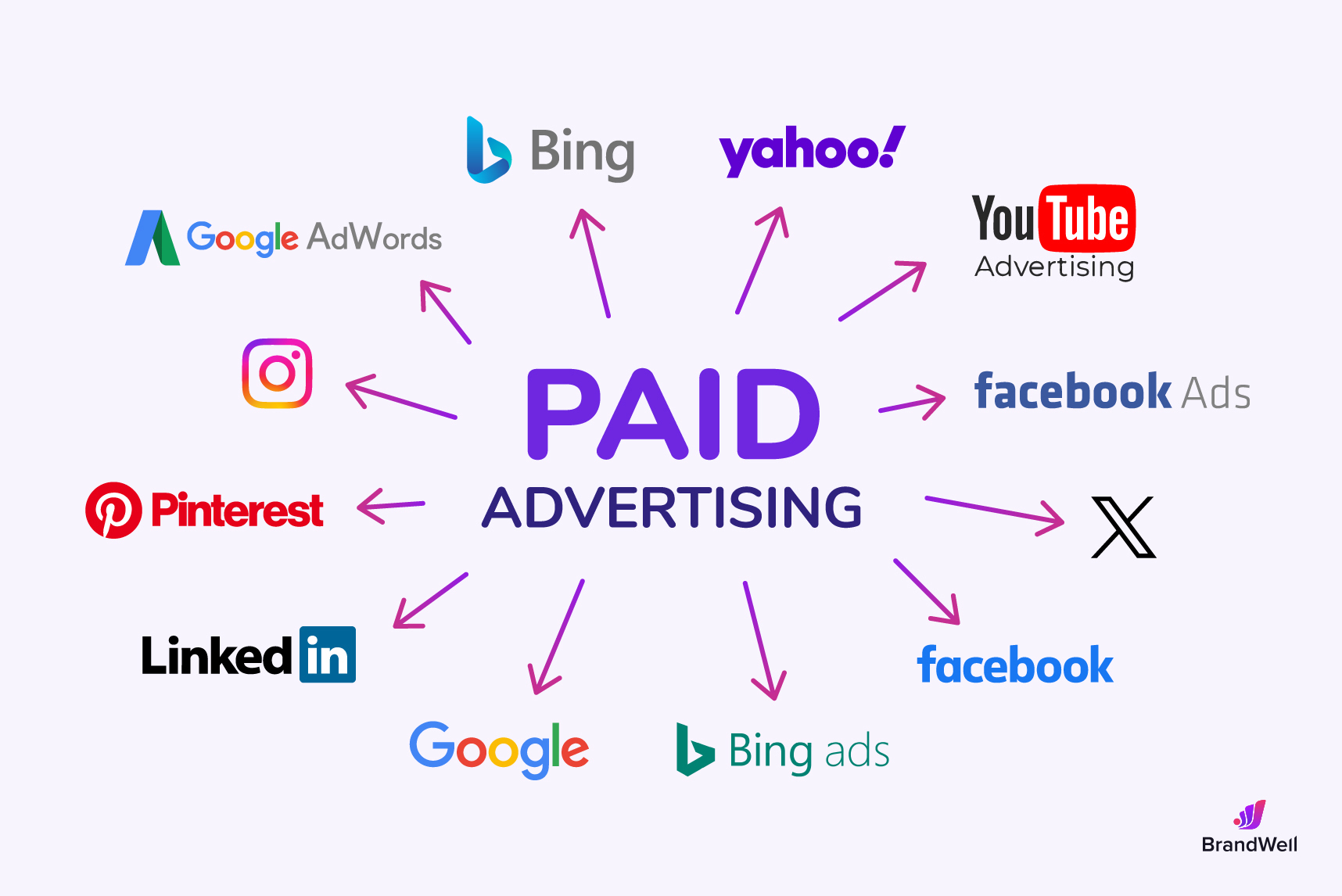
Platform consolidation has reshaped where ad dollars flow, with the emergence of what industry analysts call the “big five” digital advertising ecosystems that now control over 78% of global digital ad spend. This consolidation has created pricing pressure that has driven up costs significantly compared to 2023 levels. At the same time, user privacy enhancements and regulatory changes have restricted the data signals available for targeting, forcing advertisers to develop new approaches to audience definition and measurement. For a deeper dive into these changes, consider analyzing and predicting the future of advertising in the coming years.
“Various Types of Paid Advertising …” from www.clickslice.co.uk and used with no modifications.
Despite these challenges, paid advertising continues to offer unmatched capabilities for immediate visibility, precise targeting, and rapid testing that make it indispensable for certain marketing objectives. The key difference in 2026 is that successful paid advertising requires significantly more sophistication, technology support, and strategic planning than in previous years.
- Cost increases averaging 31% across major platforms since 2023
- Third-party cookie deprecation complete across all major browsers
- AI-driven creative optimization now essential for competitive performance
- Cross-platform attribution increasingly challenging but more valuable
- Regulatory compliance requirements creating regional targeting disparities
The Post-Cookie Reality and Its Impact
The final phase-out of third-party cookies fundamentally altered paid advertising targeting capabilities. Advertisers now operate in an environment where traditional retargeting and audience building approaches have been replaced by cohort-based targeting, first-party data activation, and contextual advertising technologies. This shift has elevated the importance of owned audience development, with brands investing heavily in data collection mechanisms that don’t rely on third-party cookies. The marketers who adapted early to this reality now enjoy significant competitive advantages, having built robust first-party data assets while others struggled with diminishing returns from traditional targeting methods.
Multicasting Strengths: When to Make It Your Primary Channel
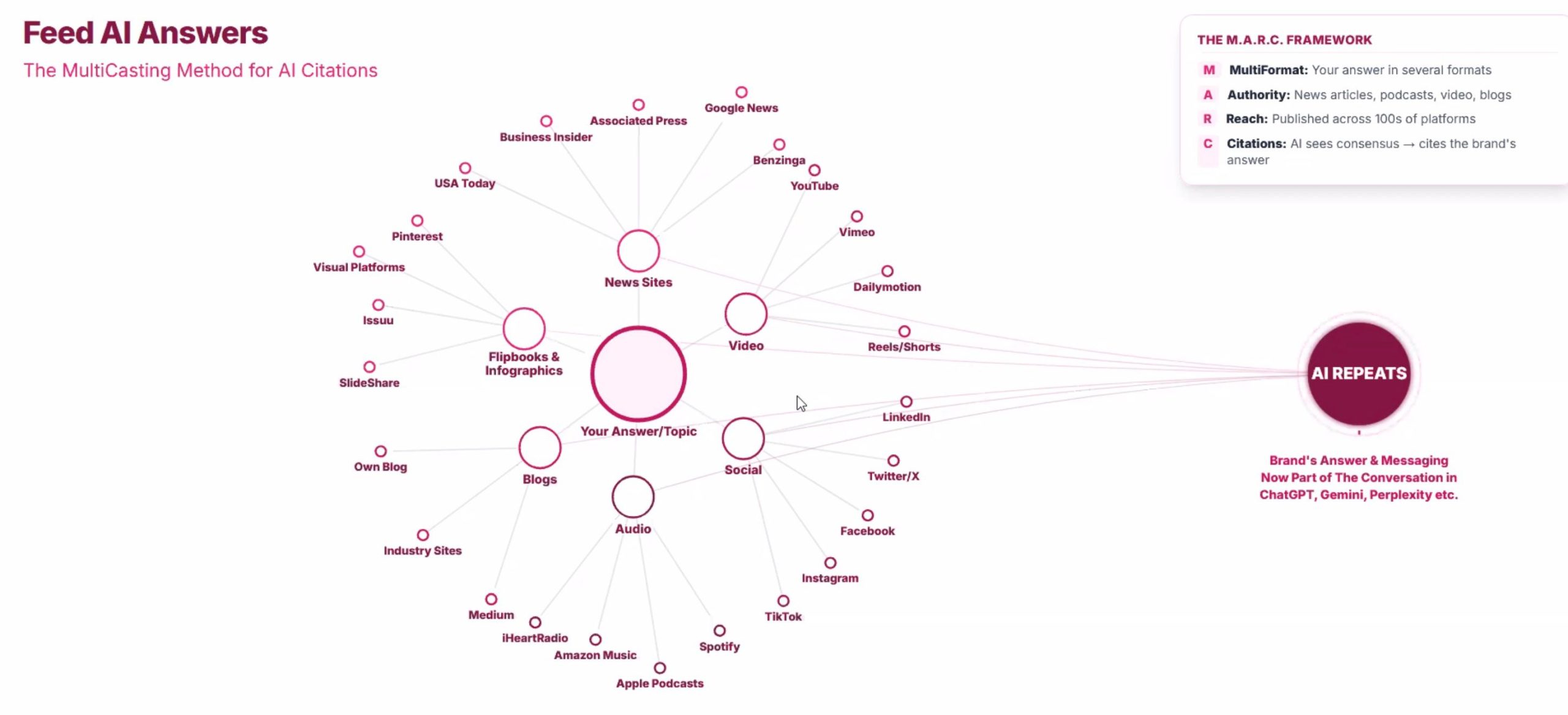
Multicasting stands as the clear frontrunner for brands focused on building sustainable audience relationships rather than just driving immediate transactions. The approach truly shines when your marketing objectives extend beyond the next quarter and you’re investing in long-term brand equity. Organizations with diverse product lines or services targeting multiple audience segments find particular value in multicasting’s ability to efficiently reach numerous customer profiles without the per-segment cost scaling that plagues traditional paid advertising.
Audience Reach and Segmentation Capabilities
Modern multicasting platforms excel at reaching previously untapped audience segments through sophisticated content distribution networks. Unlike paid advertising where each additional audience segment typically increases costs proportionally, multicasting allows you to create once and distribute everywhere, reaching diverse demographics simultaneously. This approach is particularly effective for brands with broad appeal across multiple customer types, as the incremental cost of reaching each additional segment is minimal compared to paid channels.
The real power emerges in multicasting’s ability to personalize content at scale. Today’s advanced systems automatically adapt messaging based on audience segment, platform preferences, and even individual behavioral patterns without requiring separate campaign creation for each variation. A single multicasting initiative can now deliver thousands of subtle content variations, each optimized for specific audience segments, without the corresponding increase in production costs that would make such granularity impossible in traditional channels.
Perhaps most importantly, multicasting builds audience relationships that transcend individual platforms. As consumers increasingly bounce between channels, multicasting creates consistent touchpoints across their entire digital experience, building recognition and trust that fragmented channel-specific campaigns struggle to achieve. This multi-platform presence creates a frequency effect that strengthens brand recall without the repetition fatigue that often accompanies high-frequency single-channel advertising.
Content Distribution Efficiency
The efficiency gains in content distribution represent one of multicasting’s most compelling advantages in 2026. Advanced content distribution networks now automatically optimize and reformat assets for dozens of platforms simultaneously, eliminating the production bottlenecks that once made cross-channel marketing labor-intensive. This technological evolution means creative teams can focus on developing high-quality core content rather than endless platform-specific variations, significantly improving both resource utilization and content quality.
- Automated reformatting for platform-specific requirements (aspect ratios, file sizes, etc.)
- AI-driven caption and description generation optimized for each platform’s algorithm
- Dynamic content adaptation based on real-time performance data
- Simultaneous publishing across all relevant channels with timing optimization
- Centralized performance monitoring and cross-channel analytics integration
Multicasting also provides powerful content amplification through algorithmic distribution. As platforms increasingly prioritize authentic engagement over paid promotion, well-executed multicasting strategies leverage organic reach potential across multiple channels simultaneously. This creates a multiplier effect where content that performs well on one platform can automatically receive additional distribution resources across other channels, maximizing the impact of successful content without requiring manual optimization.
The ripple effect of successful multicasting extends beyond owned channels as well. Well-targeted content naturally encourages audience sharing and cross-platform amplification, creating earned media value that paid strategies typically cannot match. This organic amplification creates a virtuous cycle where audience engagement drives additional distribution, which attracts more engagement, continually expanding reach without corresponding budget increases.
Cost Structure and Long-term Value
Multicasting typically requires higher initial investment but delivers superior long-term returns compared to paid advertising. While the upfront costs of developing quality content, establishing distribution infrastructure, and implementing measurement systems can be substantial, these investments create lasting assets with cumulative value. Unlike paid advertising where performance stops the moment budget ends, multicasting builds persistent content libraries and audience relationships that continue delivering value for months or years, creating a compounding return on investment that traditional paid channels simply cannot match.
“Paid Advertising to Grow Your Business …” from brandwell.ai and used with no modifications.
Paid Ads Advantages: When They Deliver Superior Results
Despite the growing strengths of multicasting, paid advertising remains unmatched for specific marketing objectives where speed, precision, and immediate results are paramount. Paid advertising continues to excel when you need guaranteed visibility, precise audience targeting, or rapid performance feedback. For new product launches, time-sensitive promotions, or situations where you need to quickly test messaging variations, the controlled environment of paid advertising provides advantages that even advanced multicasting systems cannot fully replicate.
Precision Targeting and Remarketing Power
Even with third-party cookie limitations, paid advertising platforms have developed sophisticated alternatives for precise audience targeting. The combination of first-party data utilization, contextual targeting algorithms, and privacy-compliant identification methods allows advertisers to reach highly specific audience segments with remarkable accuracy. This targeting precision remains particularly valuable for products with narrow audience appeal or high-consideration purchases where reaching exactly the right prospect at the right moment delivers outsized returns. For specialized B2B offerings or luxury consumer goods, this precision often justifies the premium cost compared to broader multicasting approaches.
Rapid Testing and Optimization Capabilities
The controlled environment of paid advertising creates unmatched opportunities for rapid testing and optimization. Modern paid platforms can simultaneously test dozens of creative variations, audience segments, and bidding strategies, delivering statistically significant results within days rather than the weeks or months often required for organic testing. This acceleration of the learning cycle proves invaluable when entering new markets, launching untested products, or responding to competitive threats where time-to-insight directly impacts business outcomes. The structured nature of paid campaigns also facilitates cleaner experimental design, making it easier to isolate variables and confidently identify causal relationships that inform broader marketing strategy.
Immediate Visibility and Traffic Generation
- Guaranteed placement and visibility regardless of algorithm changes
- Instant traffic generation within hours of campaign launch
- Scalable volume that can be adjusted in real-time based on capacity
- Precise timing control for synchronization with other marketing initiatives
- Predictable performance forecasting for resource planning
Perhaps the most compelling advantage of paid advertising is its ability to generate immediate results regardless of your current audience size or market position. While multicasting effectiveness correlates strongly with existing brand strength and audience relationships, paid platforms can deliver traffic and conversions from day one. This capability proves essential for startups, new market entries, or established companies launching entirely new product categories where waiting for organic momentum isn’t viable. The guaranteed visibility of paid placements also provides insurance against algorithm changes or content distribution issues that can sometimes disrupt even well-planned multicasting initiatives.
Paid advertising also maintains significant advantages in competitive conquesting – the practice of targeting competitors’ customers or keywords. Advanced platforms now offer sophisticated competitive targeting options that let you position your offering directly alongside competitive alternatives at the moment prospects are actively considering solutions. This strategic capability creates opportunities to intercept purchase journeys that would otherwise be invisible to multicasting approaches, particularly valuable in high-consideration categories where direct comparison can highlight your competitive advantages.
For businesses with seasonal patterns or irregular demand cycles, paid advertising provides unmatched flexibility to scale marketing activity up or down in perfect alignment with business needs. Unlike multicasting where momentum builds gradually and consistency matters, paid campaigns can be paused, restarted, or dramatically scaled with minimal notice. This flexibility creates significant operational advantages for businesses with variable capacity, inventory constraints, or seasonal offerings where marketing volume needs to precisely match current business conditions. Learn more about how Amazon sellers can profit from competitors’ ads for further insights into leveraging paid advertising strategies.
The Hybrid Approach: Getting the Best of Both Worlds
The most sophisticated marketing organizations in 2026 have moved beyond the false dichotomy between multicasting and paid advertising to develop integrated approaches that leverage the strengths of each. These hybrid strategies recognize that the question isn’t which approach is superior, but rather how to strategically combine them to create synergistic effects that neither could achieve independently. By carefully orchestrating multicasting and paid efforts through unified campaign frameworks, leading brands create continuous customer journeys that seamlessly transition between owned and paid channels.
The key to successful hybrid implementation lies in viewing paid and multicasting as complementary rather than competitive channels. Paid advertising excels at creating initial awareness and driving specific actions, while multicasting builds deeper relationships and long-term engagement. When these approaches work in concert—with paid campaigns driving audiences toward multicasting ecosystems and multicasting content informing paid targeting and messaging—the result is a marketing engine greater than the sum of its parts.
Integrated Campaign Structure Models
The foundation of effective hybrid approaches is a campaign structure that coordinates multicasting and paid activities toward shared objectives. Rather than planning these channels independently, leading organizations develop integrated campaign frameworks where each component plays a specific role in the broader customer journey. This integrated planning ensures message consistency while allowing each channel to perform its optimal function—whether that’s driving initial discovery, nurturing consideration, or facilitating conversion.
Most successful hybrid models follow a hub-and-spoke architecture where multicasting platforms serve as central content hubs that paid campaigns direct traffic toward. This structure leverages paid advertising’s precision targeting to build audiences while using multicasting’s engagement capabilities to deepen relationships once prospects arrive. The approach also creates natural attribution pathways as prospects move from paid touchpoints to owned channels, providing clearer measurement of paid media’s contribution to overall marketing performance.
Case Study: Financial Services Leader’s Hybrid Approach
A leading financial services company implemented a hybrid campaign that increased qualified lead generation by 43% while reducing cost-per-acquisition by 27%. Their approach used targeted paid media to reach high-value prospects with specific financial needs, directing them to educational content hubs built on multicasting principles. Once engaged with these content ecosystems, prospects received personalized nurturing through coordinated multicasting across email, social, and content platforms. Paid retargeting was selectively deployed at key decision points, creating a seamless journey that combined the precision of paid with the relationship-building power of multicasting.
Another effective integration model uses multicasting to build broad awareness and category education while deploying highly targeted paid campaigns to convert prospects at moments of peak intent. This approach recognizes that multicasting excels at moving prospects from unawareness to consideration, while paid advertising can be precisely timed to capture attention during active purchasing decisions. The strategy is particularly effective for complex products with longer consideration cycles, where multicasting builds category understanding and brand preference over time, preparing prospects for conversion-focused paid messaging when they’re ready to purchase. For more insights, explore the luxury marketing secret nobody’s talking about.
Advanced hybrid approaches also leverage channel sequencing strategies that coordinate the timing of multicasting and paid initiatives to create reinforcing effects. By carefully orchestrating when messages appear across channels, marketers create perception of momentum and social proof that drives higher engagement. These sequenced approaches typically begin with targeted paid campaigns to seed initial interest, transition to multicasting for deeper engagement, then deploy retargeting to capture conversions, creating a continuous journey that guides prospects naturally from awareness to action.
Resource Allocation Framework
Effective hybrid strategies require thoughtful resource allocation frameworks that balance investment between multicasting and paid initiatives. While traditional channel planning often treats budgets as separate and competitive, integrated approaches use dynamic allocation models that shift resources based on current performance and campaign phase. These frameworks typically establish baseline funding for both approaches with flexible reserves that can be deployed toward whichever channel is showing superior results during different campaign stages.
There are extremely sophisticated allocation models that can be used today to incorporate real-time performance data from attribution platforms like RedTrack to continuously optimize the balance between paid and multicasting investments. These systems automatically adjust spending based on current conversion patterns, audience responsiveness, and external factors like competitive activity or seasonal trends. By removing the artificial boundaries between channel budgets, these dynamic models ensure marketing resources flow to their highest and best use throughout the campaign lifecycle, significantly improving overall return on marketing investment. For those looking to profit from competitors’ ads, these strategies can be particularly beneficial.
Cross-Channel Attribution Solutions
The lynchpin of successful hybrid approaches is robust cross-channel attribution that accurately measures how multicasting and paid efforts contribute to desired outcomes. Advanced attribution solutions now capture the complex interplay between these channels, recognizing that their impact is often synergistic rather than independent. These systems track how exposure to multicasting content influences paid advertising response rates and how paid touchpoints drive engagement with multicasting platforms, providing a complete view of the customer journey across all touchpoints.
Measuring Success: The Right KPIs for Each Approach
Effective measurement strategy begins with recognizing that multicasting and paid advertising serve different functions in your marketing ecosystem and therefore require distinct evaluation frameworks. Applying paid media metrics to multicasting initiatives (or vice versa) inevitably leads to misaligned expectations and suboptimal decision-making. The most sophisticated marketing organizations develop channel-appropriate measurement frameworks that reflect each approach’s unique contribution to overall marketing performance.
Beyond channel-specific metrics, integrated measurement frameworks that capture cross-channel effects have become essential for accurately evaluating performance. These holistic approaches recognize that multicasting and paid efforts often create synergistic effects that exceed their individual contributions. By implementing attribution models that track how these channels interact and reinforce each other, marketers gain a more accurate understanding of true marketing ROI and make better resource allocation decisions.
Essential Multicasting Metrics That Matter
Effective multicasting measurement focuses on engagement depth, relationship development, and long-term value creation rather than just immediate conversion metrics. While conversion tracking remains important, evaluating multicasting solely on direct response metrics undervalues its contribution to building sustainable audience relationships. Leading organizations measure multicasting success through multidimensional frameworks that capture both immediate engagement and longer-term relationship indicators.
Content engagement metrics provide the foundation for multicasting measurement, revealing how effectively your content resonates with target audiences. These metrics go beyond simple impression counts to examine active engagement behaviors like completion rates, sharing activity, and comment sentiment. By tracking these engagement patterns across your content ecosystem, you can identify which topics, formats, and distribution channels create the deepest audience connections.
Audience development metrics track how effectively your multicasting efforts build valuable audience assets over time. These measures focus on subscription growth, audience retention, and engagement frequency across channels. By monitoring these indicators, you can assess whether your multicasting investments are creating durable audience relationships that will continue generating value over multiple campaigns and purchase cycles.
Multicasting Metric
What It Measures
Why It Matters
Audience Growth Rate
Net new subscribers/followers across platforms
Indicates building of long-term audience assets
Content Engagement Score
Weighted index of interactions across content pieces
Measures resonance and relationship depth
Audience Retention Rate
Percentage of audience maintained over time
Shows relationship durability and content value
Cross-Channel Engagement
Audience interaction across multiple platforms
Indicates relationship strength beyond single touchpoints
Content Attribution Value
Revenue influenced by content touchpoints
Connects content engagement to business outcomes
Attribution metrics connect multicasting activities to business outcomes by tracking how content engagement influences conversion paths. Advanced attribution models now capture how exposure to specific content pieces affects likelihood to convert, even when that content isn’t the final touchpoint before purchase. These sophisticated approaches recognize multicasting’s role in moving prospects through earlier funnel stages, giving proper credit for its contribution to eventual conversions that might occur through other channels.
Critical Paid Advertising Performance Indicators
Paid advertising measurement prioritizes efficiency, targeting accuracy, and direct response metrics that reflect its role in driving specific actions. While traditional metrics like click-through rates and conversion rates remain important, sophisticated measurement approaches now incorporate incremental testing methodologies that isolate true causal impact. By comparing outcomes between exposed and control audiences with identical targeting parameters, marketers can determine what results paid campaigns actually caused versus what might have happened organically—a critical distinction for accurate ROI calculation.
Conversion Attribution Models for Complex Customer Journeys
The most valuable measurement approaches recognize that modern customer journeys rarely follow linear paths through either multicasting or paid channels exclusively. Advanced attribution models now capture the complex interplay between these approaches, showing how they work together to influence purchase decisions. These sophisticated models track cross-channel effects like how multicasting exposure affects paid advertising response rates and how paid touchpoints drive engagement with multicasting content. By implementing multi-touch attribution that accurately distributes credit across the entire customer journey, marketers gain a holistic view of performance that guides more effective resource allocation across both multicasting and paid initiatives.
Real-World Success Stories: Who’s Winning With Each Approach
Examining who’s achieving exceptional results with multicasting and paid advertising reveals clear patterns about which strategies work best in specific contexts. The most instructive success stories from 2025-2026 demonstrate that channel selection aligns closely with business model, growth stage, and marketing objectives. These real-world examples provide valuable blueprints for organizations facing similar strategic decisions about their digital marketing investments.
Strategy Type
Best For
Key Success Factors
Typical ROI Timeline
Multicasting Dominant
Small to medium brands struggling to get paid ads profitable
Content quality, audience segmentation, platform diversity
1-3 months
Paid Ads Dominant
Big brands with deep pockets, and sporatic campaigns for extra attention
Creative testing, targeting precision, optimization velocity
1-2 months
Hybrid Approach
Works well in most situations, very complimentary strategies
Cross-channel integration, attribution sophistication
<1 month
The performance gap between organizations with sophisticated channel strategies and those using outdated approaches has widened dramatically. Companies that adapted quickly to the post-cookie environment and platform consolidation are seeing 2-3x better results than competitors who maintained pre-2024 approaches. This performance divergence creates both competitive risk and opportunity, as organizations that modernize their approach can quickly gain market share at the expense of slower-moving competitors.
Perhaps most notably, companies that successfully integrated their multicasting and paid strategies achieved significantly better outcomes than those treating these channels as separate silos. The synergistic effect of coordinated cross-channel campaigns delivered an average 43% improvement in overall marketing ROI compared to organizations managing these functions independently, highlighting the importance of integrated planning and measurement.
“Case Studies Across the Curriculum …” from www.keithrn.com and used with no modifications.
Case Study: Mid-Market Brand Scaling With Multicasting
A mid-market consumer healthcare brand facing rising customer acquisition costs through traditional paid channels shifted 60% of their marketing budget toward a multicasting-first approach in Q3 2025. Their strategy centered on developing condition-specific content hubs addressing the health concerns of their target demographic. Rather than creating separate campaigns for each platform, they built a centralized content ecosystem with AI-driven distribution that automatically optimized content for each channel. Within six months, they decreased customer acquisition costs by 47% while increasing conversion volume by 23%. The approach proved particularly effective for building trust in a category where consumer education and credibility significantly impact purchase decisions.
Case Study: D2C Startup Growth Through Strategic Paid Media
A direct-to-consumer home goods startup launched in early 2026 with a highly targeted paid media strategy focused on rapid testing and optimization. Rather than attempting to build organic presence from scratch, they allocated 85% of their marketing budget to precision-targeted paid campaigns across visual discovery platforms. Their approach emphasized creative testing, launching with 64 creative variations and implementing automated optimization that reallocated budget to top performers every 48 hours. This strategy delivered profitable customer acquisition within three weeks of launch, allowing them to scale from zero to $1.2M monthly revenue in under 90 days. The key success factor was their sophisticated testing framework that identified winning audience/creative combinations quickly and scaled winners aggressively.
Case Study: Enterprise Hybrid Model Driving 43% Efficiency Gains
A multinational B2B technology provider implemented a hybrid approach that seamlessly integrated multicasting and paid media initiatives through a unified customer journey framework. Their model used AI-powered content distribution to build category awareness and establish thought leadership, while precisely targeted paid media activated during specific triggers in the buying cycle. The cross-channel approach was supported by advanced attribution that tracked how multicasting exposure influenced paid media response rates. This integrated strategy increased marketing-attributed pipeline by 43% while maintaining the same overall budget, demonstrating the efficiency gains possible when these approaches work in concert rather than isolation.
Tools and Platforms That Will Define 2026 Success
The technology stack supporting your multicasting and paid advertising efforts has become a primary determinant of marketing success. Organizations with sophisticated, well-integrated marketing technology ecosystems consistently outperform competitors regardless of which channel strategy they emphasize. The right tools don’t just improve efficiency—they fundamentally expand what’s possible, enabling strategies that would be impractical or impossible with less advanced technologies.
Technology Investment Impact
According to recent industry research, organizations that invested in advanced marketing technology stacks saw 3.7x higher marketing ROI than those maintaining legacy systems. The performance gap was most pronounced in attribution capabilities, where sophisticated systems delivered 42% more accurate measurement of marketing contribution to revenue.
The most critical technology investment for 2026 is unified measurement and attribution. As customer journeys become increasingly complex and non-linear, accurately understanding how different touchpoints contribute to conversion has become essential for effective resource allocation. Organizations with sophisticated cross-channel attribution capabilities consistently make better investment decisions, allowing them to scale effective tactics while quickly identifying and eliminating underperforming initiatives.
The second key technology category is AI-powered optimization systems that continuously improve performance without human intervention. These systems now go far beyond simple A/B testing to implement complex multivariate optimization across creative elements, audience segments, bidding strategies, and channel allocation simultaneously. The ability to test dozens or hundreds of variables in parallel creates compounding performance improvements that manual optimization simply cannot match, regardless of team size or expertise.
Privacy-enhancing technologies represent the third crucial investment area as regulatory requirements continue to evolve. Solutions that enable effective targeting and measurement while maintaining strict compliance with global privacy regulations have become essential operational infrastructure. Organizations that implemented these technologies early now enjoy significant competitive advantages in their ability to personalize experiences and measure results within privacy constraints that limit competitors’ capabilities.
Essential Multicasting Platforms and Technologies
The multicasting technology landscape has consolidated around integrated content management and distribution platforms that orchestrate content deployment across multiple channels. These systems combine content creation, audience segmentation, distribution automation, and performance measurement in unified workflows that dramatically improve operational efficiency. The most advanced platforms now incorporate generative AI that automatically creates channel-specific variations optimized for each platform’s unique requirements and audience expectations, eliminating the production bottlenecks that previously limited multicasting scale.
Must-Have Paid Advertising Management Solutions
Effective paid advertising now requires sophisticated management platforms that integrate campaign creation, optimization, and measurement across multiple platforms in a unified interface. These systems leverage AI to continuously optimize budget allocation, bidding strategies, audience targeting, and creative selection based on real-time performance data. The ability to implement complex optimization rules that respond instantly to changing performance patterns has become essential as platform algorithms and competitive dynamics evolve at accelerating rates.
Perhaps most importantly, leading organizations now implement cross-platform experimentation frameworks that systematically test new targeting approaches, creative concepts, and bidding strategies. These structured testing systems maintain rigorous experimental design principles that isolate variables and establish clear causal relationships, providing actionable insights that guide continuous performance improvement. The ability to rapidly identify and scale successful innovations while quickly abandoning underperforming tests creates compounding advantages that significantly outpace competitors using less systematic approaches. For instance, understanding psychological hooks in ad copy can be a game-changer in crafting effective strategies.
Integration and Analytics Tools for Cross-Channel Optimization
The connective tissue between multicasting and paid advertising systems has become critically important as organizations implement more sophisticated cross-channel strategies. Advanced integration platforms now enable seamless data flow between these traditionally separate ecosystems, creating unified customer views that power more relevant experiences across all touchpoints. These integration layers automatically synchronize audience segments, content assets, and performance data across systems, eliminating the manual processes that previously made cross-channel coordination impractical at scale. RedTrack’s attribution solutions exemplify this new generation of tools that bridge the gap between channels, providing marketers with unified visibility and control across their entire digital marketing ecosystem.
“Career Decisions …” from corporateescapeartist.com and used with no modifications.
The Strategic Decision: Making Your Final Choice
The choice between multicasting, paid advertising, or a hybrid approach ultimately depends on your specific business context rather than universal best practices. The right strategy aligns with your growth stage, audience characteristics, competitive position, and marketing objectives. For early-stage companies focused on rapid customer acquisition, paid advertising often delivers superior short-term results despite higher costs. For established brands with deeper resources and longer planning horizons, multicasting typically provides better long-term economics and relationship development. For complex businesses with multiple product lines or audience segments, hybrid approaches that leverage both strategies in coordinated campaigns frequently deliver optimal results.
Whatever approach you select, implementation excellence matters more than the initial strategy choice. Organizations that execute their chosen approach with discipline, measurement rigor, and continuous optimization consistently outperform competitors regardless of which channel mix they emphasize. As you make this critical decision, focus on building the team capabilities, technology infrastructure, and measurement systems that will enable excellence in your selected approach rather than endlessly debating which channel deserves more resources. In the rapidly evolving digital landscape of 2026, the ability to execute with precision, adapt quickly to changing conditions, and accurately measure results across channels has become the true competitive advantage that separates marketing leaders from laggards.
Frequently Asked Questions (FAQ)
As marketers navigate the complex decision between multicasting and paid advertising strategies, certain questions consistently arise during the planning process. These frequently asked questions reflect common concerns and misconceptions about these approaches and their relative advantages. Understanding these nuances helps marketing teams make more informed decisions about their channel strategy and resource allocation.
The questions below address the most common strategic concerns we encounter from marketing leaders attempting to optimize their digital approach for 2026 conditions. While each organization’s specific situation requires customized analysis, these responses provide foundational guidance applicable across most business contexts. For instance, understanding how third-party sellers can compete with Amazon is crucial for businesses looking to enhance their competitive edge in the digital marketplace.
For further guidance on your specific situation, consider conducting a comprehensive channel assessment with attribution data from the past 6-12 months. This analysis typically reveals clear patterns about which approaches deliver superior results for your specific audience and objectives.
The most important consideration when evaluating these questions is maintaining alignment between your channel strategy and overall business objectives. Neither approach is inherently superior—the right choice creates the optimal path to your specific business outcomes with available resources and timeline considerations.
Should I do paid ads or organic marketing?
For most businesses, organic marketing should be your foundation, with paid ads used strategically rather than as your primary growth engine, and MultiCasting is the fastest way to get results. Here’s why: paid advertising delivers immediate visibility but creates a dangerous dependency where your sales vanish the moment you stop spending, while organic marketing builds permanent traffic assets that compound in value over time and continue working 24/7 without ongoing costs. Businesses relying solely on paid ads face constantly increasing costs (often 30-50% year-over-year as competition intensifies), conversion rates averaging 10-15% from cold traffic, and zero owned customer relationships since all traffic flows through platforms you don’t control. Plus there is also the risk of loosing your ad account on a particular platform, which happens all the time. In contrast, organic marketing through content distribution, SEO, and brand building typically achieves 20-30% higher conversion rates because prospects arrive already informed and trusting your brand, builds email lists and customer relationships you own regardless of algorithm changes, and creates cumulative returns where each piece of content strengthens your overall authority and search rankings. So if it’s one or the other right now go organic and fire it up with a Multicast that will get your brand and product showcased all over the internet within days. Paid ads can be used tactically later on for specific situations like new product launches, seasonal peaks, or testing new markets.
What channels should be included in a multicasting strategy?
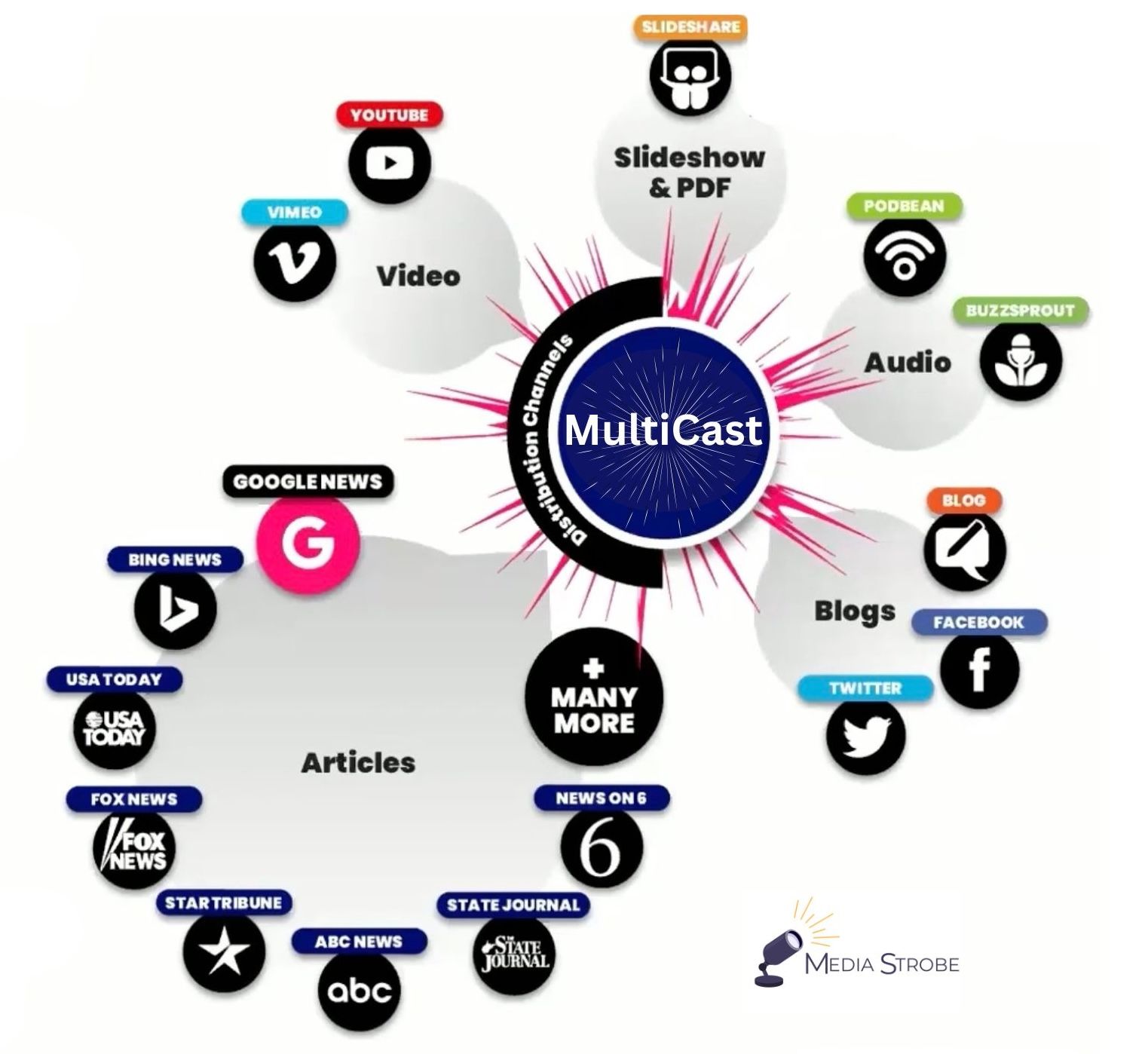
A comprehensive multicasting strategy simultaneously distributes your content across 300+ high-authority channels including trusted news and press release sites, major social media platforms (LinkedIn, Facebook, Twitter, Instagram, Pinterest), video platforms (YouTube, TikTok, Vimeo), podcast directories (Apple Podcasts, Spotify, Google Podcasts), blog networks and content syndication sites, document sharing platforms (SlideShare, Scribd), visual content platforms, industry-specific publications, Q&A sites (Quora, Reddit), and email distribution networks. The power of multicasting isn’t just channel quantity, it’s the cumulative authority effect created when your content appears across numerous trusted platforms simultaneously, signaling to both search engines and potential customers that your content is authoritative and trustworthy, which dramatically increases conversion rates compared to single-channel paid advertising approaches.
How quickly can I expect results from each approach?
Paid ads deliver immediate visibility and can generate traffic within hours of launch, but results completely stop the moment you pause spending, and costs typically increase 30-50% during competitive periods like Q4, requiring constant budget to maintain results. MultiCast distribution delivers traffic within days rather than hours as your content gets published across 300+ high-authority sites, but unlike paid ads, these results compound and strengthen over time, the content continues driving traffic for months or years without additional spending, rankings improve as backlinks accumulate, and brand authority builds with each piece of distributed content. While paid ads offer speed for short-term campaigns, MultiCast provides both relatively fast initial results (days to weeks) and long-term compounding returns, with most sellers seeing measurable traffic increases within 2-3 weeks and significant ROI by the 60-90 day mark as their content library expands and cross-promotion opportunities multiply. The fundamental difference: paid ads are renting temporary attention that disappears when spending stops, while MultiCast builds permanent traffic assets that appreciate in value and continue working 24/7 without ongoing costs.
Which approach requires more specialized talent?
Paid advertising requires significant specialized expertise including PPC campaign management, keyword bidding strategies, A/B testing methodologies, conversion rate optimization, platform-specific ad policies and best practices, ongoing performance monitoring, and budget allocation decisions, skills that typically require hiring dedicated specialists, agencies, or investing substantial time to develop proficiency, with costs for professional PPC management ranging from $1,000-$5,000+ monthly depending on ad spend levels.
MultiCast distribution, by contrast, requires minimal specialized talent since the technology automates the complex distribution and optimization processes across 300+ platforms, you simply provide basic information about your product or service (approximately 10 minutes), and the system handles formatting, platform-specific optimization, and simultaneous distribution without requiring expertise in SEO, content syndication, video editing, podcast production, or social media management. While creating effective content benefits from understanding your customers’ questions and pain points (knowledge you already possess as a business owner), MultiCast eliminates the technical barriers and specialized skills traditionally required for comprehensive content marketing, making it accessible to sellers without marketing teams or extensive budgets for professional services.
How does industry category affect the optimal channel strategy?
Industry category significantly influences which channels deliver the best ROI, with B2B services and professional products performing best on LinkedIn, industry publications, podcasts, and professional networks where decision-makers conduct research, while consumer products excel on visual platforms like Instagram, Pinterest, YouTube, and TikTok where buyers discover products through browsing and recommendations. Technical or complex products benefit from long-form content on blog networks, document sharing platforms like SlideShare, and detailed video tutorials on YouTube, whereas impulse-purchase items thrive on short-form video platforms and social media with immediate purchase paths. The beauty of MultiCast distribution is that it eliminates the guesswork of channel selection by simultaneously publishing your content across all 300+ platforms in optimized formats, allowing the market to naturally reveal which channels drive the highest conversions for your specific category—you’re not betting your budget on a single channel that might underperform, but instead casting a wide net that captures your audience wherever they’re actively searching, whether that’s news sites, social platforms, video channels, podcasts, or Q&A forums, with analytics showing exactly which channels deliver your best customers so you can understand your category’s patterns without the risk and cost of testing each channel individually through paid advertising.
What are the risks of overcommitting to either approach?
Overcommitting to paid ads creates dangerous business vulnerabilities including complete sales dependency on continued ad spending (sales vanish when budgets are cut), eroding profit margins as competition drives costs up 30-50% annually, zero owned customer relationships since all traffic flows through platform algorithms you don’t control, and catastrophic business impact from algorithm changes or account suspensions that can happen without warning. Conversely, overcommitting exclusively to content marketing without any paid promotion can result in slower initial traction, missed opportunities during peak seasonal moments when immediate visibility matters, and potential cash flow challenges if you need revenue quickly to sustain operations while content gains momentum. This assumes the paid ads are profitable! The optimal approach uses MultiCast to build a foundation of permanent traffic assets that compound over time and provide business stability, while strategically deploying paid ads for tactical purposes like new product launches, seasonal peaks, or filling specific gaps, this balanced strategy ensures you’re never dependent on a single traffic source, protects your business from platform volatility, and creates sustainable growth where content marketing handles your baseline traffic at minimal ongoing cost while paid ads serve as optional acceleration rather than mandatory life support for your business.
What are the main differences between organic marketing and paid ads?
Organic marketing (which includes multicasting) builds audience relationships through content that users discover naturally within their regular platform experiences, while paid advertising interrupts those experiences with promotional messages. This fundamental difference shapes how audiences perceive and respond to each approach. Organic touchpoints typically generate higher trust and engagement rates but reach smaller audiences initially, while paid placements deliver guaranteed visibility to precisely defined audiences but often face higher skepticism. Organic strategies generally require longer timeframes to deliver significant results but create more durable audience relationships that continue generating value without ongoing investment. Paid approaches provide immediate visibility and faster feedback cycles but typically stop delivering results when spending ends.
The economics of these approaches also differ substantially. Organic distribution costs remain relatively stable regardless of how many people engage with your content, creating excellent scalability for successful initiatives. Paid distribution costs increase proportionally with audience size, making scaling more expensive but providing predictable reach regardless of content quality or audience relationships. This economic distinction makes organic approaches generally more cost-effective for established brands with strong content capabilities, while paid approaches often work better for newer entrants needing immediate visibility.
What budget minimum is typically needed for effective paid advertising campaigns in 2026?
Effective paid advertising in 2026 typically requires a minimum monthly budget of $5,000-$10,000 per primary target audience segment to generate statistically meaningful data for optimization. If you do not have at least this amount it is recomended to start with Multicasting as it’s affordable and produces excellent results, usually is a slightly longer timeframe. This threshold has increased significantly since 2023 due to rising platform costs and the need for more sophisticated testing frameworks in the post-cookie environment. Organizations with budgets below this threshold generally struggle to gather sufficient performance data for effective optimization, creating a disadvantage against competitors with larger testing capacities. If your available budget falls below these minimums, you’ll likely achieve better results by focusing resources on a single high-priority segment rather than diluting spend across multiple audiences. For insights on competing with Amazon and other 3P sellers check out this guide for third-party sellers.
For organizations with limited budgets, strategic timing of paid initiatives often provides better results than continuous low-level spending. Concentrating available resources into focused “sprint” campaigns that reach minimum effective thresholds typically delivers better performance than maintaining constant but underfunded presence. These concentrated efforts generate sufficient data for meaningful optimization while creating momentum that organic amplification can extend, making the most of limited resources.
How have iOS privacy changes affected paid advertising performance since 2021?
The iOS privacy changes that began in 2021 fundamentally altered mobile advertising performance measurement, with impacts that continue to shape strategy in 2026. The immediate effect was a significant reduction in targeting precision and attribution accuracy for campaigns targeting iOS users, which initially decreased ROAS by 15-30% for many advertisers. However, the long-term impact has been more nuanced. Sophisticated marketers adapted by developing alternative measurement methodologies including incrementality testing, media mix modeling, and enhanced conversion tracking that partially restored visibility. They also shifted toward contextual targeting strategies and first-party data activation that proved increasingly effective as machine learning models improved with more training data.
Organizations that adapted quickly to these changes now actually outperform their pre-iOS 14 results in many cases, while those that failed to evolve their approach continue experiencing suboptimal performance. The privacy changes accelerated the transition toward more sophisticated measurement approaches and first-party data strategies that ultimately created more sustainable marketing models. The experience demonstrates how regulatory and platform changes that initially appear disruptive often drive innovation that creates new competitive advantages for adaptable organizations.
Can small businesses effectively leverage multicasting without enterprise-level resources?
Small businesses can absolutely implement effective multicasting strategies without enterprise-level resources by focusing on highly specific audience niches and leveraging automation technologies that have become increasingly accessible. The democratization of content creation and distribution tools has dramatically reduced the resource requirements for effective multicasting, allowing smaller organizations to compete successfully against larger competitors within targeted segments. The key success factor is narrowly defining your target audience and content focus rather than attempting broad coverage that would indeed require enterprise resources.
Small businesses often achieve better multicasting results by emphasizing depth over breadth in their approach. Rather than attempting to maintain presence across every possible platform, successful small-scale multicasters typically select 2-3 primary channels that best align with their specific audience characteristics, then create exceptional content specifically optimized for those environments. This focused approach allows limited resources to generate meaningful impact rather than being diluted across too many initiatives simultaneously.
How has AI transformed the optimization process for both multicasting and paid ads?
AI has fundamentally transformed optimization processes for both multicasting and paid advertising by enabling continuous, multivariate testing at scale that human analysts simply cannot match. Modern AI systems simultaneously evaluate thousands of variables across creative elements, audience segments, placement options, and timing factors to identify optimal combinations in real-time. This capability has accelerated the optimization cycle from weeks or months to hours or days, creating compounding performance improvements that significantly outpace manual approaches regardless of team expertise.
Perhaps most importantly, AI systems can now identify complex interaction effects between variables that traditional testing methodologies would miss entirely. For example, discovering that specific creative elements perform exceptionally well with particular audience segments at certain times of day—insights that would require hundreds of manual tests to uncover. These sophisticated pattern recognition capabilities create opportunities for performance breakthroughs that simply weren’t possible with previous optimization approaches, making AI-powered optimization essential for competitive performance regardless of which channel strategy you emphasize.
In the ever-evolving landscape of digital marketing, businesses are constantly seeking innovative ways to capture their audience’s attention. One such method is through the use of psychological triggers in ad copy. These psychological hooks can effectively stop users from scrolling and boost click-through rates, making them a powerful tool for marketers aiming to enhance their advertising strategies.